The Science of Canine Calming Signals and Appeasement
Discover the science behind canine calming signals. Learn to read dog appeasement behaviors, reduce stress, and improve communication with your pet.
The Evolutionary Biology of Appeasement
When we think of dog communication, we often focus on barking, growling, or tail wagging. However, the most critical aspect of canine social interaction is largely silent. Canine calming signals, a term popularized by Norwegian dog trainer Turid Rugaas, refer to a repertoire of subtle body language cues dogs use to de-escalate tension, self-soothe, and prevent conflict. From an evolutionary standpoint, these signals are vital for pack survival. According to the American Veterinary Medical Association (AVMA), understanding these subtle appeasement behaviors is crucial for preventing misunderstandings that often lead to canine behavioral issues and human-directed bites.
'Dogs are constantly talking to us. The problem is not that they are silent, but that we are not listening to their whispers.'
Unlike aggressive displays, which are designed to increase distance, calming signals are designed to maintain social harmony and decrease distance safely. When a dog feels stressed, overwhelmed, or perceives a potential threat, they will deploy these signals to communicate peaceful intentions. Misinterpreting a yawn as 'boredom' or ground-sniffing as 'distraction' can cause owners to inadvertently push a dog past their stress threshold, resulting in reactive behavior.
Top 5 Science-Backed Calming Signals
1. Yawning Out of Context
While yawning indicates tiredness in humans, in dogs, it is frequently a displacement behavior triggered by acute stress or cognitive dissonance. A landmark study published in PLOS One (Romero et al., 2013) demonstrated that dogs exhibit contagious yawning more frequently with familiar humans, linking the behavior to empathy and emotional arousal rather than mere fatigue. If your dog yawns during a veterinary exam, a tense household argument, or a tight hug, they are attempting to lower their own heart rate and signal non-aggression.
2. Lip Licking and Tongue Flicks
A quick flick of the tongue over the nose is one of the earliest indicators of mild discomfort. This micro-expression is often missed by owners. It is an appeasement gesture derived from puppyhood, where neonatal pups lick the mouths of adult dogs to stimulate regurgitation and show submission. In adult dogs, it translates to, 'I am feeling uneasy, please give me space.'
3. Turning the Head or Body Away
Direct, sustained eye contact is considered a threat in canine culture. When a dog turns their head away from a stimulus—such as an approaching stranger or a camera lens—they are actively cutting off the threat display. This is a deliberate, conscious choice to de-escalate. The ASPCA notes that forcing a dog to maintain eye contact when they are offering a head turn can elevate their anxiety and trigger defensive aggression.
4. Ground Sniffing
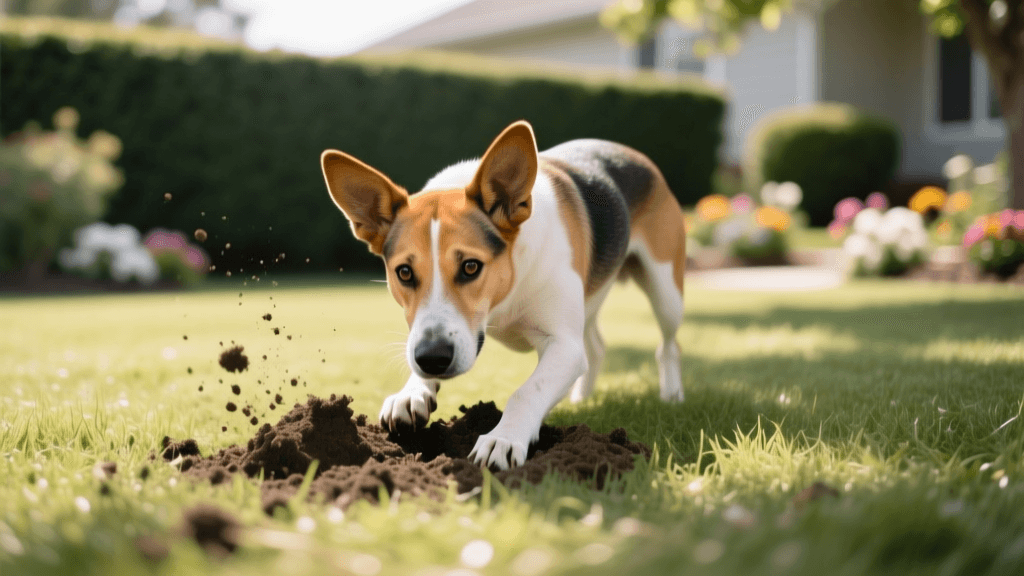
While dogs naturally explore the world through their noses, sudden, intense sniffing of the ground when another dog or person approaches is a calming signal. It is a displacement activity that allows the dog to avoid direct confrontation while appearing busy and non-threatening. It tells the approaching party, 'I am occupied and mean you no harm.'
5. Curving the Approach
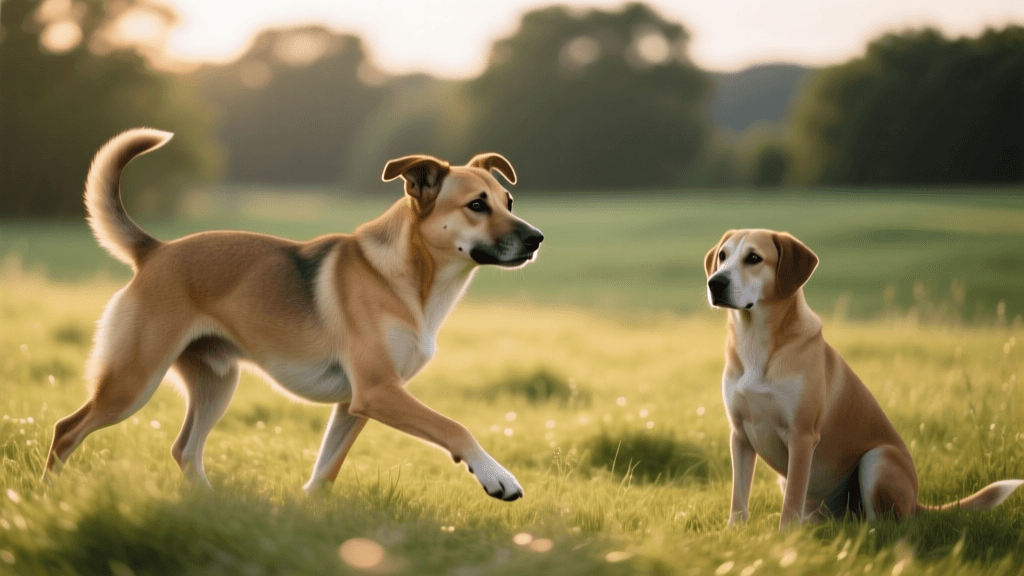
Dogs rarely walk in a straight line toward one another when greeting. A direct, head-on approach is biomechanically confrontational. Instead, polite dogs will walk in a wide arc or curve. This biometric adjustment reduces the physical tension in the dog's body and signals peaceful intent to the receiver.
Data Table: Trigger Contexts and Human Responses
| Trigger Context | Common Calming Signal | Scientific Function | Recommended Human Response |
|---|---|---|---|
| Veterinary Exam Table | Repeated Yawning, Panting | Self-soothing via vagus nerve stimulation | Provide a non-slip mat; offer high-value lick mat to engage parasympathetic nervous system. |
| Approaching Unfamiliar Dog | Curving, Ground Sniffing | De-escalation and threat avoidance | Allow the dog to curve; do not force a linear, head-on greeting on a 6-foot leash. |
| Owner Raising Voice | Lip Licking, Whale Eye | Appeasement to pacify perceived aggressor | Lower your voice immediately; drop your physical posture and look away. |
| Tight Hugging by Child | Freezing, Head Turn | Conflict avoidance; suppression of bite reflex | Intervene within 3 seconds; redirect child to pet the dog's chest or side. |
Actionable Protocol: How to Respond to Stress Signals
Recognizing calming signals is only half the equation. As a guardian, you must act as an advocate for your dog's nervous system. Here is a science-backed protocol to implement when you observe appeasement behaviors.
Step 1: The 3-Second Intervention Rule
When you notice a cluster of calming signals (e.g., lip licking followed by a head turn), you have a 3-second window to change the environment before the dog's cortisol levels spike, potentially leading to a reactive outburst. Immediately increase the distance between your dog and the stressor by at least 6 feet. This spatial buffer lowers the amygdala's threat response.
Step 2: Deploy Pheromone Support
Synthetic dog-appeasing pheromones (DAP) mimic the lactating hormones produced by nursing mothers, which biologically induce a sense of safety in canines. For dogs that exhibit chronic calming signals in public spaces, utilize an Adaptil Calm On-the-Go Collar (Cost: $25–$30). Ensure the collar is fitted snugly—allowing only two fingers to slip underneath—to maintain skin contact and continuous pheromone release. For acute, short-term stressors like car rides, apply ThunderEase Dog Calming Pheromone Spray (Cost: $15–$20) to a bandana 15 minutes prior to the event.
Step 3: The 20-Minute Decompression Walk
After a stressful encounter where your dog utilized heavy calming signals, their body is flooded with adrenaline and cortisol. It can take up to 72 hours for these hormones to fully metabolize. To accelerate recovery, engage in a decompression walk. Use a 10-to-15-foot long line (biothane or cotton, Cost: $20–$35) attached to a well-fitted Y-front harness. Allow the dog to sniff freely in a low-traffic, green environment for a minimum of 20 minutes. Sniffing lowers a dog's pulse rate and engages the seeking circuit of the brain, actively counter-conditioning the stress response.
When Calming Signals Fail: Signs of Over-Threshold Stress
If calming signals are ignored, a dog's nervous system will escalate from appeasement to defensive action. Watch for these late-stage stress indicators:
- Whale Eye: Showing the whites of the eyes while the head is turned away.
- Hard Stare: Unblinking, fixed gaze on the trigger.
- Freezing: Complete cessation of movement; a critical precursor to a bite.
- Piloerection: Raised hackles along the spine indicating sympathetic nervous system arousal.
Conclusion
Canine calming signals are a profound testament to the dog's evolutionary desire for peace and social cohesion. By shifting our perspective from viewing these behaviors as 'disobedience' or 'distraction' to recognizing them as vital communication, we can build a relationship rooted in mutual trust and scientific understanding. Pay attention to the whispers, so you never have to deal with the shouts.
jonas-cole
All our authors care for dogs every day — read more of their work on the authors page.