The Science of Canine Recall: Optimizing Reward Timing and Value
Master the science of canine recall training. Learn how precise reward timing and high-value treat hierarchies create reliable, off-leash obedience.
The Neurobiology of the Canine Recall
A reliable recall—calling your dog back to you in the presence of intense distractions—is widely considered the pinnacle of canine obedience. However, from a scientific perspective, a recall is not merely a physical action; it is a complex neurochemical event. When a dog hears their recall cue, their brain must rapidly weigh the dopamine potential of returning to you against the dopamine currently being generated by their environment (e.g., chasing a squirrel or sniffing a novel scent).
According to research in canine cognitive neuroscience, the mesolimbic dopamine pathway, which governs reward-seeking behavior and motivation, is highly sensitive to both the quality and the timing of the anticipated reward. If the neurochemical payout of returning to the handler does not exceed the environmental payout, the dog will ignore the cue. Therefore, mastering the science of operant conditioning, specifically reward timing and value hierarchies, is essential for building a bulletproof recall. As highlighted by the American Veterinary Society of Animal Behavior (AVSAB), reward-based methods are not only more effective but also significantly reduce stress and anxiety compared to aversive techniques, which can actually suppress a dog's willingness to return.
The Critical Window: Reward Timing in Milliseconds
In behavioral psychology, the temporal contiguity between a behavior and its consequence dictates how strongly the neural association is formed. For dogs, this window is remarkably narrow. To effectively 'tag' the exact moment your dog makes the decision to turn away from a distraction and orient toward you, the marker signal (a clicker or a verbal 'Yes!') must occur within 300 to 500 milliseconds of the desired action.
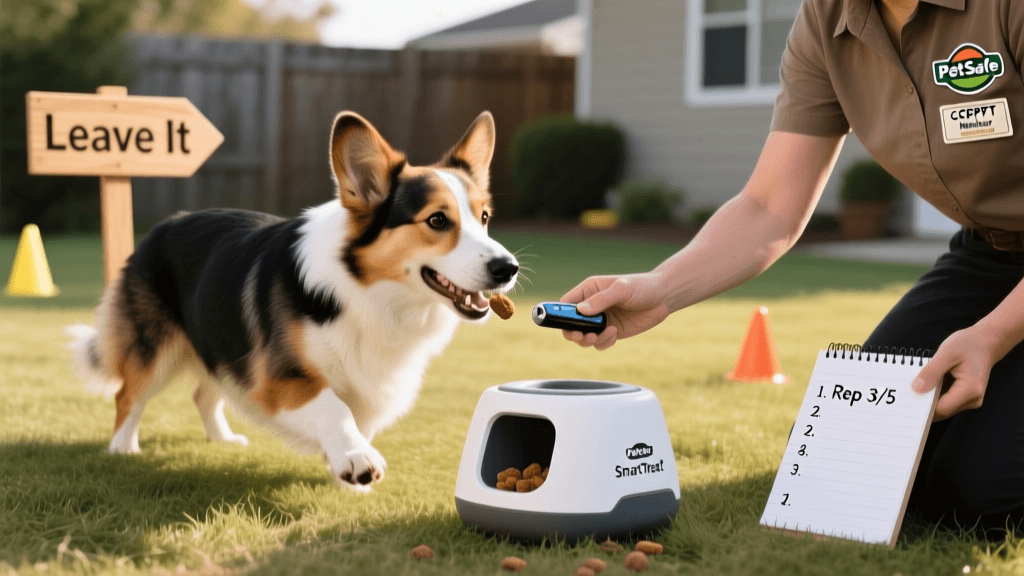
If you wait until the dog has physically reached you and is sitting to provide the marker and reward, you are inadvertently reinforcing the 'sit' or the 'arrival,' rather than the critical decision to disengage from the distraction. To optimize this, handlers should use a distinct marker. Studies indicate that a mechanical clicker (such as the PetSafe Clik-R, costing around $6) provides a consistent, emotionally neutral acoustic bridge that the canine brain processes faster than a human verbal marker, which can vary in pitch and duration based on the handler's stress levels.
Actionable Timing Drill: Practice your mechanical timing without the dog. Drop a tennis ball and click the exact moment it hits the ground. Once your reflex is under 400 milliseconds, integrate the clicker into your recall training. Mark the exact second your dog's ears flick back or their head turns toward you, before they even take a step in your direction.
The Reward Value Hierarchy: What Science Says About Treats
Not all calories are created equal in the canine brain. The value of a treat is not determined by what humans find appetizing, but by the dog's olfactory receptors, evolutionary drive for novel proteins, and the fat-to-protein ratio, which triggers a more robust dopamine release. When proofing a recall in high-distraction environments, standard kibble is often neurologically insufficient to compete with environmental stimuli.
Below is a science-backed Reward Value Hierarchy to help you select the appropriate reinforcement based on the distraction level of your training environment.
| Tier | Treat Example | Protein/Fat Profile | Best Use Case |
|---|---|---|---|
| Low | Daily Kibble (e.g., Purina Pro Plan) | Standard (26% Protein / 16% Fat) | Basic indoor shaping, known behaviors in zero-distraction zones. |
| Medium | Training Biscuits (e.g., Zuke's Mini Naturals - $8 for 6oz) | Moderate (20% Protein / 10% Fat) | Low-distraction outdoor recalls, suburban walks. |
| High | Ziwi Peak Air-Dried Beef ($35 for 2.2 lbs) | High (35% Protein / 33% Fat) | High-distraction environments, initial recall proofing, dog parks. |
| Jackpot | Stella & Chewy's Freeze-Dried Raw Liver ($15 for 3oz) | Novel/Extreme (45% Protein / 35% Fat) | Emergency recalls, breaking intense prey drive fixation. |
Notice the progression in fat content and the introduction of novel or organ-based proteins at the higher tiers. The canine olfactory system possesses up to 300 million scent receptors, making pungent, high-fat, and organ-based treats vastly more stimulating. When a dog successfully executes a recall away from a high-value distraction (like another dog or a deer), delivering a 'Jackpot' tier reward creates a massive dopamine spike, cementing the neural pathway that returning to the handler yields the highest possible payout.
Variable Ratio Schedules: The Slot Machine Effect
A common mistake in recall training is remaining on a Continuous Reinforcement (CRF) schedule—giving a treat every single time the dog comes when called. While CRF is necessary during the initial acquisition phase of learning, it leads to rapid extinction if the reward is ever delayed or unavailable. Furthermore, predictable rewards diminish the canine brain's anticipatory dopamine release.
To build long-term reliability, you must transition to a Variable Ratio (VR) schedule of reinforcement. In behavioral science, a VR schedule delivers a reward after an unpredictable number of correct responses. This is the exact psychological mechanism that makes slot machines so addictive to humans. When a dog does not know if the next recall will yield a standard treat, a handful of kibble, or a 'Jackpot' of freeze-dried liver, the anticipation drives a higher baseline level of obedience and urgency. According to research published in PLOS ONE regarding dog training methods, dogs trained with positive reinforcement on variable schedules exhibit lower stress biomarkers and higher eagerness to work compared to those trained with predictable rewards or aversive corrections.
Practical 14-Day Recall Protocol
Implement this structured, science-backed protocol to build a reliable off-leash recall. Estimated Cost: $45-$60 for high-value treats and a long line.
Phase 1: Acquisition and High-Value Tagging (Days 1-5)
- Environment: Indoors, low distraction.
- Equipment: Standard flat collar, treat pouch, clicker.
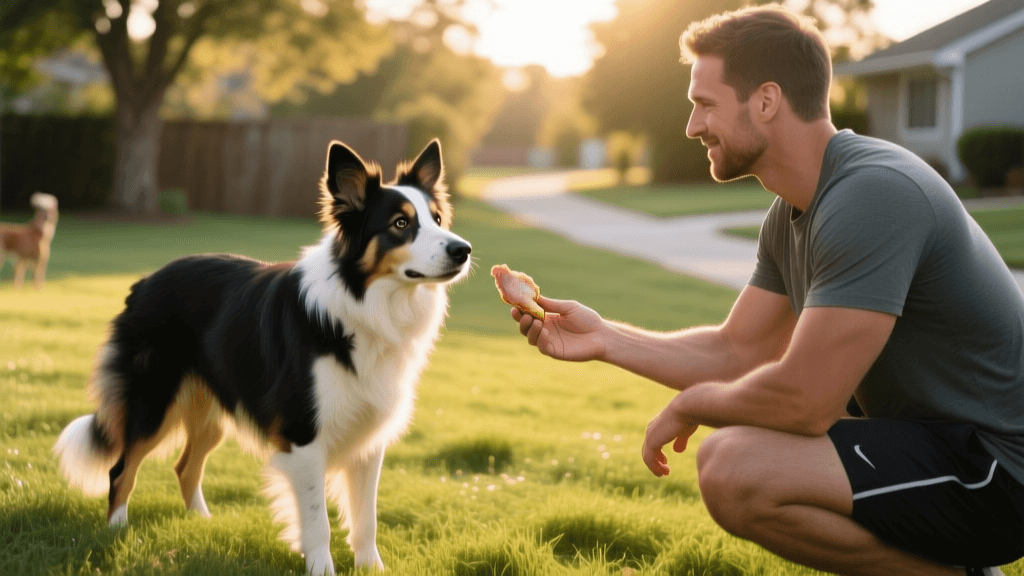
- Protocol: Take one step away from your dog. Say their name followed by your recall cue (e.g., 'Rover, Come!'). The millisecond they orient toward you, click. Deliver a High-Value treat (Ziwi Peak) directly to their mouth.
- Reps: 30 repetitions per day, divided into three 10-minute sessions. Stay on a Continuous Reinforcement (CRF) schedule.
Phase 2: Distance and Mild Distraction (Days 6-10)
- Environment: Fenced yard or quiet park.
- Equipment: 15-foot Biothane long line ($25 to ensure safety and prevent tangling).
- Protocol: Allow the dog to sniff a mildly interesting scent. Call them from 10 feet away. Mark the moment they disengage from the scent. When they arrive, deliver 3-4 pieces of Medium-Value treats in rapid succession (a technique known as 'jackpotting' the delivery, not just the value, to prolong the rewarding experience).
Phase 3: The Variable Ratio Shift (Days 11-14)
- Environment: Higher distraction areas (e.g., walking trails).
- Protocol: Begin the Variable Ratio schedule. For 5 recalls, give a Low-Value treat. For the 6th recall, give a Jackpot tier treat (Freeze-Dried Liver) with enthusiastic verbal praise. The unpredictability of the 'Jackpot' will cause your dog to respond to every recall with the urgency of hoping for the ultimate prize.
Conclusion
Building a reliable recall is not about dominance or repetition; it is about understanding and leveraging the canine brain's reward circuitry. By respecting the 300-millisecond timing window, utilizing a scientifically structured reward hierarchy, and implementing variable reinforcement schedules, you transform your recall cue from a simple command into an irresistible neurochemical trigger. As supported by the RSPCA's extensive guidelines on reward-based training, prioritizing positive, high-value reinforcement ensures that your dog's fastest, happiest response will always be returning to your side.
priya-sutaria
All our authors care for dogs every day — read more of their work on the authors page.