Training Best WFH Dog Breeds in 2026: Quiet Commands
Learn to train the best work-from-home dog breeds in 2026. Master quiet commands, place routines, and separation conditioning for hybrid schedules.
The 2026 Remote Work Reality: Why Training Matters
As we navigate the evolved hybrid and remote work landscapes of 2026, the home office has become a permanent fixture for millions of professionals. For dog owners, this means our canine companions are effectively our coworkers. However, a dog that barks at delivery drivers, whines during video conferences, or demands constant attention can severely impact productivity. The key to a harmonious work-from-home (WFH) environment is not just choosing the right breed, but implementing targeted behavioral conditioning. According to the American Kennel Club, structured training routines are essential for integrating dogs into busy household environments without causing stress for the pet or the owner.
In this comprehensive guide, we will explore the best dog breeds for remote workers and provide actionable, step-by-step training protocols to ensure your dog remains a calm, quiet, and happy presence during your deep work sessions.
Top WFH Dog Breeds and Their Training Profiles
While any dog can be trained, certain breeds possess natural temperaments that align well with the sedentary, focused nature of remote work. Below is a comparison of top WFH breeds and their specific training requirements for 2026.
| Breed | Energy Level | Trainability | Best WFH Trait | Primary Training Focus |
|---|---|---|---|---|
| Greyhound | Low | Moderate | Couch potato mentality | Impulse control and recall |
| Cavalier King Charles Spaniel | Low-Medium | High | Affectionate and quiet | Boundary training and independence |
| Basset Hound | Low | Moderate | Stubborn but vocalizes less | Scent work and settling |
| Standard Poodle | High | Very High | Highly intelligent and alert | Mental stimulation and quiet cues |
Core WFH Training Pillar 1: The 'Place' Command for Deep Work
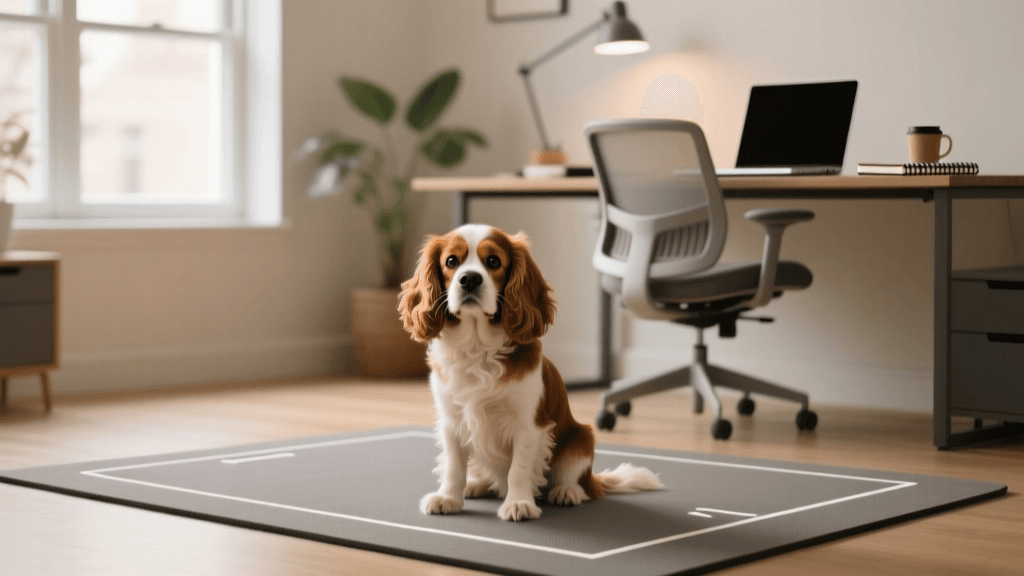
The 'Place' command is arguably the most critical skill for a WFH dog. It teaches your dog to go to a specific mat or bed and remain there until released, allowing you to focus on complex tasks without a dog nudging your elbow.
Step-by-Step 'Place' Training Protocol
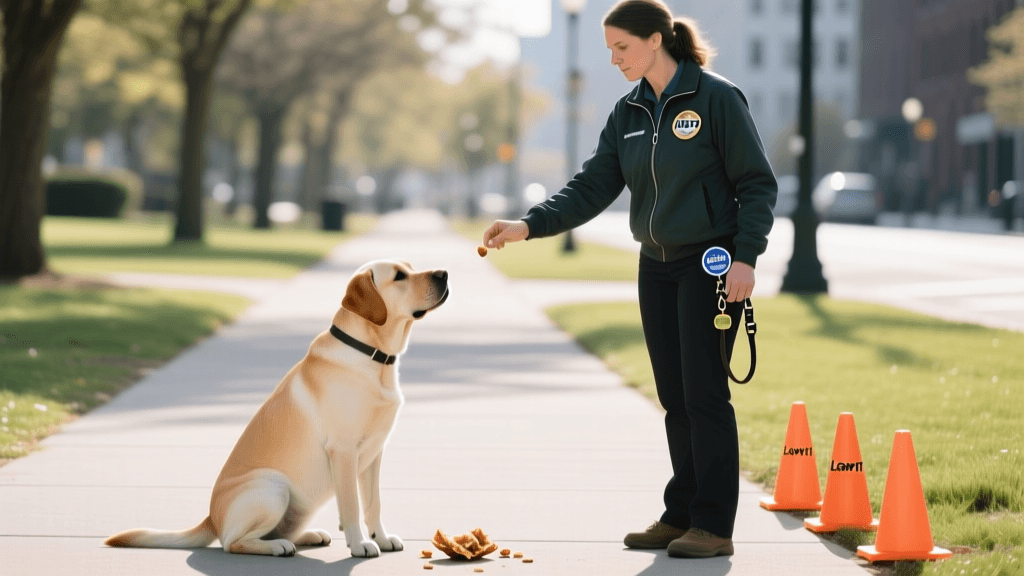
- Step 1: Lure and Mark. Stand near your dog's designated mat (a raised cot like the Kuranda PVC bed is highly recommended for 2026 as it provides clear physical boundaries). Hold a high-value treat, such as Zuke's Mini Naturals (which retail for approximately $14 per 16oz bag in 2026), and lure the dog onto the mat. The moment all four paws touch the mat, use a clicker or a verbal marker like 'Yes!' and reward.
- Step 2: Add the Cue. Once the dog reliably steps onto the mat for the lure, introduce the verbal cue 'Place' just before they step on. Reward heavily for compliance.
- Step 3: Build Duration. Begin delaying the reward. Ask for 'Place', wait two seconds, then reward. Gradually increase the time to 10 seconds, 30 seconds, and eventually several minutes. If the dog breaks the command, calmly guide them back without a reward and start the timer over.
- Step 4: Add Distance and Distraction. Take a step back after giving the cue. Slowly increase your distance, eventually moving to your desk chair. Introduce mild distractions, such as typing on your keyboard or playing a low-volume recording of office chatter.
Core WFH Training Pillar 2: Call Desensitization and the 'Quiet' Cue
Nothing disrupts a virtual meeting faster than a dog barking at a digital doorbell or a notification ping. In 2026, with AI-driven home offices and constant digital pings, desensitization to auditory triggers is mandatory.
Desensitizing to Digital Triggers
Start by recording the specific sounds that trigger your dog (e.g., your Zoom meeting join chime, your Slack notification, or the Ring doorbell). Play the sound at a volume so low that your dog notices it but does not react. Immediately reward with a treat. Over a period of two to three weeks, incrementally increase the volume. This process, known as systematic desensitization, rewires the dog's emotional response from 'alert/intruder' to 'sound equals treat'.
Teaching the 'Quiet' Command
If your dog does begin to bark, avoid yelling, as dogs often interpret yelling as you barking along with them. Instead, wait for a brief pause in the barking (even just one second of silence), say 'Quiet', and immediately deliver a high-value reward. Consistently marking the silence rather than punishing the noise will build a reliable 'Quiet' cue over time.
Core WFH Training Pillar 3: Hybrid Schedule Separation Conditioning
One of the greatest challenges for remote workers in 2026 is the hybrid schedule. If you work from home Monday through Wednesday but go to the office Thursday and Friday, your dog can easily develop severe separation anxiety. The ASPCA notes that dogs accustomed to constant human presence can exhibit destructive behaviors and distress vocalization when suddenly left alone for eight hours.
Preventative Separation Training
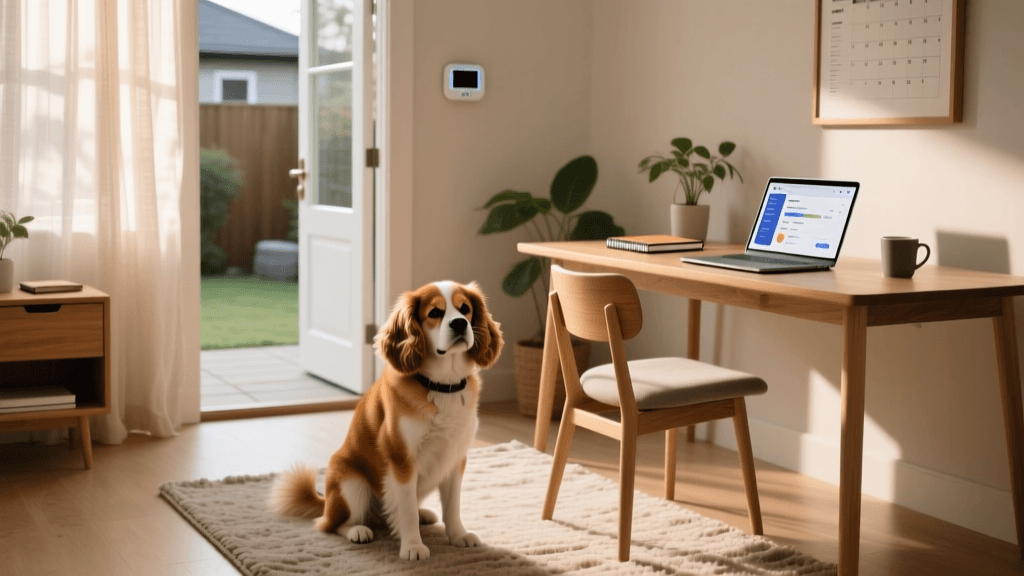
To prevent this, you must train your dog to be alone even when you are home. Implement 'Alone Time' protocols daily. Place your dog in a separate room or a spacious exercise pen with a long-lasting enrichment item, such as a KONG Classic stuffed with frozen peanut butter and kibble. Leave the room for 30 minutes to an hour. This teaches the dog that your absence is temporary, safe, and associated with positive experiences, drastically reducing the shock of your hybrid office days.
Essential 2026 WFH Dog Training Gear
Equipping your home office with the right tools can accelerate your training and maintain your dog's mental health. Here are the top recommended items for this year:
- Furbo 360 Dog Camera (2026 AI Model): Priced around $210, this camera features advanced AI that differentiates between dog barking, whining, and normal household noise, sending targeted alerts to your smartwatch so you can intervene via two-way audio before a bad habit solidifies.
- Snuffle Mats for Independent Foraging: Costing between $25 and $40, snuffle mats tap into a dog's natural scavenging instincts. Scattering your dog's daily kibble ration into a dense fleece snuffle mat can provide up to 45 minutes of quiet, independent mental stimulation while you are on a long conference call.
- Lickimats with Suction Cups: Retailing for about $15, these can be attached to the wall near your desk or the floor. Spreading plain Greek yogurt or pumpkin puree on the mat and freezing it provides a soothing, repetitive licking action that releases endorphins and promotes calmness.
Sample Daily WFH Training Schedule
Consistency is the bedrock of behavioral conditioning. Here is a sample schedule designed to balance your dog's physical needs, mental enrichment, and your professional obligations.
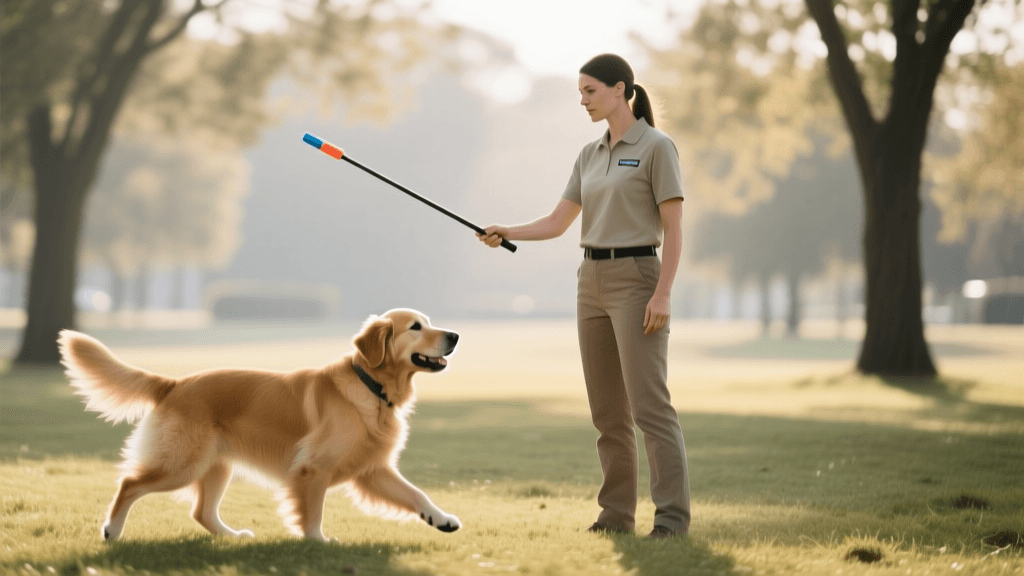
- 7:00 AM - 7:45 AM: Vigorous physical exercise (walk, jog, or fetch) to burn off morning energy. A tired dog is a quiet coworker.
- 8:00 AM - 8:30 AM: Breakfast served via a snuffle mat or puzzle feeder to encourage mental engagement while you set up your inbox.
- 9:00 AM - 11:00 AM: Deep Work Block. Dog is on their 'Place' cot with a chew toy. Practice duration rewards every 30 minutes.
- 11:00 AM - 11:30 AM: Mid-day training session. Focus on trick training (e.g., 'spin', 'shake', 'crawl') to provide mental fatigue without physical overexertion.
- 12:30 PM - 1:30 PM: Lunch break walk and potty break.
- 1:30 PM - 3:00 PM: 'Alone Time' protocol. Dog is in the living room with a frozen KONG while you take video calls in the office.
- 4:30 PM - 5:00 PM: Evening wind-down training. Practice the 'Quiet' and 'Settle' cues as the household transitions out of work mode.
Conclusion
Integrating a dog into your remote work life in 2026 requires intentionality, patience, and the right training frameworks. By selecting a breed suited for indoor companionship and rigorously applying the 'Place' command, auditory desensitization, and preventative separation conditioning, you can cultivate a workspace that is both highly productive and deeply enriching for your canine companion. Remember that training is not a one-time event but an ongoing dialogue with your dog. Invest the time in these foundational skills, and your dog will be the best coworker you have ever had.
beth-carrasco
All our authors care for dogs every day — read more of their work on the authors page.