Best WFH Puppy Breeds: 2026 Training Guide for Remote Workers
Discover the best puppy breeds for remote workers in 2026. Learn specialized mat training and quiet-time conditioning for a peaceful home office.
Why WFH Puppy Training is Different in 2026
Working from home has evolved significantly by 2026, with hybrid schedules and virtual meetings becoming the permanent standard. For remote workers bringing a new puppy into their home office, the stakes are high. A poorly trained puppy can derail a crucial video conference, while a well-conditioned canine companion can boost productivity and mental health. However, not all breeds are naturally suited for the quiet, structured environment of a modern home office.
The post-pandemic shift to permanent remote work has created a unique behavioral challenge: hyper-attachment. Puppies raised in homes where their owners are present 24/7 often develop severe separation anxiety the moment the owner leaves for a hybrid office day or even steps into another room. According to the ASPCA, separation anxiety remains one of the most prevalent behavioral issues in modern dogs. Therefore, training a WFH puppy isn't just about teaching them to be quiet during Zoom calls; it is equally about teaching them how to be comfortably alone in the same house.
Top 3 Most Trainable Puppy Breeds for Remote Workers
When selecting a breed for a home office, you must prioritize low vocalization, high biddability (eagerness to please), and a natural off-switch. In this guide, we explore the best puppy breeds for remote workers in 2026, focusing specifically on their trainability for quiet office behaviors, mat work, and independence conditioning.
1. Cavalier King Charles Spaniel
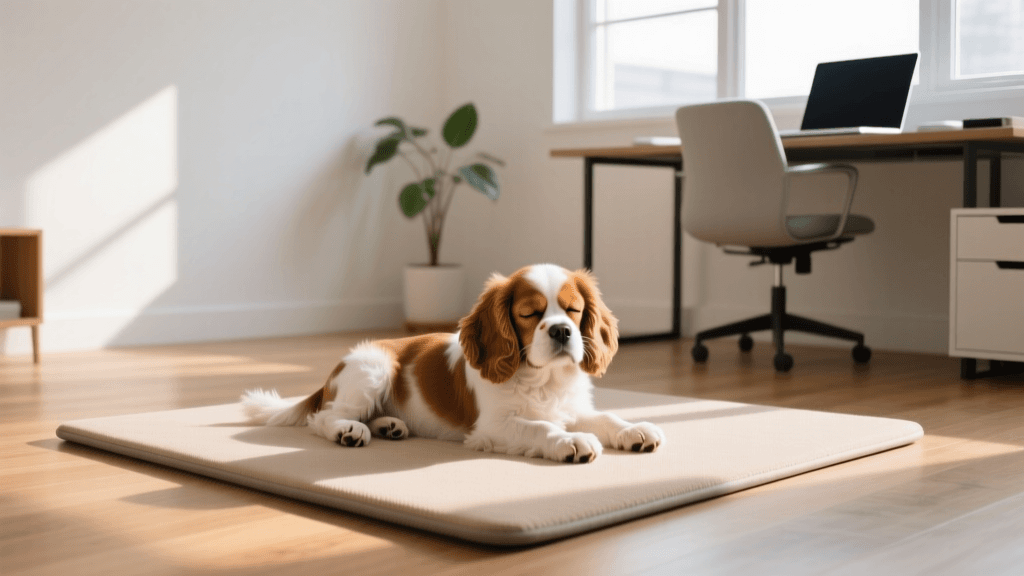
The Cavalier is the quintessential lap dog, but their true superpower for remote workers is their eagerness to please and low prey drive. They are highly responsive to positive reinforcement. A Cavalier puppy can master the 'place' command within two weeks of consistent, 10-minute daily sessions. They rarely demand-bark, making them ideal for households with frequent virtual meetings.
Training Focus: Duration mat training. Cavaliers love comfort, so pairing a plush orthopedic mat (budget around $65 for a high-quality, chew-resistant 2026 model) with frozen bone broth treats will keep them anchored during long work sprints.
2. Greyhound
While often associated with racing, retired racing Greyhounds and responsibly bred puppies are essentially 45-mph couch potatoes. They possess a natural inclination to lounge for hours. From a training perspective, Greyhounds are highly sensitive and respond beautifully to quiet, calm praise rather than high-energy excitement.
Training Focus: Desensitization to household noises. Because they are sensitive, WFH owners must systematically desensitize Greyhound puppies to the sounds of doorbells, delivery drones, and loud keyboard typing using recorded audio tracks played at low volumes.
3. Standard Poodle
Do not let the show-dog haircut fool you; the Standard Poodle is a working breed with immense cognitive capacity. For remote workers who want to integrate advanced trick training into their screen-breaks, the Poodle is unmatched. They can be trained to perform complex tasks, such as fetching specific office supplies or turning off smart lights.
Training Focus: Mental fatigue protocols. Physical exercise isn't enough for a Poodle. Remote workers must utilize 15-minute snuffle-mat sessions and puzzle feeders (costing roughly $30-$45) to drain their mental energy before the workday begins.
The 'Quiet Office' Training Protocol
Regardless of the breed you choose, implementing a strict WFH training protocol is non-negotiable. The American Kennel Club emphasizes that teaching a designated place is foundational for household harmony.
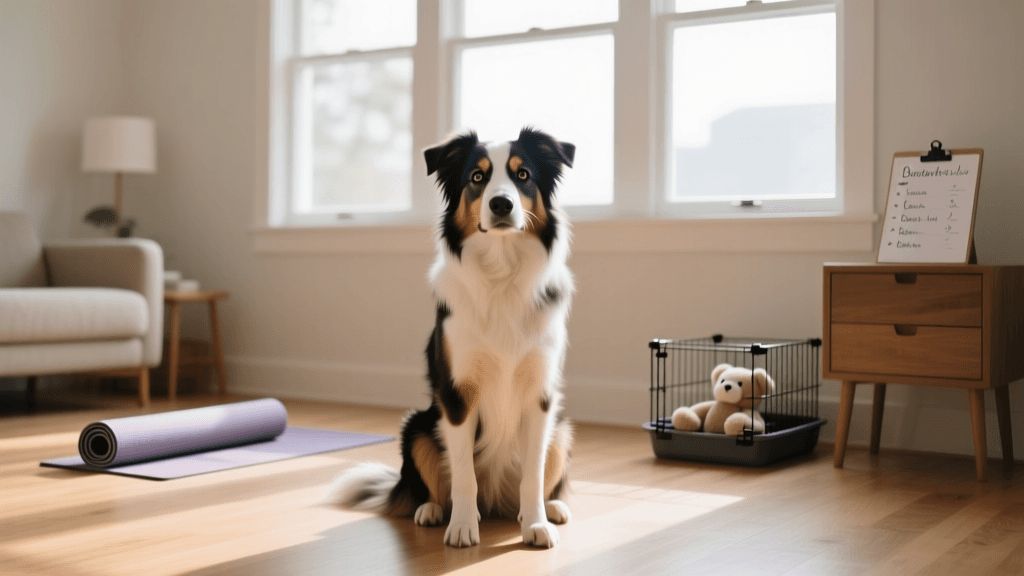
Step 1: Advanced Mat Training for Zoom Calls
Your puppy needs a designated office mat. Start by luring them onto the mat with high-value treats (like freeze-dried beef liver, approx. $18 per bag).
- Week 1-2: Reward simply for stepping on the mat. Use a clicker or a verbal marker like 'Yes!'
- Week 3-4: Introduce the 'down' command on the mat. Begin extending the duration between treats from 2 seconds to 10 seconds.
- Week 5+: Introduce the '3 Ds' (Distance, Duration, Distraction). Start taking mock video calls while tossing a treat to the mat every 3 minutes, gradually increasing the interval to 15 minutes.
Step 2: Vocalization Extinction
Demand barking during a phone call is a learned behavior. If you shush your puppy or give them a treat to quiet them down, you have just trained them to bark for attention. Instead, practice active extinction. When the puppy barks during a meeting, completely ignore them—no eye contact, no verbal reprimands. The moment they pause for three seconds, calmly mark the silence and toss a treat to their mat.
Step 3: Preventing Hyper-Attachment
Even when working from home, you must simulate absence. Use baby gates to separate your office from the puppy's playpen for at least two hours a day. Provide them with a long-lasting chew, such as a Yak cheese block ($22 for a pack of three), which promotes self-soothing through repetitive licking and chewing.
WFH Puppy Breed Compatibility Chart
| Breed | Trainability for 'Place' | Vocalization Risk | Daily Mental Enrichment Needed | Best For |
|---|---|---|---|---|
| Cavalier King Charles Spaniel | High | Low | 30 mins (Snuffle mats, gentle puzzles) | Quiet offices, frequent meetings |
| Greyhound | Medium | Very Low | 20 mins (Scent work, short walks) | Minimalist offices, calm environments |
| Standard Poodle | Very High | Medium (if bored) | 60+ mins (Advanced tricks, agility) | Active remote workers, interactive breaks |
Essential 2026 Training Gear for the Home Office
To execute this training successfully, remote workers should invest in the following modern tools:
- AI-Assisted Treat Cameras: Modern iterations of pet cameras now use AI to detect when your dog is resting quietly on their mat and automatically dispense a micro-treat, reinforcing the settle behavior even when you are deep in focus work.
- Orthopedic 'Place' Mats: Avoid standard dog beds for training. Use a flat, dense orthopedic mat with a removable, washable cover. It clearly defines the boundary of the place command.
- Timed Puzzle Feeders: Instead of feeding your puppy from a bowl during your lunch break, use programmable puzzle feeders that release kibble over a 20-minute window, keeping them occupied while you eat at your desk.
- Lick Mats and Frozen Enrichment: Spread plain, unsweetened Greek yogurt or pureed pumpkin onto a textured silicone lick mat and freeze it overnight. The act of licking releases endorphins in the canine brain, naturally sedating your puppy during high-stress periods like quarterly review meetings.
Conclusion
Finding the best puppy breed for remote workers in 2026 goes beyond picking a cute face; it requires matching a breed's cognitive profile to your specific work environment. By selecting highly trainable breeds like the Cavalier, Greyhound, or Standard Poodle, and rigorously applying mat training and independence conditioning, you can cultivate a peaceful, productive home office. Remember, a well-trained WFH puppy isn't just a pet; they are a supportive colleague who knows exactly when it's time to work and when it's time to play.
tom-renshaw
All our authors care for dogs every day — read more of their work on the authors page.