Scent Work Bonding Games For Anxious Rescue Dogs (2026)
Discover how scent work builds trust with anxious rescue dogs. Learn 2026 science-backed olfactory games to deepen your bond and reduce canine stress.
The Science of Sniffing: Why Scent Builds Trust in 2026
When we bring a rescue dog into our homes, our first instinct is often to bond through physical touch, direct eye contact, and traditional obedience training. However, for an anxious, fearful, or under-socialized dog, these human-centric approaches can inadvertently trigger a stress response. In 2026, leading veterinary behaviorists and canine cognition researchers have overwhelmingly shifted toward a more species-appropriate method of relationship building: olfactory enrichment. Understanding your dog's primary sense is the ultimate key to unlocking their confidence and forging an unbreakable bond.
A dog's olfactory system is a biological marvel. While humans possess roughly 6 million olfactory receptors, dogs have up to 300 million, depending on the breed. Furthermore, the part of a dog's brain devoted to analyzing smells is proportionally 40 times greater than ours. When a dog sniffs, they are not just gathering information about their environment; they are engaging their limbic system, the brain's emotional center. This engagement naturally lowers their heart rate, reduces cortisol levels, and stimulates the production of dopamine and endorphins. By facilitating scent-based activities, you are literally helping your anxious dog self-soothe while associating that profound sense of relief directly with you.
Why Olfactory Bonding Outperforms Traditional Training
For rescue dogs carrying the weight of past trauma, traditional training can feel like a high-pressure test. Obedience requires the dog to look at you, read your physical cues, and make a decision, which can be overwhelming for a dog in a state of hyper-vigilance. Scent work, on the other hand, is autonomous. It allows the dog to lead the interaction, giving them a sense of agency and control that is crucial for trauma recovery.
According to the American Kennel Club's Scent Work guidelines, nose work is one of the most inclusive and confidence-building sports available, specifically because it taps into a dog's natural, instinctual drives rather than forcing them to suppress them. The National Association of Canine Scent Work also emphasizes that scent work builds a unique partnership where the human becomes the supportive facilitator rather than the demanding director.
| Bonding Feature | Traditional Obedience Bonding | Olfactory Scent Bonding |
|---|---|---|
| Primary Sense Used | Visual and Auditory | Olfactory (Smell) |
| Stress Level (Anxious Dogs) | High (Requires direct focus and eye contact) | Low (Autonomous exploration and choice) |
| Brain Region Activated | Prefrontal Cortex (Decision making) | Limbic System (Emotion, Memory, Soothing) |
| Best Suited For | Confident, Handler-Oriented Dogs | Fearful, Reactive, Shut-Down Rescue Dogs |
| Human's Role | Director and Evaluator | Supporter and Resource Provider |
3 Science-Backed Scent Bonding Games for Your Rescue Dog
To start building trust through scent, you need to create low-pressure environments where your dog can succeed. Here are three highly effective, actionable games recommended by modern canine enrichment specialists.
Game 1: The Decompression Scatter Walk
The decompression walk is a foundational 2026 enrichment technique designed to mimic the natural foraging behavior of wild canids. Instead of feeding your anxious dog from a bowl, take them to a quiet, low-traffic grassy area on a long line (15 to 30 feet). Allow them to sniff freely. Once they are engaged in sniffing the environment, quietly scatter a handful of high-value, aromatic treats (such as single-ingredient freeze-dried beef liver or minnows) into the grass around them.
Actionable Steps:
- Use a harness and a long line to give them a full radius of exploration without the pressure of a tight leash.
- Do not call their name or point to the treats. Let their nose do the work.
- Stand quietly and observe. Your calm, parallel presence teaches them that you are a safe anchor while they explore.
Game 2: Owner Scent Imprinting for Safe Spaces
Anxious dogs often struggle to settle in new environments. You can use your unique biological scent to create a 'safe zone' association. This game leverages the vomeronasal organ (Jacobson's organ) to process pheromones and familiar odors, signaling safety to the dog's nervous system.
Actionable Steps:
- Take a clean, unwashed cotton t-shirt you have worn for a few hours and place it in the dog's crate or on their designated resting mat.
- Pair your scent with high-value chews, like a stuffed Kong or a yak cheese chew, exclusively in that spot.
- Over a few weeks, your dog will neurologically link your specific scent profile with the endorphin release of chewing and the safety of their resting place, deepening their attachment to you even when you are not actively interacting with them.
Game 3: The Confidence Box Search
This indoor game is perfect for rainy days or highly reactive dogs who cannot yet handle outdoor environments. It builds problem-solving confidence and reinforces the idea that working with you yields wonderful results.
Actionable Steps:
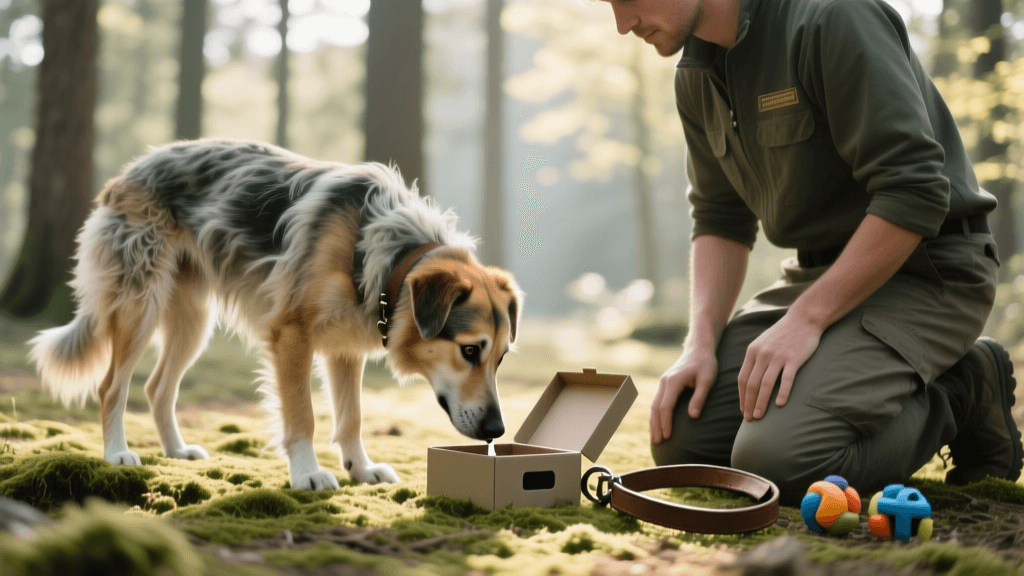
- Gather 5 to 10 identical cardboard boxes (shoe boxes work perfectly) and place them randomly around a quiet room.
- With your dog out of the room, place a strong-smelling treat or a favorite scent-infused toy inside just one box. Leave the flaps open.
- Bring your dog into the room and give a release cue like 'Find it.'
- When they locate the correct box and eat the treat, offer calm, low-pitched verbal praise. Avoid loud clapping or high-pitched excitement, which can startle a nervous rescue.
Setting Up Your 2026 Scent Work Environment
Understanding your dog also means understanding what disrupts their primary sense. Veterinary behaviorists aligned with Fear Free Pets strongly advise pet owners to audit their home environments for olfactory pollutants. In 2026, we know that strong chemical cleaners, particularly those containing bleach, ammonia, or synthetic citrus oils, can cause microscopic inflammation in a dog's nasal passages and create 'scent blindness' during enrichment games. To optimize your bonding sessions, switch to pet-safe, enzyme-based cleaners and ensure the room is well-ventilated but free from overwhelming drafts that scatter scent cones too rapidly for a beginner dog to track.
Reading Your Dog's Scent Body Language
A crucial part of relationship building is learning to read your dog's subtle communication signals during scent work. When a dog is happily engaged in olfactory processing, their body language shifts dramatically from a state of fear to a state of flow.
Signs of a Happy, Bonded Sniffing Dog:
- The 'Sniff-Hold' Pattern: You will notice a rhythmic breathing pattern—rapid, shallow sniffs followed by a long, deep exhale. This exhale is a physiological sign of stress release.
- Soft Eyes and Relaxed Ears: The facial muscles relax, and the ears will hold a neutral or slightly back position, indicating comfort rather than fear.
- Sweeping Tail Carriage: Even in breeds with naturally low tail carriages, you will see a loose, sweeping wag that originates from the base of the spine, not just a stiff wag at the tip.
- Leaning In: After finding a treat, a dog that trusts you will often lean their body weight against your leg or look up at you with a soft expression, checking in to see if you have more 'scent puzzles' for them.
Conclusion: Patience and the Power of the Nose
Bonding with an anxious rescue dog is not a sprint; it is a marathon of trust-building micro-interactions. By shifting your focus from traditional, visual-based obedience to the rich, invisible world of scent, you speak to your dog in their native language. Scent work removes the pressure of performance and replaces it with the joy of discovery. As you continue to facilitate these olfactory games throughout 2026 and beyond, you will watch your fearful rescue transform into a confident, connected companion who views you not just as a provider of food, but as the ultimate partner in a fascinating, scent-filled world.
robin-maitland
All our authors care for dogs every day — read more of their work on the authors page.