Best Puppy Breeds For Remote Workers In 2026: Top 5
Discover the best puppy breeds for remote workers in 2026. Learn how breed psychology, independence, and energy levels match your work-from-home lifestyle.
The Psychology of the Work-From-Home Dog
As we navigate the evolving corporate landscape of 2026, remote and hybrid work models have permanently reshaped our daily routines. For dog owners, this means the home office is no longer just a place for Zoom calls and deep work; it is a shared den. However, not all dogs are psychologically equipped for the unique environment of a home office. Understanding your dog's breed instincts, energy thresholds, and attachment styles is critical to maintaining both your productivity and your puppy's mental well-being.
The fundamental challenge of the work-from-home (WFH) lifestyle is the constant proximity between human and canine. While this fulfills a dog's pack-oriented social needs, it can inadvertently trigger hyper-attachment. When a dog becomes overly reliant on your continuous physical presence, simple errands or mandatory in-office days can lead to severe distress. Therefore, selecting a puppy whose innate psychological profile aligns with your work habits is the first step toward a harmonious household.
Why Breed Instincts Dictate WFH Success
To understand why certain breeds thrive in a home office while others struggle, we must look at their ancestral jobs. Dogs were selectively bred for specific tasks, and those genetic blueprints remain active today, regardless of whether they live in a city apartment or a suburban home.
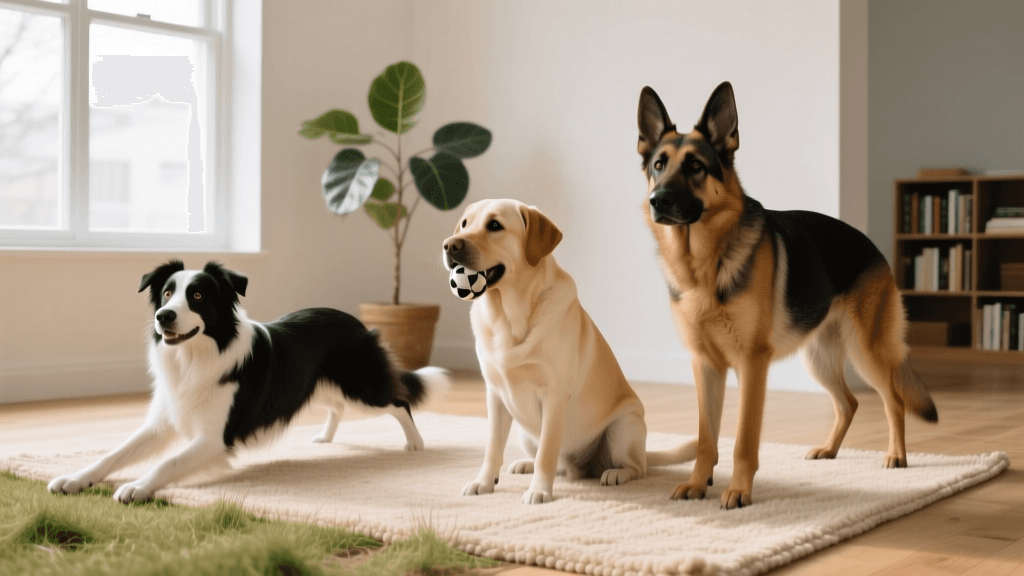
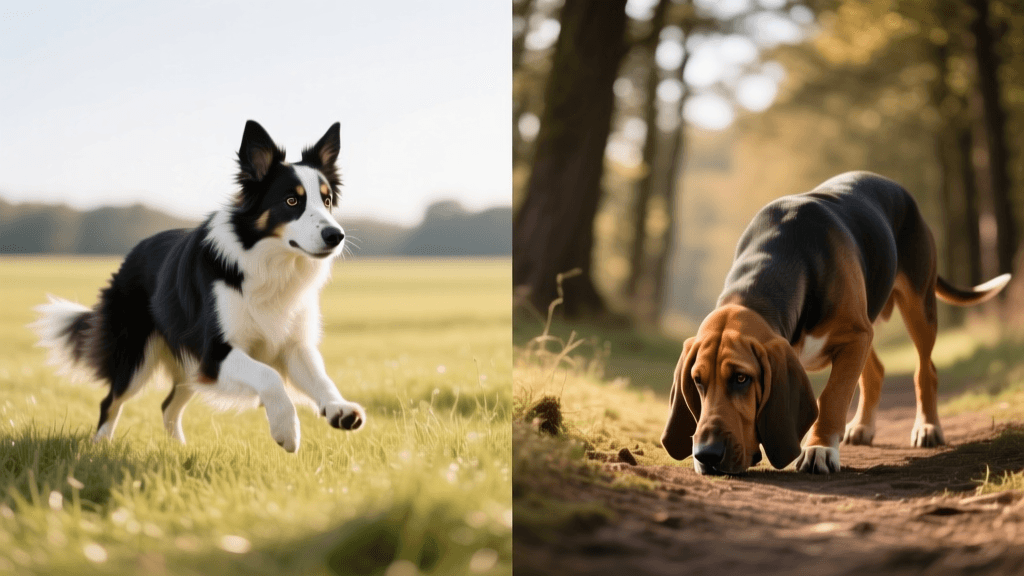
For example, herding breeds like Border Collies or Australian Shepherds possess a high-motion sensitivity instinct. In a home office, this can manifest as pacing, whining, or even nipping at children or other pets moving through the room. Similarly, guardian breeds may feel compelled to alert-bark at every delivery driver or neighbor passing by your window, shattering your concentration. Conversely, breeds developed for companionship or low-energy observation tend to view the home office as a secure, relaxing den, making them ideal WFH partners.
Top 5 Puppy Breeds for Remote Workers in 2026
1. The Shiba Inu: The Independent Thinker
Often described as 'cat-like,' the Shiba Inu is a basal breed with a deeply independent psychological profile. Unlike highly biddable gundogs that constantly seek human direction, Shibas are content to share a room with you without demanding continuous physical contact. They are fastidiously clean, relatively quiet, and perfectly happy to nap on a nearby dog bed while you tackle your spreadsheet. Their independence makes them highly resilient to separation anxiety if you need to step away for a co-working session.
2. The Greyhound: The Sprint-and-Snooze Professional
Despite their reputation as racing athletes, Greyhounds are famously known as '45-mph couch potatoes.' Their physiology is built for short, anaerobic sprints rather than aerobic endurance. Psychologically, they do not possess the high-strung, continuous drive of a terrier. After a brisk 20-minute morning walk, a Greyhound will happily sleep for up to 18 hours a day, making them an incredibly unobtrusive presence during long virtual meetings.
3. The Basset Hound: The Low-Decibel Lounger
Bred as scent hounds to track small game at a slow pace, the Basset Hound is driven by olfactory stimulation rather than visual motion. This means they are far less likely to react to visual triggers outside your home office window. Their low energy levels and stubborn, laid-back temperament mean they prefer to anchor themselves to a soft rug beneath your desk. While they can be vocal if left alone for long periods, their indoor demeanor is exceptionally calm.
4. The Cavalier King Charles Spaniel: The Empathetic Velcro Dog
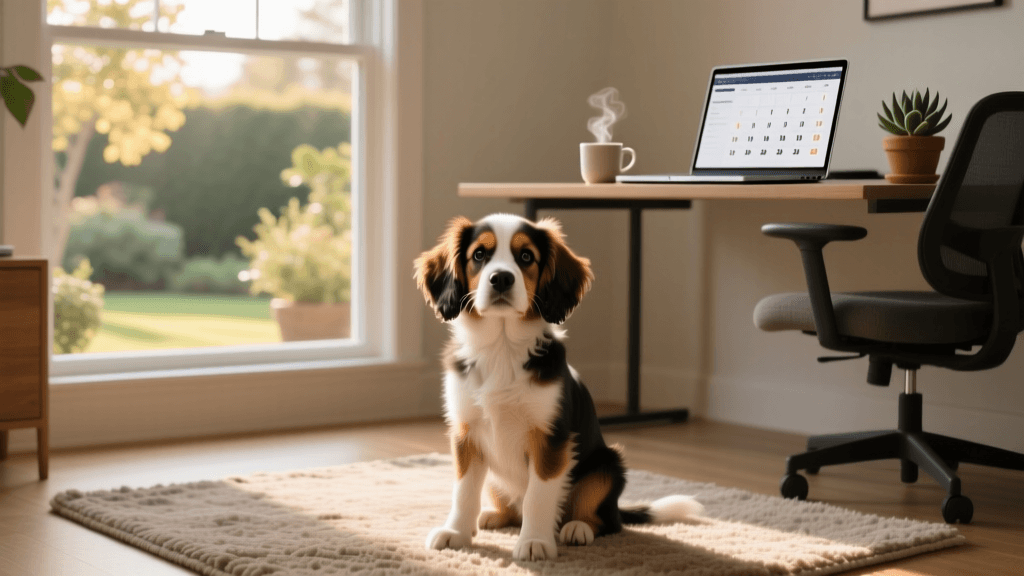
If your ideal workday involves a dog resting its chin on your foot while you type, the Cavalier is the ultimate choice. Bred exclusively for centuries to be companion lap-warmers, their psychology is entirely centered around human bonding. They are highly empathetic and will mirror your calm energy during stressful workdays. However, remote workers must be proactive about training them to be alone, as their intense 'velcro' tendencies make them prone to separation anxiety.
5. The Bichon Frise: The Adaptable Office Cheerleader
The Bichon Frise was developed to be a cheerful, non-aggressive companion to nobility and sailors alike. Psychologically, they lack territorial guarding instincts, meaning they rarely nuisance-bark at doorbells or passing cars. They are highly adaptable, thrive on positive reinforcement, and their low-shedding coats keep your home office furniture clean. They require moderate mental stimulation but are easily satisfied with a puzzle toy while you work.
WFH Breed Compatibility Comparison Chart
| Breed | Independence Level | Bark Factor | Energy / Exercise Need | Best WFH Trait |
|---|---|---|---|---|
| Shiba Inu | High | Low | Moderate | Respects boundaries; low separation anxiety risk. |
| Greyhound | Moderate | Very Low | Low (Indoor) | Sleeps through long meetings; zero pacing. |
| Basset Hound | Moderate | Moderate | Low | Unbothered by visual distractions outside. |
| Cavalier King Charles | Very Low | Low | Moderate | Provides deep emotional support and grounding. |
| Bichon Frise | Low | Low | Moderate | Non-territorial; highly adaptable to schedule changes. |
Managing Separation Anxiety in a Hybrid World
Even the most independent breeds can develop maladaptive behaviors if their environment is not managed correctly. In 2026, with many companies enforcing hybrid schedules or requiring occasional travel, your puppy must learn that your absence is temporary and safe. According to the ASPCA, separation anxiety is triggered when a dog becomes hyper-attached to a specific guardian and panics when isolated.
To prevent this, remote workers must practice 'Departure Desensitization.' This involves putting on your shoes, picking up your keys, and leaving the house for five minutes, gradually increasing the duration over several weeks. The Humane Society emphasizes that making departures and arrivals incredibly boring—without emotional greetings or goodbyes—helps normalize your comings and goings in the dog's mind.
Furthermore, the American Kennel Club recommends utilizing crate training not as a punishment, but as a psychological safe space. When a dog views their crate as a secure den, your absence becomes a cue to rest rather than a trigger for panic.
Setting Up Your 2026 Home Office for Canine Enrichment
A successful WFH setup requires more than just an ergonomic chair; it requires environmental enrichment tailored to your dog's instincts. When you are in deep focus mode and cannot engage with your puppy, you must provide outlets for their natural behaviors.
- For Scent Hounds (Basset Hounds): Utilize snuffle mats or scatter-feeding techniques on a designated rug. Engaging their olfactory system tires them out mentally much faster than physical exercise.
- For Companion Breeds (Cavaliers, Bichons): Use long-lasting lick mats frozen with dog-safe bone broth. The repetitive licking action releases endorphins in the canine brain, promoting a state of calm relaxation while you work.
- For Independent Breeds (Shibas): Provide durable, interactive puzzle feeders that require problem-solving to access high-value treats, satisfying their need for mental autonomy.
Additionally, modern 2026 smart home integrations, such as AI-driven pet cameras that detect stress-whining and automatically dispense calming pheromones or treats, can help monitor and manage your dog's anxiety levels when you are forced to step away from your home office.
Conclusion
Choosing the right puppy for a remote work lifestyle requires looking beyond a cute face and understanding the deep-seated psychological instincts that drive canine behavior. By matching your work habits with a breed's natural energy levels, independence, and social needs, you can foster a peaceful, productive home office. Whether you opt for the stoic independence of a Shiba Inu or the empathetic warmth of a Cavalier, prioritizing breed psychology and proactive separation training will ensure both you and your dog thrive in the modern WFH era.
tom-renshaw
All our authors care for dogs every day — read more of their work on the authors page.