Top Cooling Vests for Working Dogs in 2026 Reviewed
Discover the best 2026 cooling vests and hydration protocols for working dogs. Compare Ruffwear and Hurtta gear to prevent heat stress on the job.
The Escalating Threat of Heat Stress in Working and Service Dogs
As global temperatures continue to break records into 2026, the operational environments for search and rescue (SAR) dogs, guide dogs, and tactical working dogs have become increasingly hazardous. Unlike humans, working dogs cannot rely on widespread sweat glands to dissipate heat. Instead, they depend on panting and vasodilation in their paw pads and ears. When a working dog is deployed in high-heat, high-humidity environments, their core temperature can rapidly exceed the safe threshold of 103°F (39.4°C), leading to catastrophic cellular damage and heatstroke. According to the American Kennel Club, heatstroke in dogs is a life-threatening emergency that requires immediate intervention, making proactive thermal management an absolute necessity for handlers in the field.
Physiological Warning Signs of Canine Heat Exhaustion
Before a dog reaches the critical stage of heatstroke, they will exhibit signs of heat exhaustion. Handlers must be trained to recognize these subtle physiological shifts during active deployments to prevent irreversible organ damage:
- Excessive, frantic panting: Panting that does not slow down when the dog is at rest or shows a harsh, raspy auditory tone.
- Brick-red or pale gums: Indicating poor circulation, systemic shock, or impending cardiovascular collapse.
- Delayed capillary refill time: Pressing on the gums should result in a return to normal pink color within 1.5 seconds; longer indicates severe cardiovascular stress.
- Thick, ropey saliva: A primary indicator of advanced dehydration and reduced salivary gland function.
- Lethargy or disorientation: The dog may ignore trained commands, stare blankly, or stumble, indicating neurological impact from hyperthermia.
For comprehensive guidelines on recognizing and treating these symptoms, the ASPCA's summer safety resources provide excellent foundational knowledge for both civilian and professional handlers managing active dogs.
2026 Gear Review: Top Cooling Vests for Active Duty Dogs
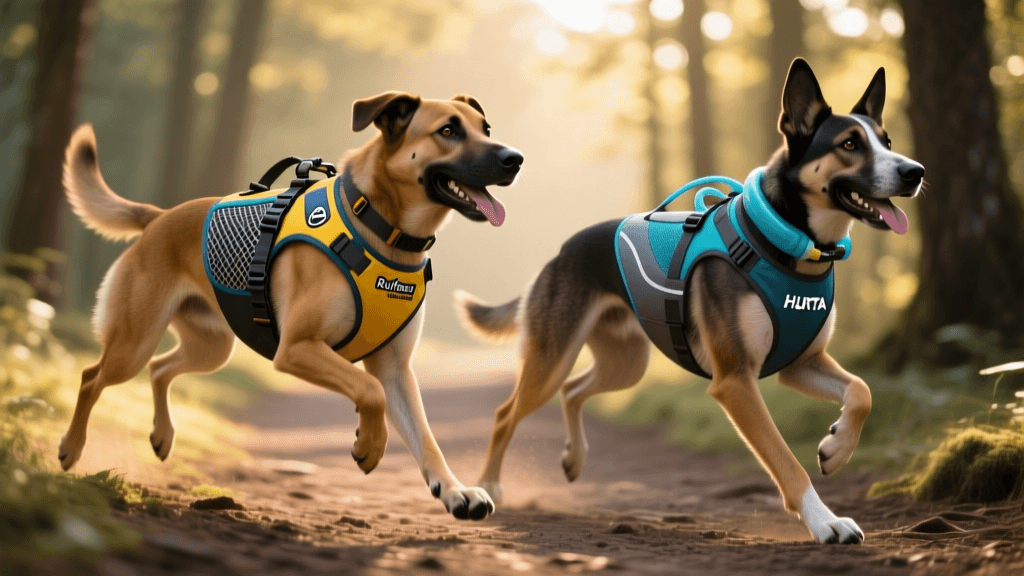
To combat hyperthermia, the working dog gear market has seen significant innovations in evaporative cooling technology for 2026. Below, we review the top three cooling systems currently trusted by SAR and tactical handlers worldwide.
Ruffwear Swamp Cooler Evo (2026 Edition)
The 2026 iteration of the Ruffwear Swamp Cooler Evo remains a staple for field operatives. Utilizing a three-layer construction, the vest features a dry outer layer that reflects solar radiation, a middle absorbent layer that stores water for evaporative cooling, and a comfortable mesh inner lining. The integrated harness compatibility makes it ideal for guide dogs and SAR dogs that require a working harness without the bulk of multiple overlapping straps. Priced at approximately $95, it offers excellent core coverage but leaves the underbelly exposed, which is a consideration for dogs traversing hot pavement or dense, sun-baked brush.
Hurtta Cooling Vest (2026 Update)
Hurtta’s 2026 Cooling Vest is engineered for maximum thermal regulation, specifically targeting the dog's vital organs. Unlike standard back-only vests, Hurtta’s design wraps around the chest and underbelly, protecting the heart and lungs. The specialized cooling fabric maintains a lower temperature for up to 4 hours in low-humidity environments before requiring re-wetting. At $110, it is an investment piece, but its comprehensive coverage makes it the superior choice for medical alert dogs and mobility assistance dogs operating in extreme urban heat islands where ground radiation is intense.
Non-stop dogwear Freemotion Cooling Harness
For working dogs engaged in continuous forward motion, such as sled dogs in summer training or tactical tracking dogs, the Non-stop dogwear Freemotion Cooling Harness integrates cooling technology directly into a pulling harness. Priced at $145, it utilizes a specialized hydrophilic material that draws moisture away from the skin while maintaining structural integrity for pulling tasks. It is less effective for stationary or slow-moving service dogs but unparalleled for high-exertion working breeds covering long distances.
Comparative Analysis: 2026 Cooling Gear Specifications
| Product | Coverage Area | Evaporation Duration | Weight (Dry) | Best Use Case |
|---|---|---|---|---|
| Ruffwear Swamp Cooler Evo | Back & Sides | 2-3 Hours | 8.5 oz | SAR, Guide Dogs, Hiking |
| Hurtta Cooling Vest | Full Torso & Chest | 3-4 Hours | 11.2 oz | Urban Service Dogs, Heat Sensitivity |
| Non-stop Freemotion Cooling | Back & Harness Points | 1.5-2 Hours | 14.0 oz | Tracking, Pulling, High-Exertion |
Advanced Hydration and Electrolyte Protocols for 2026
Evaporative cooling vests are only half of the thermal management equation; internal hydration is equally critical. In 2026, veterinary sports medicine specialists emphasize that plain water is insufficient for working dogs sweating out essential minerals through panting and paw pad secretions. Handlers must utilize canine-specific electrolyte supplements to maintain cellular function and prevent muscle cramping.
Products like K9 Power Go Dog and Bully Max Canine Electrolyte have been reformulated for 2026 to include optimized ratios of sodium, potassium, and magnesium, alongside taurine for cardiovascular support during stress. Never use human sports drinks, as the high sugar content and artificial sweeteners (like xylitol) are highly toxic to canines.
The Working Dog Hydration Schedule:
- Pre-Deployment (2 hours prior): Offer 16 oz of water mixed with a half-dose of electrolytes to ensure cellular saturation without causing gastric sloshing.
- Active Deployment: Provide 4 to 6 oz of electrolyte-enhanced water every 20 minutes. Avoid allowing the dog to gulp large volumes rapidly, which significantly increases the risk of gastric dilatation-volvulus (bloat).
- Post-Deployment: Offer free-choice plain water and a recovery meal rich in easily digestible proteins and complex carbohydrates to replenish glycogen stores safely.
Tactical Work/Rest Cycles and Core Temp Monitoring
No cooling vest can override the biological limits of a working dog. Handlers must enforce strict work/rest cycles. The standard operational protocol in high-heat environments is the 20/10 rule: 20 minutes of active searching or guiding, followed by 10 minutes of mandatory shade rest, hydration, and cooling. Additionally, handlers must account for environmental thermal radiation. Asphalt and concrete can reach temperatures exceeding 150°F (65°C) on a 95°F day, capable of causing severe paw pad burns within seconds. In 2026, the use of protective canine booties, such as the Ruffwear Polar Trex or specialized summer mesh booties, is highly recommended when operating on urban surfaces, even when cooling vests are deployed.
Furthermore, relying on tactile assessment (feeling the dog's ears or belly) is scientifically inaccurate. Handlers must carry a fast-read digital veterinary rectal thermometer. If a dog’s core temperature reaches 104°F (40°C), all work must cease immediately, and active cooling protocols—such as applying cool (not ice-cold) water to the paw pads, groin, and axillary regions—must be initiated while transporting the dog to emergency veterinary care. Ice water should never be used, as it causes peripheral vasoconstriction, trapping lethal heat in the core organs.
Post-Deployment Recovery and Holistic Wellness
The physical toll of navigating hot environments extends beyond immediate heat stress. The extra weight of wet cooling vests, combined with the biomechanical strain of working in high temperatures, accelerates joint fatigue. Incorporating holistic wellness routines post-deployment is vital for the longevity of service and working dogs. Handlers should implement a 15-minute cool-down walk at a slow pace to gradually lower the heart rate, followed by targeted canine massage focusing on the shoulder and hindquarter muscle groups.
Many top-tier working dog kennels now incorporate canine hydrotherapy or underwater treadmills into their weekly recovery routines. The buoyancy of the water relieves joint compression while the resistance maintains muscle tone, and the controlled water temperature actively reduces systemic inflammation. For handlers without access to specialized facilities, simple passive range-of-motion (PROM) stretches performed at home can significantly reduce delayed onset muscle soreness (DOMS) in working breeds. Additionally, daily supplementation with veterinary-recommended joint support formulas, such as Dasuquin Advanced or GlycoFlex Stage III, helps mitigate the inflammatory response triggered by heat and physical exertion. By combining cutting-edge 2026 cooling gear with rigorous hydration protocols and holistic recovery practices, handlers can ensure their working dogs remain safe, healthy, and mission-ready regardless of the rising mercury.
jonas-cole
All our authors care for dogs every day — read more of their work on the authors page.