Ruffwear vs Hurtta Cooling Vests for Service Dogs 2026
Compare the top 2026 cooling vests for working service dogs. We review Ruffwear and Hurtta gear, hydration protocols, and heat stress prevention.
The Hidden Danger of Heat Stress in Working and Service Dogs
As we navigate the extreme summer heatwaves of 2026, the health and wellbeing of working and service dogs face unprecedented challenges. Unlike pet dogs that can choose to rest in the shade when they feel overheated, working dogs—ranging from mobility assistance dogs and guide dogs to search-and-rescue canines—are driven by an intense desire to perform their tasks. This incredible work ethic, while life-changing for their handlers, can be incredibly dangerous in high-temperature environments. A working dog's task-focus often overrides their biological warning signs, meaning they will continue to brace, guide, or track until they reach the point of physical collapse.
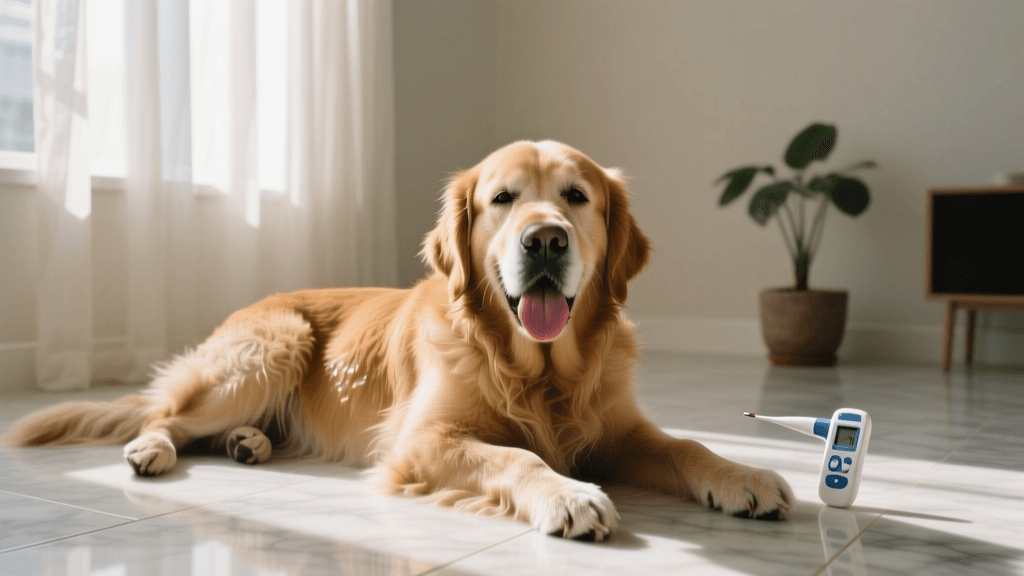
According to the American Kennel Club, a dog's normal body temperature rests between 101 and 102.5 degrees Fahrenheit. Once a dog's internal temperature surpasses 104 degrees, they enter the danger zone for heatstroke, which can cause catastrophic organ failure, brain damage, and even death within minutes. For handlers of working and service dogs, proactive thermal management is not just a comfort measure; it is a critical, life-saving necessity.
Canine Thermoregulation vs. Task Drive
Dogs do not possess the widespread eccrine sweat glands that humans use to cool down. Instead, they rely primarily on panting to facilitate evaporative cooling from their respiratory tracts, alongside minimal sweating through their paw pads. When a mobility dog is actively bracing against a handler's weight, or a detection dog is executing high-speed perimeter sweeps, their heavy panting is often insufficient to offset the massive amount of metabolic heat generated by their working muscles.
To combat this in 2026, veterinary sports medicine experts strongly recommend the use of specialized evaporative cooling gear, structured hydration protocols, and strict work-rest cycles. Below, we break down the two most trusted cooling vests on the market for working dogs: the Ruffwear Swamp Cooler Zip and the Hurtta Cooling Vest.
2026 Gear Showdown: Ruffwear Swamp Cooler Zip vs. Hurtta Cooling Vest
When outfitting a service dog, gear must be durable, non-restrictive, and compatible with specialized working equipment. The two industry leaders in canine cooling technology approach the problem with slightly different design philosophies.
Ruffwear Swamp Cooler Zip: The Integrated Solution
The Ruffwear Swamp Cooler Zip utilizes a sophisticated three-layer construction. The outer layer is a highly reflective polyester that deflects direct solar radiation. The middle layer is an absorbent felt matrix that stores water for evaporative cooling. The innermost layer is a comfortable, moisture-wicking mesh that transfers the cooling effect directly to the dog's core.
For service dogs, the 'Zip' model is particularly notable because it integrates a leash portal and a built-in harness system. This means it can function as both a cooling layer and a walking harness. However, for mobility assistance dogs who require a custom rigid-pull harness or a specialized guide dog handle, the built-in harness of the Swamp Cooler Zip can create bulk and interfere with the dog's primary working equipment. It is best suited for psychiatric service dogs, hearing dogs, or detection dogs that only require a standard dorsal leash attachment.
Hurtta Cooling Vest: The Harness-Friendly Alternative
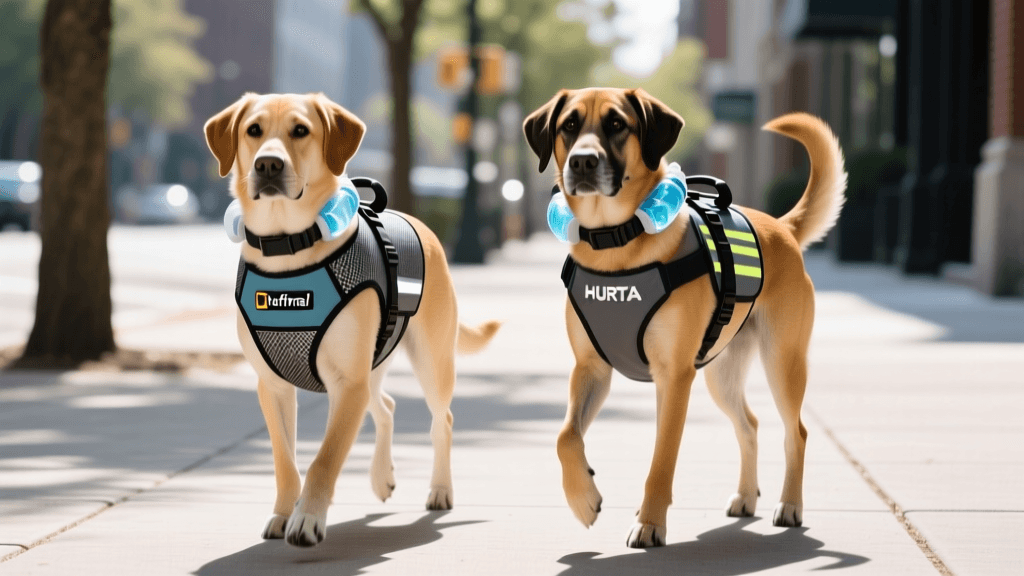
The Hurtta Cooling Vest takes a streamlined, ultra-lightweight approach. Made from a highly breathable, specialized knit fabric, it is designed to be soaked in cold water and wrung out before being placed on the dog. The Hurtta vest is incredibly thin, making it the premier choice for dogs that must wear bulky custom mobility harnesses or guide dog leather rigs. Because it adds virtually no girth to the dog's chest and back, a custom service dog harness can easily be strapped directly over the top of the Hurtta vest without chafing or altering the fit of the working gear.
Additionally, the Hurtta vest features a dedicated opening for a harness D-ring, ensuring that even if worn over a lightweight harness, the leash attachment remains fully accessible. In the intense sun of 2026, the Hurtta's light-colored, UV-reflective fabric has proven exceptionally effective at keeping the dog's core temperature stable during prolonged outdoor guiding tasks.
Feature Comparison Chart
| Feature | Ruffwear Swamp Cooler Zip | Hurtta Cooling Vest |
|---|---|---|
| Cooling Method | 3-Layer Evaporative & Reflective | Single-Layer Evaporative Knit |
| UV Protection | UPF 50+ Outer Shell | Highly Reflective Light Fabric |
| Harness Integration | Built-in Harness (May conflict with custom mobility rigs) | Worn Under Custom Harnesses (D-ring portal included) |
| 2026 Retail Price | ~$95.00 USD | ~$75.00 USD |
| Weight / Bulk | Moderate (Adds slight girth) | Ultra-Lightweight (Negligible girth) |
| Best Suited For | PSD, Hearing Dogs, Detection Dogs | Mobility Dogs, Guide Dogs, SAR |
Advanced Hydration and Electrolyte Protocols
A cooling vest is only half of the thermoregulation equation. Working dogs lose significant moisture and essential minerals through heavy panting. Providing plain water is often insufficient for canine athletes working in high heat, as it can lead to dilutional hyponatremia (water intoxication) if the dog drinks massive quantities without replacing lost sodium and potassium.
Handlers in 2026 are increasingly turning to canine-specific electrolyte supplements. Products like K9 Power Go Dog or Bully Max Performance are formulated with the correct osmolality for canine absorption. Unlike human sports drinks—which contain dangerous levels of sugar and artificial sweeteners like xylitol (which is highly toxic to dogs)—canine electrolyte powders can be mixed into a 'slurry' or 'baited water' to encourage the dog to drink and replenish simultaneously.
Actionable Tip: Train your service dog to drink on cue. During a working outing, offer a collapsible silicone travel bowl with electrolyte-enhanced water every 20 to 30 minutes. Never wait for the dog to seek out water on their own, as task-focused dogs will often ignore their thirst drive until they are already mildly dehydrated.
Pavement Temperatures and Paw Pad Protection
While we often focus on core body temperature, the paws of a working dog are in direct contact with scorching surfaces. In direct summer sunlight, asphalt and concrete can reach temperatures up to 50 degrees hotter than the ambient air. An 85°F day can easily yield pavement temperatures of 135°F, which is hot enough to cause severe contact burns, blistering, and permanent tissue damage to a dog's paw pads within 60 seconds.
The U.S. Food and Drug Administration (FDA) routinely warns pet owners about the dangers of hot pavement, but working dogs cannot simply avoid walking. To protect your service dog's paws, apply a heavy coat of paw wax, such as Musher's Secret, before heading out. For prolonged working shifts on urban concrete, invest in breathable, heavy-duty summer working booties like the Ruffwear Grip Trex. Ensure you condition your dog to wear booties in a low-stress environment long before the summer heat arrives, as the sensory change can initially distract a dog from their working tasks.
The 2026 Work-Rest Cycle Guidelines
Veterinary sports medicine guidelines updated for 2026 emphasize strict, proactive work-rest cycles for canines operating in environments where the heat index exceeds 80°F. The recommended protocol is the 15/15 Rule: for every 15 minutes of active, focused work, the dog must be given 15 minutes of mandatory rest in a shaded, well-ventilated, or air-conditioned area.
During the rest period, the cooling vest should be re-wetted with cold water, and the dog should be offered baited electrolyte water. Handlers must also monitor their dog's mucous membranes; bright red or tacky, dry gums are early indicators of heat exhaustion that require immediate cessation of all work and active cooling measures, such as applying cool (not ice-cold) water to the dog's groin, armpits, and paw pads.
Conclusion
The dedication of working and service dogs is unparalleled, but it is the handler's responsibility to act as the dog's biological governor. By outfitting your canine partner with the appropriate gear—whether that is the integrated Ruffwear Swamp Cooler Zip or the harness-friendly Hurtta Cooling Vest—implementing strict electrolyte hydration protocols, and adhering to structured work-rest cycles, you can ensure your dog remains safe, healthy, and capable of performing their vital duties throughout the harshest summers of 2026 and beyond.
anouk-beaumont
All our authors care for dogs every day — read more of their work on the authors page.