Best No Pull Puppy Harness Guide 2026: Stop Leash Pulling Fast
Discover how to fit and use a front-clip no pull dog harness for your puppy in 2026. Expert tips to stop leash pulling and ensure safe walks.
Mastering the First Year: The No Pull Dog Harness Advantage
Bringing a new puppy home is one of the most exciting milestones in dog ownership, but those first outdoor walks can quickly turn into a frustrating game of tug-of-war. Puppies are naturally curious, easily distracted, and completely unaware of leash etiquette. As we navigate puppy care in 2026, veterinary behaviorists and professional trainers universally agree that using a properly fitted, front-clip no pull dog harness is the most effective and humane way to teach leash manners. Unlike traditional collars that can damage a developing puppy's delicate trachea, a well-designed harness distributes pressure safely across the chest while gently redirecting forward momentum.
The Developmental Phase: Why Puppies Pull
Before we can stop the pulling, we must understand why it happens. Between the ages of 8 weeks and 6 months, puppies are in a critical socialization and developmental window. Their prey drive is awakening, their senses are overwhelmed by new smells, and they simply do not understand the physical constraint of a leash. When a puppy feels pressure on their neck from a collar, their natural opposition reflex kicks in, causing them to pull harder against the restriction. According to training guidelines published by the American Kennel Club, teaching a puppy to yield to leash pressure rather than fight it is the foundational step of loose-leash walking. A front-clip no pull dog harness bypasses the opposition reflex entirely by turning the puppy's shoulders back toward you the moment they surge forward.
The Anatomy of a True No Pull Dog Harness
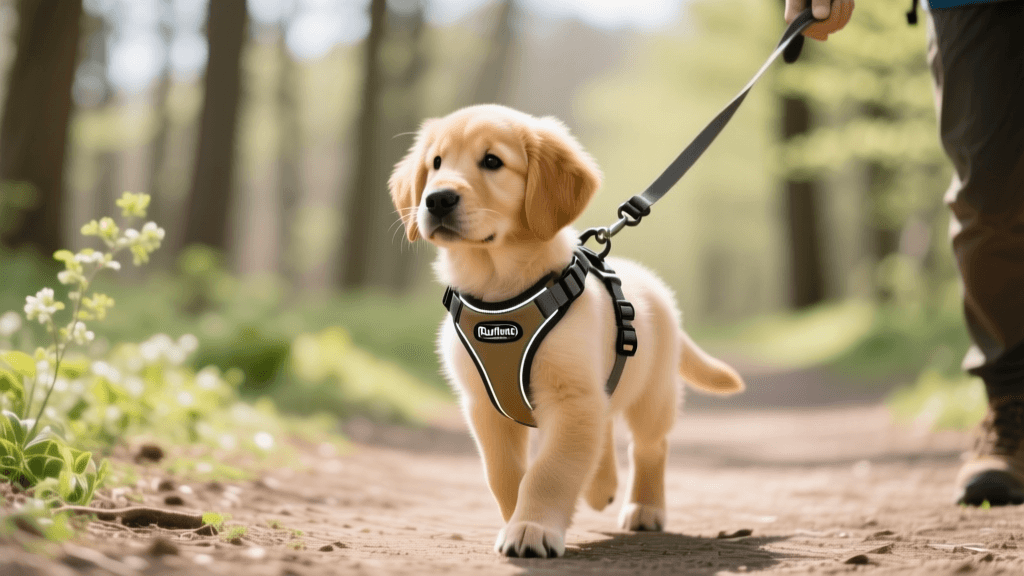
Not all harnesses are created equal. The market is flooded with back-clip harnesses that, while safe for car rides or hiking with trained dogs, actually encourage pulling. Think of a sled dog: they wear back-clip harnesses specifically designed to maximize forward pulling power. For a puppy in training, you need a harness with a front D-ring located on the sternum (chest). When the puppy pulls, the front attachment point gently pivots their center of gravity sideways, effectively neutralizing their forward momentum without causing pain or injury. Many premium 2026 models also feature a dual-clip system, allowing you to transition to a back-clip once your puppy has fully mastered loose-leash walking.
Top Harness Picks for Growing Puppies in 2026
When selecting a harness for a growing puppy, adjustability and lightweight materials are paramount. Puppies grow in sudden spurts, and a heavy, bulky harness can impede their natural gait and cause chafing. Here are the top recommendations for 2026:
1. Ruffwear Front Range Dog Harness (2026 Update)
The 2026 iteration of the Ruffwear Front Range remains a gold standard for puppy owners. Priced at approximately $45, it features an ultra-lightweight, breathable foam that prevents overheating during summer socialization walks. The front chest clip is reinforced with webbing specifically designed to withstand the sudden lunges of an excitable terrier or retriever mix. It offers four points of adjustment, making it easy to accommodate a puppy's rapidly changing barrel chest.
2. 2 Hounds Design Freedom No-Pull Dog Harness
Retailing around $38, this harness is highly recommended by the ASPCA and various veterinary behaviorists for its unique velvet-lined chest strap. The velvet lining prevents the armpit chafing that is notoriously common in short-coated puppies like Boxers and Vizslas. It also utilizes a patented martingale loop on the back, which provides a gentle, humane tightening sensation when the puppy pulls, mimicking the corrective feedback of a mother dog.
Step-by-Step Fitting Guide for Puppy Comfort
A no pull dog harness is only effective if it fits correctly. A poorly fitted harness can cause gait abnormalities, shoulder restriction, and severe chafing. Follow these steps every two weeks during your puppy's first year:
- The Neck Opening: Slip the neck loop over your puppy's head. You should be able to slide exactly two fingers flat between the harness and the back of their neck. Any looser, and they can back out of it; any tighter, and it will restrict breathing.
- The Girth Straps: Buckle the straps behind the front legs. Again, apply the two-finger rule. Ensure the straps are sitting high enough so they do not rub against the puppy's elbows when they walk.
- The Chest Plate Alignment: The front D-ring must sit perfectly centered on the puppy's sternum (breastbone). If it is pulled to the left or right, tighten the opposite girth strap until the D-ring is centered.
- The Gait Check: Watch your puppy trot from the front and the side. Their front legs should have a full, unrestricted range of motion. If you notice a shortened stride or 'paddling' of the front paws, the chest plate is sitting too high or is too tight.
4-Week Positive Reinforcement Leash Training Plan
Equipment alone will not train your puppy; it only manages the behavior. To achieve a permanent loose-leash walk, pair your front-clip no pull dog harness with this 4-week positive reinforcement protocol, heavily endorsed by the Humane Society.
Week 1: Indoor Acclimation and the 'Treat Magnet'
Do not start outside. Puppies are too distracted by the outdoors to learn new mechanics. Put the harness on your puppy indoors and let them wear it for 10-minute intervals while playing. Once comfortable, attach the leash to the front clip. Hold a high-value treat (like boiled chicken or freeze-dried liver) at your knee, right where you want your puppy's head to be. Walk forward, luring them with the 'treat magnet.' Reward them every three steps for staying in the 'heel' position.
Week 2: The 'Red Light, Green Light' Game
Move to a fenced backyard or a quiet hallway. Begin walking at a normal pace. The absolute millisecond the leash goes taut and the front clip engages, stop walking completely (Red Light). Do not yank the leash; simply become a statue. Wait for your puppy to turn their head back to look at you or take a step backward to create slack in the leash. The moment the leash is loose, say 'Yes!' and reward with a treat, then resume walking (Green Light).
Week 3: The U-Turn Method
Introduce this in a low-distraction neighborhood. When your puppy surges forward to sniff a fire hydrant or chase a leaf, do not stop. Instead, immediately turn 180 degrees and walk the opposite direction, making a cheerful kissing sound to encourage them to follow. When they catch up to you and the leash is loose, reward heavily. This teaches the puppy that pulling forward actually results in moving further away from their goal, while staying near your leg gets them rewards.
Week 4: Adding Distractions and the 'Check-In'
Begin walking near mild distractions (e.g., a neighbor watering their lawn). Before your puppy has the chance to pull, ask for a 'check-in.' Say their name, and when they make eye contact, mark the behavior with a clicker or a 'Yes!' and toss a treat on the ground. This builds a habit of voluntary engagement with you, even in stimulating environments.
Harness Types Comparison Chart
| Harness Type | Best Use Case | Effect on Pulling | Suitability for Puppies |
|---|---|---|---|
| Front-Clip No Pull | Leash training, urban walking | Redirects momentum sideways, stops pulling | Highly Recommended |
| Back-Clip Standard | Car travel, hiking, trained dogs | Encourages pulling (opposition reflex) | Not recommended for training |
| Head Halter | Reactive adult dogs, giant breeds | Steers the head, requires acclimation | Not recommended (neck injury risk) |
| Tightening / Slip | Aversive training (discouraged) | Causes pain/discomfort to stop pulling | Never use on puppies |
Common Mistakes to Avoid in 2026
Even with the best front-clip no pull dog harness, owners frequently make errors that undermine their training progress. First, avoid using retractable leashes during the training phase. Retractable leashes teach puppies that pulling yields more leash length, directly contradicting your training efforts. Stick to a standard 4-to-6-foot biothane or leather leash. Second, never leave a harness on an unsupervised puppy. Puppies are notorious chewers, and a chewed girth strap can fail during a critical moment near traffic. Finally, be patient. The neurological pathways required for impulse control take time to develop. Consistent, short 10-minute training sessions are vastly superior to hour-long frustrating marches around the block. By combining the mechanical advantage of a 2026 front-clip harness with positive reinforcement, you will transform your puppy into a polite, confident walking companion.
beth-carrasco
All our authors care for dogs every day — read more of their work on the authors page.