Best No-Pull Puppy Harness 2026: Ruffwear Front Range Guide
Discover how to fit and train your puppy with the Ruffwear Front Range no-pull harness in 2026. Stop leash pulling and enjoy safe, happy walks.
The Importance of Early Leash Training in 2026
Welcoming a new puppy into your home is one of life’s greatest joys, but those first few walks can quickly turn into a frustrating tug-of-war. As we navigate the evolving landscape of dog ownership in 2026, veterinary behaviorists and professional trainers are more unified than ever on one crucial topic: how we introduce puppies to leash walking sets the foundation for a decade of safe, enjoyable outdoor adventures. Puppies are naturally curious, easily distracted, and prone to sudden bursts of energy. When a young dog pulls on a leash, the physical and psychological impacts can be significant, making the right equipment absolutely essential.
For growing puppies, traditional flat collars can pose severe risks to their delicate necks and developing tracheas. This is where a high-quality, front-clip no-pull harness becomes a vital tool in your puppy care arsenal. In this comprehensive guide, we will explore why the Ruffwear Front Range Harness remains a top-tier choice for puppy owners in 2026, how to properly fit it to a rapidly growing dog, and the exact training protocols you need to teach your puppy to walk politely by your side.
Why a Front-Clip No-Pull Harness is Essential for Puppies
Before diving into specific brands, it is critical to understand the anatomy of a puppy. A dog’s neck houses the trachea, esophagus, and major blood vessels. When a puppy pulls against a flat collar, the concentrated pressure can lead to tracheal collapse, neck strain, and even long-term spinal issues. According to the American Kennel Club (AKC), utilizing a harness distributes the force of a pull across the dog’s chest and shoulders, which are much better equipped to handle the stress.
Furthermore, a front-clip harness offers a distinct mechanical advantage for training. When the leash is attached to the ring on the puppy's chest, any forward pulling naturally redirects the dog's momentum back toward the handler. This gentle redirection interrupts the pulling behavior without causing pain or fear, aligning perfectly with the modern, force-free training methodologies that dominate the canine behavioral science community in 2026.
Deep Dive: The Ruffwear Front Range Harness for Growing Pups
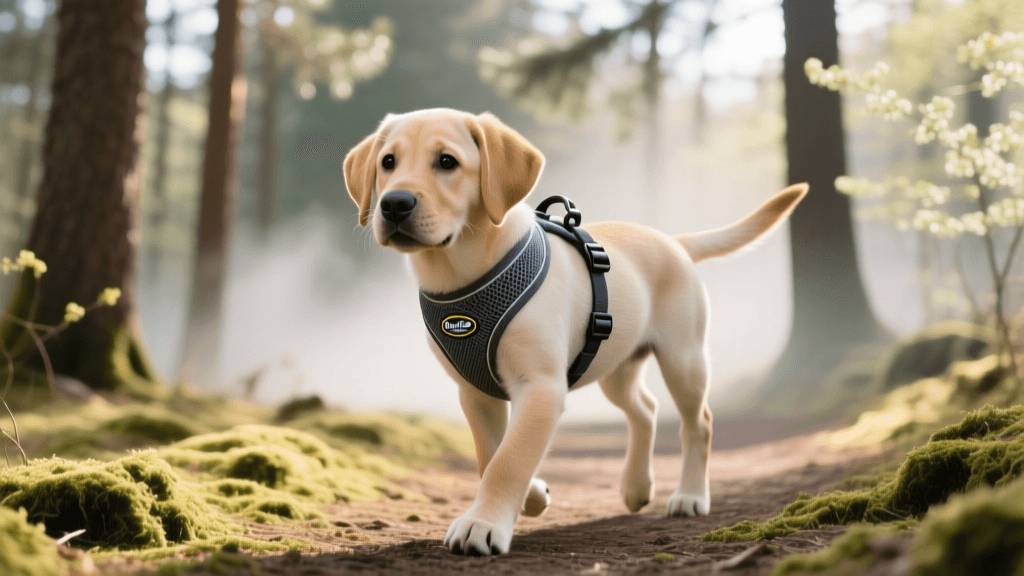
While the market is flooded with cheap, nylon no-pull harnesses, the Ruffwear Front Range Harness stands out for its durability, ergonomic design, and puppy-friendly features. The 2026 iteration of this beloved harness continues to utilize high-quality, recycled materials, ensuring a smaller environmental paw-print while maintaining the rugged durability Ruffwear is known for.
Here is why the Front Range is particularly well-suited for puppies:
- Four Points of Adjustment: Puppies grow in unpredictable spurts. The Front Range features two neck adjustments and two girth adjustments, allowing for a highly customized fit that can accommodate a growing ribcage and broadening chest over several months.
- Dual Leash Attachments: It includes a reinforced front webbing loop (for no-pull training) and a back V-ring (for casual walks or attaching a ID tag). This versatility means you won't need to buy a second harness once your puppy masters loose-leash walking.
- Plush Padding: The closed-cell foam padding protects a puppy’s sensitive skin and developing coat from chafing, which is a common issue with cheaper, unpadded harnesses.
- Reflective Trim: Early morning and late evening socialization walks are safer with built-in reflectivity, a must-have for urban and suburban puppy owners.
As of early 2026, the Ruffwear Front Range retails for approximately $45 to $50, making it a premium but accessible investment for your puppy's health and training.
Step-by-Step Fitting Guide for Your Puppy
An improperly fitted harness can cause chafing, restrict shoulder movement, or allow the puppy to slip out and bolt into traffic. VCA Animal Hospitals emphasizes that proper fit is just as important as the training itself. Follow these steps to ensure a safe, comfortable fit:
1. Measure the Girth, Not Just the Weight
Never buy a harness based solely on your puppy’s weight or breed estimate. Use a soft tailor’s measuring tape to measure the widest part of your puppy’s ribcage, just behind the front legs. This is the girth. If your puppy measures 22 inches, they fall into the Ruffwear Small size (22-27 inches).
2. The Over-the-Head and Clip Method
Slip the harness over your puppy’s head. Puppies can be wiggly, so use a high-value treat (like boiled chicken or a lick mat) to keep their nose pointed forward. Once the head loop is on, bring the girth straps around their sides and clip the two side-release buckles.
3. The Two-Finger Rule
This is the golden rule of harness fitting. You should be able to comfortably slide two fingers flat between the harness straps and your puppy’s body at every point of contact.
- Too tight: If you cannot fit two fingers, the harness will restrict breathing and cause severe chafing.
- Too loose: If you can fit three or more fingers, or if the harness shifts side-to-side when your dog moves, it is too loose and poses an escape risk.
4. Check the Shoulder Clearance
Ensure the front padding sits below the trachea and does not rub against the puppy’s armpits. The shoulder straps should not impede the natural forward extension of your puppy's front legs.
The "Stop and Redirect" Training Protocol
Equipping your puppy with a no-pull harness is only half the battle; you must also teach them how to walk on it. The front-clip ring is a training tool, not a permanent crutch. Here is a highly effective, reward-based training protocol to use in 2026:
- Attach the Leash to the Front Ring: Use a standard 4-to-6-foot flat leash. Avoid retractable leashes entirely during this phase, as they teach the dog that pulling yields more distance.
- Mark and Reward the "Sweet Spot": Hold a treat near your leg at your puppy's nose level. Take three steps forward. If the puppy stays by your side without pulling, mark the behavior with a clicker or a verbal "Yes!" and deliver the treat right at your pant seam.
- Be a Tree: The moment the leash goes tight and the puppy pulls, stop walking immediately. Do not yank the leash; simply become an immovable object. The front-clip will gently turn the puppy back toward you.
- Reset and Redirect: Wait for the puppy to look back at you or take a step toward you to create slack in the leash. Mark that slack, invite them back to your side, and resume walking.
"Consistency is the cornerstone of leash training. If a puppy learns that pulling sometimes gets them to the fire hydrant, they will continue to pull. The front-clip harness combined with the 'be a tree' method removes the reward of forward momentum when the leash is tight." — Canine Behavioral Science Guidelines, 2026.
Harness Types Comparison Chart for Puppies
To understand why the front-clip no-pull design is superior for early training, review this comparison of common puppy walking equipment:
| Equipment Type | Leash Attachment | Pulling Control | Trachea Safety | Best Use Case for Puppies |
|---|---|---|---|---|
| Flat Nylon Collar | Back of neck | Poor | Low (High Risk) | ID tags only; not for leash walking |
| Back-Clip Harness | Upper back | Moderate | High | Car rides, casual walks for trained dogs |
| Front-Clip Harness | Chest (Sternum) | Excellent | High | Active leash training & pulling correction |
| Head Halter | Snout | Excellent | High | Large breed adolescents; requires acclimation |
Safety Precautions and Common Mistakes
Even with the best gear, puppy owners in 2026 frequently make a few avoidable mistakes. Keep these safety tips in mind to protect your growing dog:
Never Leave the Harness On 24/7
Harnesses are for walks and training sessions only. Leaving a harness on an unsupervised puppy can lead to disastrous consequences. Puppies chew, and if they chew the straps, they can ingest nylon or plastic buckles, leading to life-threatening intestinal blockages. Furthermore, a loose harness can catch on crate wires or furniture, posing a severe strangulation hazard.
Adjust Weekly During Growth Spurts
A harness that fit perfectly at 12 weeks may be dangerously tight by 16 weeks. Make it a habit to check the two-finger rule every single Sunday evening. Loosen or tighten the four adjustment points as needed to accommodate your puppy's rapid physical development.
Do Not Use as a Car Restraint (Unless Certified)
While the Ruffwear Front Range is excellent for walking, it is not crash-tested for vehicle safety. In the event of a sudden stop or collision, a walking harness will not adequately protect your puppy. Always use a dedicated, crash-tested canine seatbelt tether or a secured travel crate when driving with your pup.
Conclusion: Building a Foundation for Life
Investing in a high-quality no-pull harness like the Ruffwear Front Range and committing to positive reinforcement training during your puppy's first year is one of the best decisions you can make for your dog's long-term well-being. By protecting their delicate anatomy and teaching them that a loose leash equals forward movement, you are transforming chaotic, stressful walks into a rewarding bonding experience. Remember to measure carefully, adjust frequently, and practice patience. With the right tools and consistent 2026 training methods, your puppy will grow into a confident, polite, and happy walking companion.
marcus-aldridge
All our authors care for dogs every day — read more of their work on the authors page.