First-Day Essentials: Top No-Pull Dog Harnesses for 2026
Discover the best no-pull dog harnesses for 2026. Learn how to measure, fit, and train your new rescue or puppy using front-clip harnesses safely.
Why a Front-Clip Harness is a First-Day Essential
Bringing a new dog home is one of the most exciting milestones in a person's life, but the transition period can be incredibly stressful for your new companion. Whether you are adopting a rescue dog with an unknown history or bringing home an energetic puppy, the first walk sets the tone for your entire relationship. In 2026, veterinary behaviorists and professional dog trainers universally agree that a front-clip, no-pull harness is an absolute first-day essential for new dog owners.
When a new dog arrives in an unfamiliar environment, they often experience sensory overload. This overstimulation frequently manifests as leash pulling, lunging, or frantic sniffing. Traditional flat collars place all the kinetic energy of a pulling dog directly onto their delicate trachea and cervical spine. According to VCA Animal Hospitals, repetitive pressure on the neck from flat collars can exacerbate or trigger tracheal collapse, a serious and painful respiratory condition, especially in smaller breeds or dogs with pre-existing airway sensitivities.
A front-clip no-pull harness redirects the dog's momentum. When the dog pulls forward, the front leash attachment gently pivots their chest back toward the handler, effectively neutralizing their forward drive without causing pain or choking. This mechanical advantage gives you the critical seconds needed to redirect your new dog's attention and begin building a foundation of trust and loose-leash walking from day one.
2026 Innovations in No-Pull Harness Design
The pet industry has seen massive technological and material advancements over the last few years. As we navigate 2026, the best no-pull harnesses are no longer just heavy nylon straps. Modern designs prioritize escape-proof security, sustainable materials, and integrated smart technology.
- Integrated Tracker Pockets: With the rise of micro-GPS and Bluetooth trackers like the Apple AirTag and Samsung SmartTag, 2026 harness models feature dedicated, secure interior pockets to house these devices. This is a game-changer for new rescue dogs who might attempt to slip their gear and bolt during the decompression phase.
- Bio-Based and Recycled Materials: Leading brands have shifted toward high-tensile recycled ocean plastics and bio-based nylons, offering the same durability as traditional materials but with a significantly lower carbon pawprint.
- Chafe-Free Neoprene Linings: Advanced moisture-wicking and antimicrobial linings are now standard in premium harnesses, preventing the armpit chafing that was a common complaint with older harness generations.
Top No-Pull Harness Picks for New Dogs in 2026
Selecting the right harness depends on your dog's build, your budget, and your specific training goals. Here are the top three front-clip harnesses dominating the market this year.
1. Ruffwear Front Range (2026 Eco-Edition)
The Ruffwear Front Range remains the gold standard for everyday use. The latest iteration features an ultra-breathable, recycled mesh interior and a reinforced front webbing loop that withstands even the most determined pullers. It offers four points of adjustment, ensuring a custom fit for the awkward proportions of many mixed-breed rescues.
2. Kurgo Tru-Fit Smart Harness
If you are driving your new dog home from a shelter or breeder, the Kurgo Tru-Fit is unparalleled. It doubles as a crash-tested car safety harness. The chest plate is modeled after rock-climbing gear, distributing force across the dog's sternum rather than their throat during sudden stops or vehicular accidents.
3. Rabbitgoo No-Pull Pet Harness
For new owners on a strict budget, the Rabbitgoo harness provides exceptional value. While it lacks the premium hardware of higher-end models, its dual-clip design (front and back) and highly visible reflective strips make it a safe, reliable choice for evening decompression walks in urban environments.
2026 Harness Comparison Chart
| Brand & Model | 2026 Retail Price | Clip Points | Tracker Integration | Best Use Case |
|---|---|---|---|---|
| Ruffwear Front Range | $44.95 | Front & Back | Hidden Interior Pocket | Everyday walks, hiking, mixed-breeds |
| Kurgo Tru-Fit Smart | $39.99 | Front & Back | External Loop Attachment | Car travel, large/giant breeds, safety |
| Rabbitgoo No-Pull | $19.99 | Front & Back | None (Requires aftermarket pouch) | Budget-conscious owners, city walking |
| Blue-9 Balance Harness | $52.00 | Front & Back | Compatible with add-on pouches | Reactive dogs, professional training |
Step-by-Step Fitting Guide for Your New Arrival
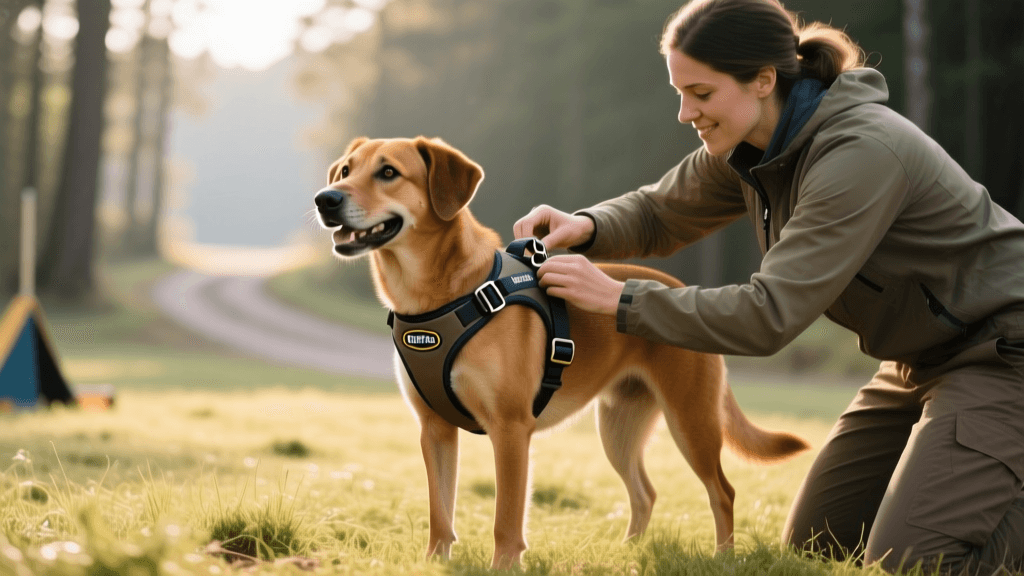
A no-pull harness is only effective if it fits correctly. A poorly fitted harness can cause gait abnormalities, shoulder chafing, and even allow a panicked dog to back out and escape. Follow this protocol when your new dog arrives home:
- Measure the Girth, Not Just the Neck: Use a soft tailor's measuring tape to measure the widest part of your dog's ribcage, usually just behind the front legs. This is the most critical measurement for any harness.
- Measure the Lower Neck: Measure the base of the neck where it meets the shoulders, not the upper neck where a collar sits.
- The Two-Finger Rule: Once the harness is on, you should be able to slide exactly two fingers flat between the harness straps and your dog's body. If you can fit your whole hand, it is too loose and poses an escape risk. If you cannot fit two fingers, it is too tight and will restrict breathing or blood flow.
- Check the Shoulder Clearance: Ensure the front straps do not sit directly on the dog's shoulder joints. The straps should frame the shoulders, allowing for a full, unrestricted range of motion. Restricting the shoulder joint over time can lead to long-term orthopedic issues.
The First-Week Leash Training Protocol
Equipping your dog with a front-clip harness is only half the battle; you must pair it with proper handling techniques. As recommended by the American Kennel Club, stopping immediately when tension is felt on the leash teaches the dog that pulling results in a loss of forward momentum.
During the first week, utilize the 'Magnet Hand' technique. Hold a high-value treat (like freeze-dried liver or boiled chicken) in the hand closest to your dog, keeping it right at their nose level near your pant seam. This encourages the dog to naturally align their shoulder with your leg, engaging the front-clip's steering mechanism without them even realizing they are being trained.
Keep your initial walks short. A 15-minute 'sniffari' where the dog is allowed to explore the environment on a long line attached to the back clip is excellent for mental decompression. Switch to the front clip only when you are actively practicing loose-leash walking in higher-distraction areas, like crossing streets or passing other dogs.
Common First-Day Mistakes to Avoid
Never leave a harness on an unsupervised dog. Puppies and anxious rescues will chew through nylon webbing in minutes, destroying an expensive piece of equipment and risking severe intestinal blockages if ingested.
Another frequent mistake is pairing a front-clip harness with a retractable leash. Retractable leaches teach dogs that pulling extends the leash, which directly contradicts the mechanics of a front-clip harness. Always use a standard 4-to-6-foot biothane or leather leash to maintain consistent communication and control.
Finally, remember the 3-3-3 rule of rescue dogs: three days to decompress, three weeks to learn your routine, and three months to feel at home. Be patient. A no-pull harness is a management tool that keeps your dog safe while their brain settles into their new environment. With consistency, positive reinforcement, and the right 2026 gear, you and your new best friend will be walking in perfect harmony in no time.
aaron-whyte
All our authors care for dogs every day — read more of their work on the authors page.