Retired Service Dog Care: Best 2026 Orthopedic Beds
Discover the best 2026 orthopedic beds and joint care routines for retired mobility service dogs. Give your hardworking companion the comfort they deserve.
The Unique Physical Toll on Mobility Assistance Dogs
When a mobility service dog transitions into retirement, usually between the ages of eight and ten, their daily life changes drastically. Unlike standard companion animals, mobility assistance dogs have spent years performing high-impact, physically demanding tasks. Whether they have been bracing for balance, pulling wheelchairs, or assisting with transfers, the cumulative physical toll on their joints, spine, and musculature is significant. As we navigate 2026, veterinary rehabilitation specialists emphasize that the retirement phase for a working dog requires a highly specialized approach to pain management, joint preservation, and environmental modification.
According to the American Kennel Club, osteoarthritis (OA) is a degenerative joint disease that affects a large percentage of senior dogs, but it is notably accelerated in working breeds like Labrador Retrievers and Golden Retrievers due to the repetitive strain of service work. Providing the right orthopedic support during their off-duty hours is no longer a luxury; it is a medical necessity to ensure their golden years are pain-free and dignified.
Why Standard Pet Beds Fail Retired Working Dogs
Many handlers make the mistake of purchasing standard, off-the-shelf pet beds for their retired service dogs. These beds, often filled with polyester fiberfill or low-grade memory foam, compress entirely under the weight of a large breed dog within a matter of weeks. When the foam bottoms out, the dog is essentially sleeping on the hard floor, which exacerbates joint inflammation and prevents the restorative sleep necessary for tissue repair.
For a retired mobility dog weighing between 60 and 90 pounds, a bed must offer targeted therapeutic support. It must distribute weight evenly, alleviate pressure points on the hips and elbows, and provide enough firmness to allow the dog to stand up easily without struggling—a common issue with overly soft, plush beds that trap the dog in a deep sink.
The 2026 Gold Standard: Big Barker Orthopedic Dog Bed
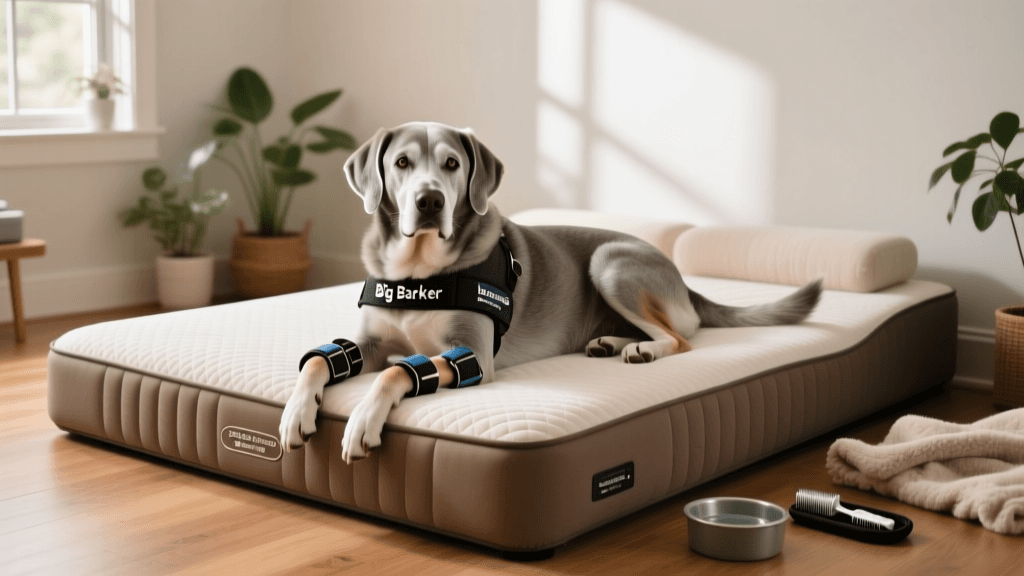
In 2026, the undisputed champion for retired large-breed working dogs remains the Big Barker 7-inch Orthopedic Dog Bed. Engineered specifically for large and giant breeds, this bed utilizes a proprietary three-layer foam system that refuses to flatten over time. The core consists of high-density H45 polyurethane foam, sandwiched between two layers of H10 comfort foam. This specific combination provides the firm support required for aging joints while cushioning the bony prominences of the hips and shoulders.
Why Big Barker Wins for Working Breeds
- Unmatched Durability: Backed by a 10-year warranty, the foam is guaranteed not to flatten by more than 10% over a decade, making it a cost-effective investment for a dog's entire retirement.
- Ease of Access: The 7-inch thickness is specifically calibrated to make it easier for arthritic dogs to get in and out of the bed without the strain of climbing up or pushing out of a deep crater.
- Hygienic Covers: The 2026 cover designs feature heavy-duty, furniture-grade microfiber that is fully machine washable, crucial for older dogs who may experience occasional incontinence or drooling.
Current 2026 pricing for the Large Big Barker (designed for dogs up to 80 lbs) sits at approximately $299, while the Extra Large model (for dogs over 80 lbs) is around $349. While this is a premium price point, it eliminates the need to replace cheap beds every six months.
2026 Orthopedic Bed Comparison Chart
| Brand & Model | Best For | 2026 Price (Large) | Key Feature for Retired Dogs |
|---|---|---|---|
| Big Barker 7" Orthopedic | Severe Arthritis & Large Breeds | $299.00 | H45 high-density core prevents bottoming out |
| K9 Ballistics Tough Bed | Anxious Dogs & Chewers | $215.00 | Ballistic nylon cover resists digging and nesting |
| Furhaven Orthopedic Sofa | Budget-Conscious Handlers | $65.00 | Egg-crate foam provides basic pressure relief |
| PetFusion Ultimate Lounge | Dogs Needing Head/Neck Support | $149.00 | Memory foam bolsters for cervical spine alignment |
Building a Comprehensive 2026 Joint Care Routine
An orthopedic bed is only one pillar of a successful retirement plan. To truly support a retired mobility dog, handlers must implement a multi-modal joint care routine. The American Veterinary Medical Association highlights that senior dog care requires a proactive approach to mobility, combining nutrition, controlled exercise, and environmental management.
Nutritional Support and Supplements
Before reaching for prescription NSAIDs, which can tax the liver and kidneys over long-term use, consult your veterinarian about clinical-strength joint supplements. In 2026, veterinary orthopedists frequently recommend formulations containing a synergistic blend of Glucosamine Hydrochloride, Chondroitin Sulfate, MSM, and ASU (Avocado/Soybean Unsaponifiables). Products like Dasuquin Advanced or Cosequin Senior help inhibit cartilage breakdown and reduce synovial inflammation.
Canine Physical Therapy and Hydrotherapy
Maintaining muscle mass is critical because muscles act as shock absorbers for compromised joints. According to experts in canine physical therapy, low-impact exercises like swimming or underwater treadmill sessions are ideal for retired service dogs. These activities build hind-end strength without placing concussive forces on the spine and hips. If hydrotherapy is unavailable, daily 15-minute leash walks on soft, even surfaces (like grass or packed dirt) help maintain joint lubrication without causing micro-trauma.
Home Modifications for the Aging Mobility Dog
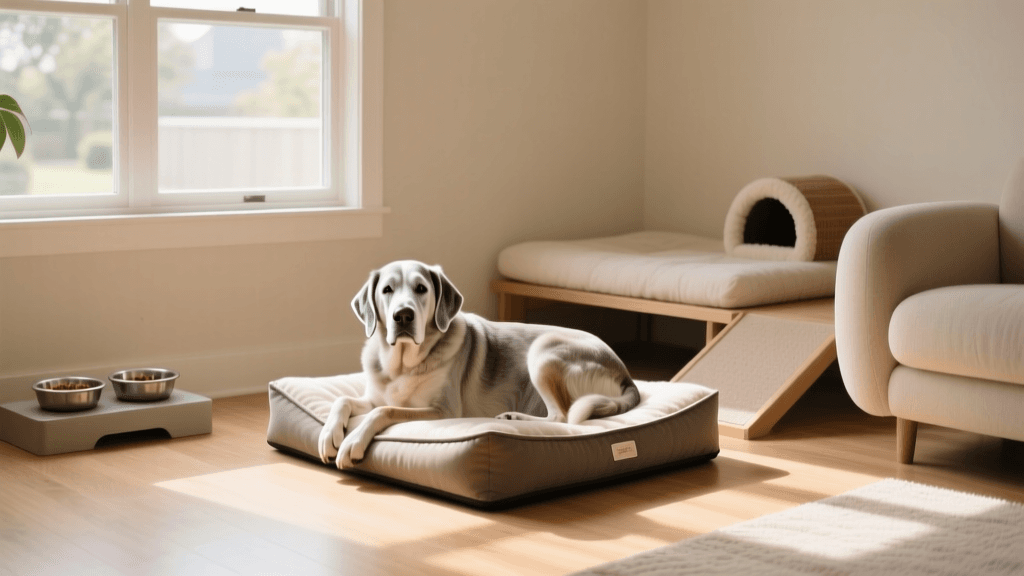
Your home environment must be adapted to suit a dog that can no longer navigate obstacles with the agility of their youth. Slippery hardwood or tile floors are the enemy of the arthritic dog, often leading to splaying and catastrophic soft-tissue injuries.
- Non-Slip Traction: Invest in high-traction area rugs with rubberized backings, or apply paw-grip wax and dog-specific traction socks when navigating slick areas.
- Ramps and Stairs: If your retired dog is still allowed on furniture or needs to enter a vehicle, use ramps with a gentle incline (ideally a 2:1 or 3:1 slope ratio) covered in high-grip carpeting.
- Elevated Bowls: While elevated bowls are sometimes debated for bloat-prone breeds, for a retired mobility dog with severe cervical or shoulder arthritis, slightly raised feeding stations prevent painful downward reaching.
Cognitive Decompression: From Task-Oriented to Pet Life
One of the most overlooked aspects of retiring a service dog is the psychological transition. Mobility dogs are bred and trained to be hyper-vigilant, task-oriented, and deeply connected to their handler's physical state. When the harness comes off for the last time, many dogs experience a form of working-dog depression or anxiety, unsure of what is expected of them.
"Retiring a service dog isn't just about taking off the vest; it's about teaching them that it is finally safe to just be a dog. You have to actively grant them permission to decompress."
— 2026 Assistance Dog Training Coalition Guidelines
To facilitate this cognitive shift, introduce low-stakes enrichment activities that have no 'pass or fail' outcome. Snuffle mats, lick mats, and scent-work games in the backyard allow the dog to use their powerful working drive in a relaxing, self-paced manner. Replace the structured 'heel' command with 'free sniff' walks, allowing the dog to dictate the pace and direction of the stroll. This sensory decompression lowers cortisol levels and signals to the dog that their working career has successfully concluded, replacing the stress of duty with the joy of leisure.
Conclusion: Honoring Their Service
Your mobility service dog gave you the gift of independence, stability, and unwavering support. As they enter their twilight years in 2026, it is your turn to give them the gift of comfort. By investing in premium orthopedic sleep systems like the Big Barker, implementing a rigorous joint-care routine, and modifying your home to accommodate their aging body, you ensure that the dog who carried you through life is now gently carried through their retirement. They have earned every bit of this rest.
marcus-aldridge
All our authors care for dogs every day — read more of their work on the authors page.