5 Best Puppy Breeds for Remote Workers in 2026 Reviewed
Discover the best low-barking, adaptable puppy breeds for remote workers in 2026. Perfect companions for home offices and endless Zoom calls.
The Rise of the Home-Office Hound in 2026
As we settle into the hybrid and fully remote work models of 2026, the home office has become a permanent fixture for millions of professionals. But working from home brings a unique set of challenges when you decide to add a puppy to your household. A high-energy herding dog might view your moving feet under the desk as an invitation to play, while a vocal terrier could easily derail a crucial client presentation with untimely barking. Choosing the right puppy breed is no longer just about your living situation; it is about your digital footprint and professional environment.
The ideal remote-work companion is a dog that thrives on proximity but does not demand constant, high-octane interaction. They should be content to snooze on an orthopedic bed beneath your standing desk, offer a comforting nuzzle during a stressful email exchange, and remain blissfully quiet while your microphone is unmuted. In this comprehensive guide, we explore the best puppy breeds for remote workers in 2026, focusing on low-barking tendencies, moderate energy levels, and adaptability to the home-office lifestyle.
What Makes a Breed Ideal for Remote Work?
Before diving into specific breeds, it is essential to understand the traits that make a dog a successful "co-worker." Not every popular breed is suited for the quiet confines of a home office. When evaluating a puppy for a remote-work environment, prioritize the following characteristics:
- Low Vocalization: Breeds historically bred to alert or hunt by barking (like Beagles or Shetland Sheepdogs) are risky for professionals who spend hours on video calls.
- Moderate to Low Energy: While all puppies require play and training, breeds that naturally mature into "couch potatoes" or moderate walkers are much easier to manage between meetings.
- Companionship over Independence: You want a dog that wants to be in the same room as you (the "velcro" trait) but is content to just watch you work rather than demanding you throw a ball.
- Ease of Potty Training: For those living in urban high-rises and working long hours, breeds that are notoriously stubborn to housebreak can add immense stress to your workday.
Top 5 Puppy Breeds for Remote Workers
1. Cavalier King Charles Spaniel
The Cavalier King Charles Spaniel is the undisputed champion of the home office. Bred exclusively for companionship, these puppies are affectionate, gentle, and incredibly attuned to their owner's emotions. If you are stressed about a deadline, your Cavalier will likely rest their chin on your foot in silent solidarity. According to the American Kennel Club, Cavaliers are highly adaptable and do well in both apartments and larger homes. They are notoriously quiet, rarely barking without a very good reason, making them the perfect background presence for Zoom calls. Their exercise needs are easily met with a brisk morning walk and a midday game of indoor fetch, leaving them perfectly content to nap under your desk for the rest of the afternoon.
2. Basset Hound
If your home office is on the ground floor and you appreciate a dog with a profound sense of humor, the Basset Hound is a phenomenal choice. Famous for their soulful eyes and low-slung bodies, Bassets are notoriously laid-back. As puppies, they have brief bursts of clumsy energy, but they mature into dogs whose primary ambition is finding the softest spot in the room to sleep. They are not known for excessive barking, though they do possess a deep, resonant "bay" if they catch an interesting scent outside. Bassets are stubborn, so patience is required during potty training, but their low physical energy requirements make them ideal for professionals who cannot commit to a five-mile morning run before logging on.
3. Havanese
The Havanese is a sturdy, small breed that thrives on human companionship without being overly neurotic. Unlike some toy breeds that are prone to "small dog syndrome" and excessive yapping, the Havanese is remarkably stable and quiet. The AKC notes that the Havanese is highly trainable and eager to please, which translates beautifully to learning home-office boundaries. You can easily train a Havanese puppy to settle on a specific mat or bed while you are at your keyboard. Their silky coat does require regular brushing, which can actually serve as a mindful, stress-relieving break during your lunch hour away from the glare of your monitors.
4. Shih Tzu
Bred for centuries to sit in the laps of Chinese royalty, the Shih Tzu is practically genetically engineered for the modern remote worker. They are not working dogs; they are companion dogs in the purest sense. A Shih Tzu puppy will happily follow you from the kitchen to the home office, but they have zero desire to herd your cats or fetch a tennis ball for three hours straight. They are relatively quiet and deeply affectionate. The main consideration for a Shih Tzu in a home office is grooming; their beautiful coat requires daily brushing or a professional "puppy cut" every six weeks to prevent matting. However, their calm demeanor and low exercise needs make them an exceptional choice for busy professionals.
5. Japanese Chin
Often described as "cat-like" in their demeanor, the Japanese Chin is a quiet, aristocratic, and deeply observant breed. They are not overly demanding of attention and are perfectly happy to perch on the back of your office chair or a nearby sofa, watching you type. Japanese Chins are incredibly quiet, rarely barking at passing cars or delivery drivers, which is a massive asset for urban remote workers. They are sensitive to their owner's moods and offer quiet comfort without being overbearing. Because of their small size and low exercise requirements, they are exceptionally well-suited for apartment dwellers who work from home.
Breed Comparison Chart for Home Offices
| Breed | Barking Level | Energy Level | Trainability | Ideal Desk Setup |
|---|---|---|---|---|
| Cavalier King Charles | Low | Moderate | High | Orthopedic under-desk bed |
| Basset Hound | Low/Moderate | Low | Low (Stubborn) | Thick floor mat / cooling pad |
| Havanese | Low | Moderate | High | Elevated cot near your chair |
| Shih Tzu | Low | Low | Moderate | Plush bolster bed nearby |
| Japanese Chin | Very Low | Low | Moderate | Soft perch or chair blanket |
Training Your Puppy for the Zoom Call
Even the quietest breed requires training to understand the boundaries of a professional home office. In 2026, with video conferencing remaining a cornerstone of corporate communication, teaching your puppy the "Settle" or "Place" command is non-negotiable.
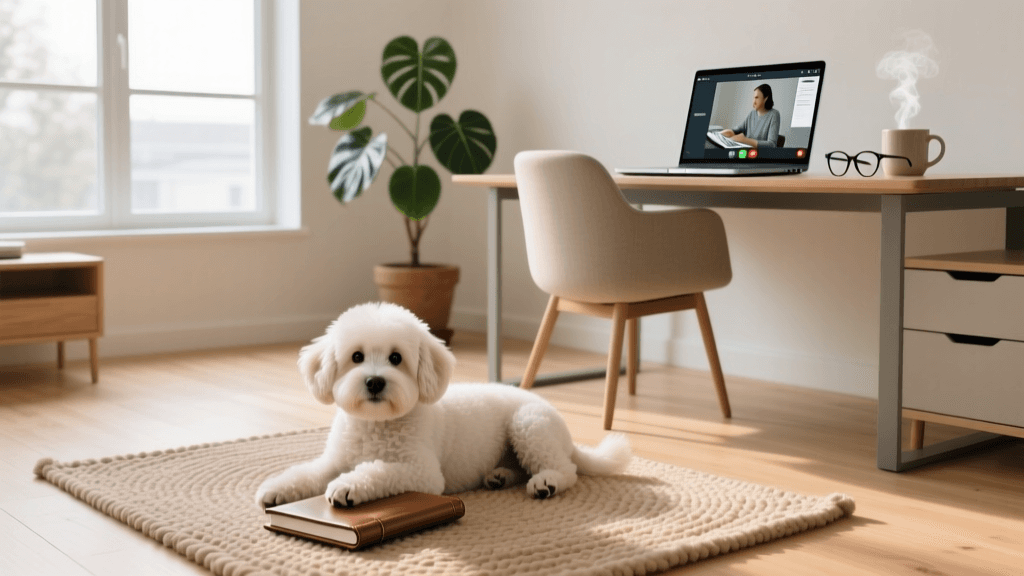
Start by selecting a specific mat or bed that is visible on your webcam but out of the immediate "drop zone" of your arms. Use high-value treats to lure your puppy onto the mat, rewarding them heavily for staying put. Gradually increase the duration and distance. When you have a meeting, provide a long-lasting, silent chew (like a stuffed and frozen Kong or a natural yak cheese chew) to keep them occupied on their mat. Never use squeaky toys during work hours, as the sudden noise can be jarring to colleagues on the other end of the line.
Essential Gear for the 2026 Remote-Work Puppy
To ensure your puppy is comfortable and your workspace remains productive, invest in gear specifically designed for the home-office environment:
- Snuffle Mats and Lickimats: These provide silent, mental enrichment. Spreading your puppy's breakfast across a Lickimat and freezing it will keep them quietly occupied for 30 minutes during your morning stand-up meeting.
- Orthopedic Under-Desk Beds: Brands like FurHaven and Big Barker offer low-profile, memory-foam beds that slide perfectly beneath standard 29-inch desks, giving your puppy a den-like space that keeps them out of your rolling chair's path.
- Smart Indoor Potties: For high-rise remote workers who cannot afford a 10-minute elevator ride every time the puppy needs to go, modern smart-grass systems with automatic UV cleaning and odor neutralization are a 2026 game-changer for maintaining a fresh-smelling office.
Managing Separation Anxiety in a Hybrid World
The biggest risk for remote workers getting a puppy in 2026 is separation anxiety. If your puppy spends 24/7 with you in the home office, they will inevitably panic on the days you are required to go into the corporate headquarters. The ASPCA emphasizes that preventing separation anxiety requires proactive training from day one.
"Dogs with separation anxiety exhibit behavior problems when they're left alone or separated from their guardians. It is crucial to teach puppies how to be comfortable alone, even when you are home."
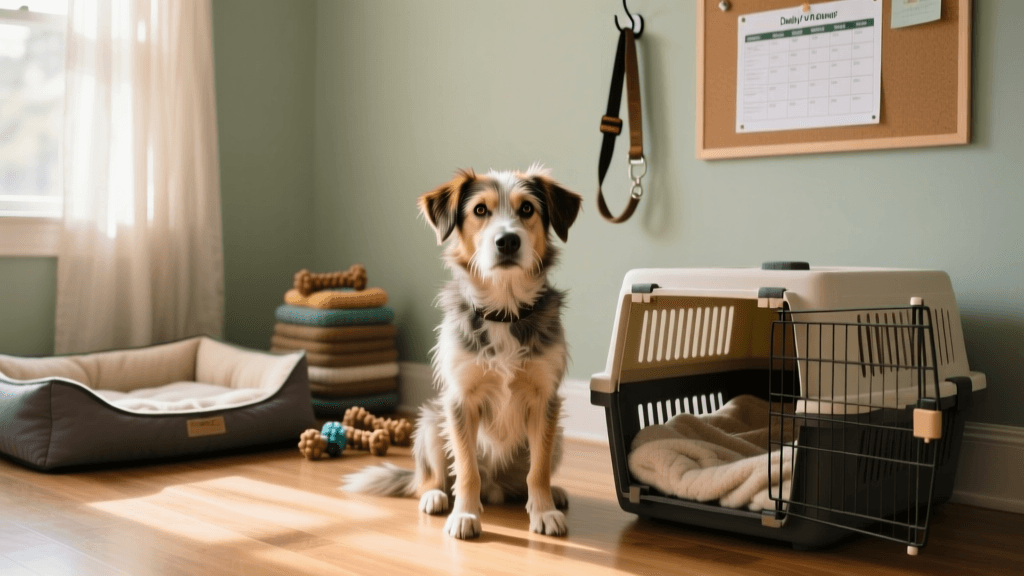
To combat this, utilize a playpen or crate in a different room for at least two hours a day while you work. Give them a special toy that they only get when confined. Furthermore, practice your "leaving the house" routine—putting on your shoes, grabbing your keys, and walking out the door—without actually leaving, to desensitize them to your departure cues. By fostering independence early, you ensure your puppy remains confident and relaxed, whether you are sitting three feet away or commuting to the office.
Conclusion
Sharing your home office with a puppy is one of the greatest perks of the modern remote-work lifestyle. By selecting a breed that naturally aligns with the quiet, structured environment of a home office—like the Cavalier King Charles Spaniel, Basset Hound, Havanese, Shih Tzu, or Japanese Chin—you set yourself up for a harmonious workday. Pair the right breed with proactive "settle" training, silent enrichment toys, and deliberate independence-building exercises, and you will have the perfect co-worker: one who never interrupts your presentations, always boosts your morale, and requires nothing more than a gentle scratch behind the ears between emails.
anouk-beaumont
All our authors care for dogs every day — read more of their work on the authors page.