Living With A Retired Greyhound: Daily Apartment Care
Discover the reality of living with a retired racing Greyhound. Learn daily routines, apartment tips, and essential gear for your new couch potato.
The 45-MPH Couch Potato: Understanding the Retired Racer
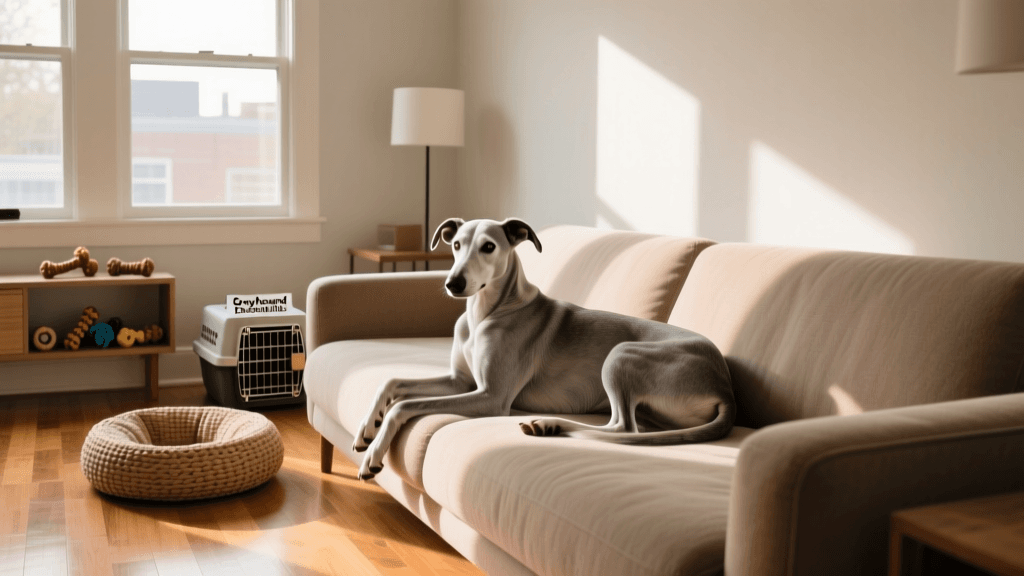
When most people picture a Greyhound, they imagine a high-strung, hyperactive athlete that requires miles of running every single day. However, those who have welcomed a retired racing Greyhound into their homes know the hilarious truth: they are essentially 45-mph couch potatoes. According to the American Kennel Club, Greyhounds are notoriously calm, quiet, and low-energy indoors. Transitioning from a racing kennel to a suburban apartment or a quiet city condo is a journey filled with unique challenges and immense rewards. These dogs have spent their lives in structured environments, meaning they often lack basic household knowledge, such as navigating stairs or understanding glass doors. In this deep dive, we will explore the practical realities, daily routines, and essential gear required to thrive with a retired sighthound in a modern living space.
Apartment-Proofing for a Sighthound
The Danger of Slippery Floors
Greyhounds are built for explosive speed on dirt and turf, not for traction on polished hardwood or sleek ceramic tiles. Their paw pads are relatively small, and their long, spindly legs offer little stability on slippery surfaces. A sudden slip can lead to severe musculoskeletal injuries, including splayed legs or torn cruciate ligaments. If your apartment features hard flooring, you must invest in low-pile area rugs or interlocking foam mats for their primary walking paths. Expect to spend around $100 to $200 to adequately cover high-traffic areas, ensuring your dog can confidently navigate from the bedroom to the kitchen without doing the splits.
The Necessity of Orthopedic Bedding
Unlike double-coated breeds like Huskies or Golden Retrievers, Greyhounds possess incredibly low body fat and lack a natural insulating undercoat. This means they feel the cold acutely and are highly susceptible to pressure sores when lying on hard surfaces. A standard plush dog bed will not suffice. You need a high-density orthopedic bed that is at least 4 to 7 inches thick to support their bony prominences. Premium options like the Big Barker 7-inch Orthopedic Dog Bed (approximately $240) are excellent investments, though budget-friendly alternatives like the Furhaven Plush & Velvet Orthopedic Bed (around $45) can work if layered with thick fleece blankets. Always provide a bed large enough for them to stretch out fully—aim for at least 40x30 inches for a standard-sized female and 48x36 inches for a larger male.
The Ideal Daily Routine: Timing and Exercise
One of the most surprising aspects of living with a retired racer is how little exercise they actually require. While they enjoy a good sprint in a securely fenced area, their daily apartment routine is surprisingly sedentary. Greyhounds can sleep up to 18 hours a day, often adopting the famous 'roach' position—lying flat on their backs with all four legs splayed in the air.
Here is a realistic daily schedule for a working professional living with a Greyhound:
- 7:00 AM - Morning Potty & Sniffari: A 15 to 20-minute leash walk. Sighthounds process the world through their noses and eyes; allow them time to sniff and mentally decompress.
- 7:30 AM - Breakfast: Served in an elevated bowl to aid digestion and prevent neck strain.
- 8:00 AM to 5:00 PM - The Long Nap: Your Greyhound will likely sleep on their orthopedic bed or couch while you are at work.
- 5:30 PM - Evening Walk: A slightly longer 30-minute neighborhood walk to burn off mild evening energy.
- 6:30 PM - Dinner: Followed by a mandatory 45-minute rest period to mitigate bloat risks.
- 7:30 PM - Couch Cuddles: Greyhounds are deeply affectionate and will happily lean their 70-pound frame against you for the remainder of the evening.
Essential Gear for the Retired Racer
Equipping your home for a Greyhound requires specialized gear designed for their unique anatomy. Below is a breakdown of the must-have items for your new companion.
| Gear Item | Why It Is Necessary | Estimated Cost | Recommended Brand |
|---|---|---|---|
| Martingale Collar | Greyhounds have necks wider than their heads; standard collars will slip off if they pull backward. | $15 - $25 | Blue-9 Design or Hound House |
| Elevated Feeder | Raises food to chest level, reducing air intake and neck strain for deep-chested breeds. | $30 - $60 | Neater Feeder or IRIS USA |
| Sighthound Winter Coat | Provides essential insulation for dogs with zero body fat during winter potty breaks. | $60 - $120 | Hurtta or Chilly Dog |
| Basket Muzzle | Crucial for safe introductions to small pets and emergency vet visits. | $20 - $35 | Baskerville Ultra |
| Orthopedic Bed | Prevents pressure sores and provides joint support for bony prominences. | $45 - $250 | Big Barker or Furhaven |
Health Watch: Bloat and Temperature Sensitivity
Preventing Gastric Dilatation-Volvulus (GDV)
As a deep-chested breed, Greyhounds are at a significantly higher risk for Gastric Dilatation-Volvulus, commonly known as bloat. This is a life-threatening condition where the stomach fills with gas and twists on itself. The American Kennel Club strongly recommends preventive measures for susceptible breeds. Always feed your Greyhound two smaller meals a day rather than one large meal, and strictly enforce a 'no vigorous exercise' rule for at least 45 minutes before and after eating. Furthermore, avoid elevated water bowls that encourage rapid gulping, and consider using a slow-feeder bowl if your dog tends to inhale their kibble.
Navigating the Elements
Because they lack an undercoat, Greyhounds cannot regulate their body temperature in extreme weather. In the winter, a quick potty break in freezing temperatures requires a tailored sighthound coat that covers their chest and kidneys. In the summer, their thin skin and short hair make them highly prone to sunburn. Apply pet-safe sunscreen to their noses and sparsely haired bellies before any outdoor lounging, and limit walks to the cooler hours of the early morning or late evening.
Multi-Pet Households and the Prey Drive
Retired racers have spent their lives chasing a mechanical lure, and many retain a strong prey drive toward small, fast-moving animals. While many Greyhounds live harmoniously with cats and small dogs, introductions must be handled with extreme caution. Organizations like Greyhound Pets conduct rigorous cat-testing before placing dogs in multi-pet homes. If your dog has passed these tests, you should still utilize a Baskerville Ultra basket muzzle during the first few weeks of supervised interactions. Condition your dog to the muzzle using high-value treats like freeze-dried liver, ensuring they associate the gear with positive experiences rather than punishment. Never leave a Greyhound unsupervised with a small pet until you are absolutely confident in their desensitization, which can take several months of consistent management.
'The key to a successful sighthound and small-dog household is management, not just training. You are managing an instinct that has been selectively bred into them for thousands of years.' — Certified Professional Dog Trainer (CPDT-KA)
Conclusion
Living with a retired racing Greyhound is a masterclass in patience, adaptation, and profound companionship. They may not be the hiking partners you initially envisioned, but their quiet dignity, gentle nature, and comical sleeping habits make them unparalleled apartment companions. By investing in the right orthopedic gear, managing their environment for safety, and respecting their unique physiological needs, you will provide a deeply enriching second chapter for a dog that has already given so much to the track.
Remember that adoption is a marathon, not a sprint. The first three weeks in a new home are often referred to as the 'decompression period.' Your Greyhound may seem aloof, anxious, or confused as they process the transition from a kennel environment to a bustling human home. Give them space, maintain a rigid routine, and watch as their true, goofy personality blossoms over the following months.
hannah-wickes
All our authors care for dogs every day — read more of their work on the authors page.