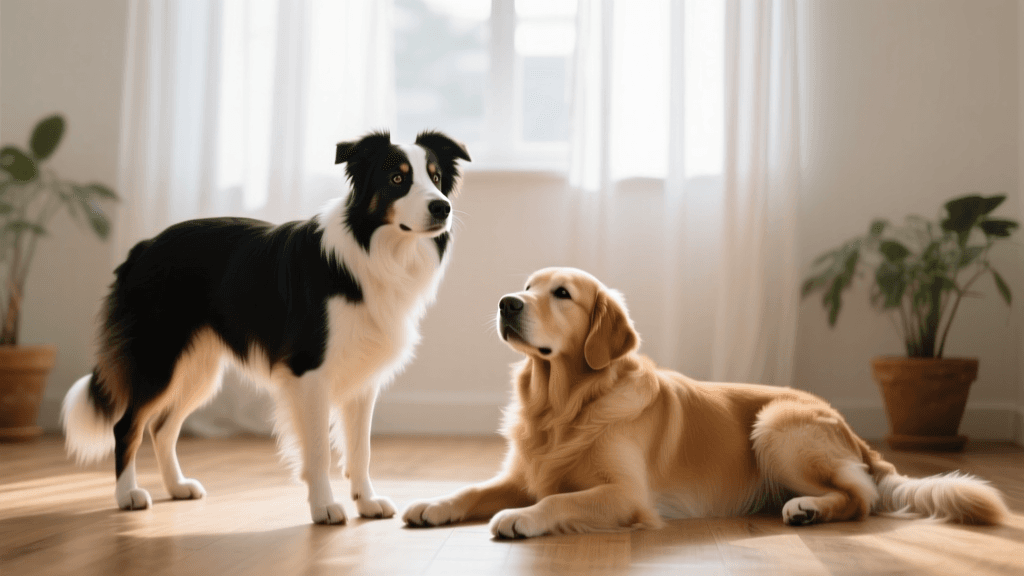
Case Studies: Curing Resource Guarding In Multi-Dog Homes
Discover how to resolve resource guarding in multi-dog households through real behavior case studies, actionable training plans, and expert management tips.

Understanding Resource Guarding in Multi-Dog Households
Resource guarding is one of the most common, yet highly misunderstood, behavioral challenges in multi-dog homes. It occurs when a dog employs avoidance, threatening, or aggressive behaviors to retain control of a valued item, space, or person. While a natural survival instinct in the wild, in a modern domestic setting, it can lead to severe inter-dog aggression and human injury. According to behavioral resources provided by the ASPCA, guarding is rarely about "dominance" and almost always rooted in anxiety, scarcity mindsets, or lack of impulse control.
To truly understand how to dismantle these behaviors, we must look beyond generic advice and examine real-world applications. Below, we analyze three distinct behavior case studies involving resource guarding, detailing the psychological triggers, the step-by-step interventions, and the specific products used to achieve lasting results.
Reading the Subtle Body Language of Guarding
Before diving into the case studies, it is vital to recognize that guarding does not begin with a bite. Dogs communicate their discomfort through a ladder of escalation. Intervening at the bottom of the ladder prevents the need for the dog to climb to the top.
- Freezing: The dog becomes completely rigid over the item.
- Whale Eye: The dog turns its head slightly away while keeping its eyes fixed on the approaching dog or human, showing the whites of the eyes.
- Lip Licking and Yawning: Displacement behaviors indicating internal stress.
- Hard Stare: A fixed, unblinking gaze directed at the perceived threat.
- Low Growl or Snarl: A clear auditory warning to increase distance.
Ignoring these early signals forces the dog to escalate to snapping or biting. As noted by the American Kennel Club, punishing a dog for growling only suppresses the warning system, resulting in a dog that bites without warning.
Case Study 1: High-Value Food Guarding (The "Speed Eater")
The Subjects
Bella (a 4-year-old Labrador Retriever) and Max (a 6-year-old Beagle).
The Problem
Bella exhibited extreme food guarding. She would inhale her meals in under thirty seconds, then immediately rush to Max’s bowl. If Max was still eating, Bella would stiffen, emit a low growl, and body-block him. Max, a more submissive dog, began exhibiting stress-induced diarrhea and would refuse to eat unless hand-fed in a separate room.
The Psychological Analysis
Labradors possess a genetic predisposition for high food drive, linked to a mutation in the POMC gene which regulates satiety. Bella’s guarding was not born of malice, but of an intense, biologically driven scarcity mindset. She perceived Max not as a packmate, but as a competitor for limited caloric resources.
The Intervention Protocol
- Spatial Management (Weeks 1-2): The owners installed a freestanding pet barrier ($45) to physically separate the dogs during mealtimes. This immediately lowered Max’s cortisol levels and removed Bella’s opportunity to practice the guarding behavior.
- Pacing the Meal (Weeks 3-6): Bella was transitioned to an Outward Hound Fun Feeder Slow Bowl ($14.99). This extended her eating time from 30 seconds to 8 minutes, satisfying her foraging instinct and reducing the frantic urgency that triggered her guarding.
- The "Trade-Up" Game (Ongoing): To change Bella’s emotional response to Max approaching her food area, owners practiced the "Trade-Up" protocol. While Bella was eating a low-value kibble, the owner approached and tossed a high-value piece of freeze-dried liver ($12 for a 3oz bag) into her bowl. This conditioned Bella to associate proximity with positive outcomes rather than theft.
"By changing the dog's emotional response from 'they are taking my food' to 'they are bringing me something better,' we rewire the guarding impulse at its neurological root."
Case Study 2: Spatial and Toy Guarding (The "Velvet Dictator")
The Subjects
Luna (a 3-year-old Greyhound) and Toby (a 2-year-old Jack Russell Terrier).
The Problem
Luna claimed the living room sofa and a specific roster of plush toys. When Toby attempted to jump onto the sofa or investigate a toy near Luna, she would pin her ears back, bare her teeth, and occasionally snap, catching Toby’s ear on one occasion.
The Psychological Analysis
Sighthounds like Greyhounds often place immense value on elevated, comfortable resting spaces due to their low body fat and need for joint support. Luna’s guarding was territorial and space-based. The sofa represented a high-value sanctuary, and Toby’s erratic terrier energy was perceived as an invasion of her safe zone.
The Intervention Protocol
- Environmental Reset: The sofa was temporarily covered with a thermal space blanket to alter its texture and smell, making it less appealing. A Kuranda Elevated Dog Cot ($130) was introduced in the center of the room to provide Luna with an alternative, elevated sanctuary that was exclusively hers.
- "Place" Command Training: Luna was trained to go to her Kuranda cot on cue. Training sessions lasted 5 minutes, three times a day, using a clicker and high-value treats. Once Luna reliably went to her cot, Toby was brought into the room on a leash.
- Desensitization to Toy Proximity: All plush toys were put away. Luna was given a Kong Classic ($15) stuffed with peanut butter, which was only provided when she was on her cot. If Toby entered the room, Luna received a continuous trickle of treats for remaining relaxed on her mat. The plush toys were eventually reintroduced, but only during supervised, separated play sessions.
Comparative Analysis: Guarding Triggers and Interventions
The following table breaks down the core components of different guarding styles observed in clinical behavior cases, offering a quick-reference guide for identification and management.
| Guarding Type | Primary Trigger | Early Warning Signs | Recommended Intervention | Est. Setup Cost |
|---|---|---|---|---|
| Food / Bowl | Scarcity mindset, hunger drive | Speed eating, hovering, hard stare | Slow feeders, spatial separation, trade-up games | $20 - $60 |
| Spatial / Furniture | Need for security, physical comfort | Blocking pathways, stiffening when approached | Alternative elevated beds, "Place" command, baby gates | $40 - $150 |
| Toy / Object | Possessiveness, high prey drive | Grabbing and running, growling when reached for | Toy rotation, "Drop It" training, puzzle toys | $15 - $30 |
| Human Attention | Insecurity, lack of impulse control | Body blocking, nudging owner, whining | Parallel mat training, structured affection, "Wait" protocol | $0 - $20 |
Case Study 3: Human Attention Guarding (The "Shadow")
The Subjects
Duke (a 5-year-old German Shepherd) and Daisy (a 4-year-old Golden Retriever).
The Problem
Whenever the owner sat down to pet Daisy, Duke would immediately wedge his body between them, place his paws on the owner’s lap, and emit a low, vibrating growl if Daisy tried to re-engage. Duke was effectively hoarding the owner's affection.
The Psychological Analysis
Attention guarding is frequently mislabeled as jealousy. In reality, it is a manifestation of poor impulse control and learned behavior. Duke had learned that pushing Daisy away resulted in exclusive access to the owner’s hands (the reward). The American Veterinary Medical Association emphasizes that dogs do not experience complex human emotions like spite or jealousy; rather, they are highly adept at recognizing patterns that secure valuable resources—in this case, social contact.
The Intervention Protocol
- Removing the Reward: The moment Duke attempted to body-block, the owner stood up and turned their back, completely withdrawing attention. This broke the operant conditioning loop.
- Parallel Mat Work: Two distinct mats were placed in the living room. Both dogs were trained to lie on their respective mats. The owner would then sit between them, delivering treats and calm pets to both dogs simultaneously, provided both remained on their mats.
- Structured Affection: Free petting was eliminated. Affection became a reward for calm, polite behavior. If Duke nudged the owner while they were petting Daisy, he was asked to perform a "Sit" and "Down" before receiving any physical contact.
When to Call a Professional
While the case studies above highlight successful at-home interventions, resource guarding can be incredibly dangerous. If your dog has broken the skin of another dog or human, or if the guarding behavior is escalating rapidly despite management, it is time to seek professional help. Look for a Certified Applied Animal Behaviorist (CAAB) or a veterinarian specializing in behavior (DACVB). These professionals can assess whether underlying medical issues, such as pain or thyroid imbalances, are lowering the dog's bite threshold, and can design a customized behavior modification plan to ensure the safety of your entire household.
Conclusion
Resource guarding in multi-dog homes is a complex puzzle of genetics, environment, and learned history. By observing the subtle body language of our dogs, managing their environment to prevent rehearsal of bad habits, and utilizing targeted, positive-reinforcement training protocols, we can transform a house divided into a harmonious pack. Patience, consistency, and empathy are your most valuable tools in this behavioral rehabilitation journey.
beth-carrasco
All our authors care for dogs every day — read more of their work on the authors page.