Understanding Resource Guarding: Force-Free Methods 2026
Discover the psychology behind canine resource guarding and learn force-free, positive reinforcement trade-up protocols to build trust in 2026.
The Evolutionary Psychology of Resource Guarding
As we navigate the evolving landscape of canine behavioral science in 2026, one thing remains abundantly clear: understanding your dog requires empathy, observation, and a commitment to force-free methodologies. Among the most misunderstood behaviors in the canine repertoire is resource guarding. Historically, outdated television trainers and dominance-based theories mislabeled this behavior as a dog attempting to be the "alpha" or assert pack leadership. Today, veterinary behaviorists and certified force-free trainers recognize resource guarding for what it truly is: a natural, survival-based anxiety response rooted in the fear of losing something valuable.
To truly understand resource guarding, we must look at canine evolution. In the wild, the ancestors of our modern domestic dogs relied on their ability to secure and protect vital resources—such as food, shelter, and mates—to survive. A dog that willingly gave up its hard-earned meal to a competitor would not survive to pass on its genetics. Therefore, the instinct to guard is hardwired into the canine brain.
In our modern homes, the stakes are incredibly low. Your dog does not need to guard a synthetic rubber chew toy or a bowl of premium extruded kibble to survive. However, the neurological pathway remains the same. When a dog perceives a threat to a valued item, the amygdala (the brain's fear center) activates, triggering a fight-or-flight response. Cortisol and adrenaline flood their system. According to the American Society for the Prevention of Cruelty to Animals (ASPCA), resource guarding is fundamentally an anxiety-driven behavior, not a display of malice or dominance. Punishing a dog for this instinctual fear only validates their anxiety, teaching them that humans are indeed unpredictable thieves who must be warned away with escalated aggression.
It is also worth noting that certain medical conditions, such as canine cognitive dysfunction or underlying gastrointestinal pain, can exacerbate resource guarding in older dogs. A sudden onset of guarding behavior in a previously relaxed adult dog warrants an immediate veterinary examination to rule out physiological causes before beginning any behavioral modification protocol.
Decoding Canine Body Language: The Warning Ladder
Dogs are masterful communicators, but their language is subtle and often missed by the untrained human eye. Long before a dog snaps or bites, they will display a series of "calming signals" and distance-increasing behaviors. Recognizing these early warnings is the cornerstone of force-free intervention. If we ignore the subtle whispers, the dog is forced to shout.
| Signal | Description | Emotional State |
|---|---|---|
| Freezing | Dog stops chewing and becomes completely rigid | High tension, assessing threat |
| Whale Eye | Showing the whites of the eyes while turning the head away | Anxiety, deep discomfort |
| Lip Licking | Quick, repetitive flicks of the tongue over the nose | Stress, appeasement signaling |
| Hard Stare | Unblinking, fixed gaze on the approaching handler | Warning, escalation imminent |
| Low Growl | Rumbling vocalization originating from the chest | Active warning, distance-increasing |
| Snapping/Biting | Lunging or making contact with teeth | Defensive panic, last resort |
Understanding this ladder is critical. If your dog displays "whale eye" or lip licking, they are asking for space. If you push past these signals and force them to escalate to a growl or a snap, you are damaging the trust in your relationship and teaching the dog that early warnings do not work.
The 2026 Force-Free "Trade-Up" Protocol
The goal of force-free training is not to forcefully confiscate items, but to change your dog's underlying emotional response to your approach. We want your dog to think, "When my human approaches while I have something good, it means something even better is about to happen!" This is achieved through classical conditioning and positive reinforcement.
Step 1: Baseline Assessment and Safe Distances
Begin by identifying your dog's "safe distance." If your dog freezes when you are five feet away while they chew a bully stick, your starting point must be six or seven feet away. Never push your dog into a state of panic. Management is key here; in 2026, we have access to excellent modular baby gates, indoor playpens, and separate rooms to ensure your dog can enjoy high-value chews without feeling ambushed by foot traffic.
Step 2: The Approach and Toss (Desensitization)
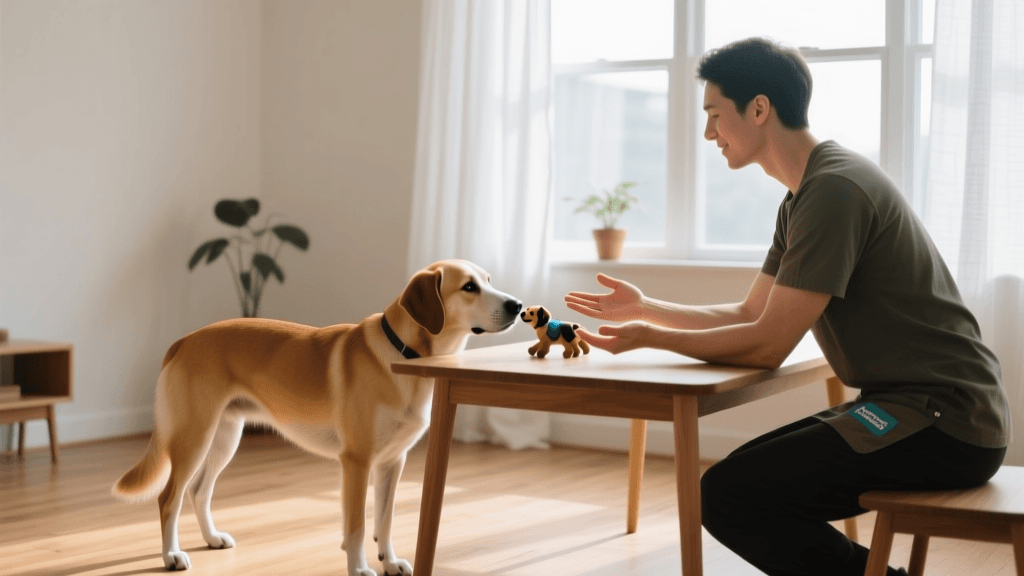
With your dog enjoying a mid-value item (like a standard kibble-stuffed puzzle toy), stand outside their safe distance zone. Toss a high-value treat—such as single-ingredient freeze-dried beef liver or wild-caught salmon bites—toward them, then immediately turn and walk away. You are teaching the dog that your approach predicts a fantastic reward, and your departure means they get to keep their original item. Repeat this over multiple sessions until your dog visibly relaxes, their body loosens, and they begin to anticipate the treat toss when you approach.
Step 3: The High-Value Trade
Once your dog is happily wagging their tail as you approach, you can initiate the trade. Approach calmly, present a handful of irresistible, aromatic treats right near their nose, and use a cheerful marker word like "Yes!" or "Trade!" When they drop the guarded item to eat the treats, calmly pick up the item, let them finish the treats, and then give the original item back. This is a crucial step often missed by amateur trainers. Returning the item proves to the dog that they are not losing their resource permanently, which drastically reduces future guarding anxiety. The American Kennel Club (AKC) emphasizes that trading and returning the item builds a foundation of lifelong trust and eliminates the fear of theft.
Environmental Management and Canine Enrichment
While active training protocols are essential, managing your dog's environment is equally important, especially in multi-dog households or homes with young children. In 2026, canine enrichment has evolved far beyond the standard rubber kong. Utilizing slow-feeders, snuffle mats, and modular puzzle toys like the West Paw Toppl or the Outward Hound Dog Brick can satisfy your dog's foraging instincts while minimizing the high-arousal state associated with rapid eating.
Furthermore, incorporating scent work and decompression walks into your daily routine can lower your dog's baseline cortisol levels. A dog with a fulfilled brain and a regulated nervous system is far less likely to exhibit hyper-vigilance over resources. For multi-dog homes, spatial management is non-negotiable. Feed dogs in separate crates or distinct rooms to eliminate the pressure of competition. Never leave high-value chews like raw bones or antlers out in shared spaces where a dog might feel the need to hoard or defend them from a sibling.
The Danger of Aversive Corrections
It is imperative to address what not to do. Aversive methods—such as alpha rolls, scruffing, leash corrections, or forcefully prying a dog's jaws open—have been universally condemned by modern veterinary behaviorists. These methods do not cure the underlying anxiety; they merely suppress the outward symptoms. A dog that is punished for growling learns that growling results in pain or fear. Consequently, the next time they feel threatened, they will skip the growl entirely and go straight to a bite. This is known as "learned helplessness" or suppressed warning signals, creating a dangerously unpredictable dog.
Positive reinforcement, on the other hand, addresses the root cause of the behavior. By changing the emotional association from "humans steal my things" to "humans bring me better things," we create a confident, relaxed, and safe companion.
Conclusion: Patience and Professional Support
Overcoming resource guarding is a journey that requires patience, consistency, and a deep respect for your dog's evolutionary instincts. By honoring their body language, utilizing force-free trade-up protocols, and managing their environment, you can transform a stressful behavioral issue into an opportunity to strengthen your bond. If your dog's guarding behavior includes severe aggression, biting, or extreme distress, always consult a certified force-free behaviorist or a board-certified veterinary behaviorist to create a customized, safe rehabilitation plan for your unique dog.
robin-maitland
All our authors care for dogs every day — read more of their work on the authors page.