2026 Rescue Dog Bonding: First 30 Days Enrichment Guide
Discover the ultimate 2026 rescue dog bonding routine. Learn the 3-3-3 rule, top enrichment toys, and daily schedules to build trust in the first 30 days.
The Science of Canine-Human Bonding in 2026
Bringing a rescue dog into your home is one of the most profoundly rewarding experiences a person can have. However, the transition from a shelter environment to a living room is a massive psychological shift for a dog. As veterinary behaviorists emphasize in 2026, forced affection—such as prolonged hugging or staring into a fearful dog's eyes—can actually trigger cortisol spikes and delay the bonding process. Instead, modern canine psychology champions 'cooperative enrichment' as the fastest, most reliable pathway to building deep, lasting trust.
When you engage a dog in scent work, puzzle-solving, and cooperative play, their brain releases oxytocin and dopamine. These are the exact same neurochemicals responsible for human-infant bonding. By shifting your focus from demanding affection to facilitating enrichment, you become the source of your dog's joy, safety, and mental stimulation. This guide will walk you through a highly specific, actionable 30-day bonding routine designed specifically for newly adopted rescue dogs.
Understanding the 3-3-3 Rule
Before diving into toys and routines, it is vital to understand the timeline of rescue dog adjustment. According to ASPCA's comprehensive dog care resources, the 3-3-3 rule remains the gold standard for managing expectations:
- 3 Days to Decompress: Your dog may hide, refuse to eat, or sleep excessively. They are overwhelmed by new scents and sounds.
- 3 Weeks to Learn the Routine: Your dog begins to understand your schedule, house rules, and that they are in a safe, permanent environment.
- 3 Months to Feel at Home: The true personality of your dog emerges, and a deep, mutual bond of trust is fully cemented.
Our 30-day enrichment protocol is specifically engineered to support your dog through the first two critical phases of this timeline, accelerating their comfort and your connection.
Top 4 Enrichment Tools for Accelerating Trust
You do not need to spend hundreds of dollars to build a bond, but having the right tools makes a significant difference. The 2026 enrichment market has refined these classics to be more durable and engaging than ever. Here are the four essential items for your first 30 days:
| Enrichment Tool | Primary Bonding Benefit | Best For | 2026 Avg Cost |
|---|---|---|---|
| KONG Classic (Red) | Associates owner with high-value, long-lasting rewards | Power chewers, separation anxiety relief | $16.99 |
| Outward Hound Hide N Slide | Builds confidence through interactive problem-solving | Smart breeds, scent hounds, timid dogs | $14.99 |
| DogNoseGear Snuffle Mat | Lowers heart rate, mimics natural foraging behaviors | High-energy, reactive, or nervous dogs | $39.00 |
| Squishy Face Studio Flirt Pole | Encourages cooperative play and impulse control | Terriers, herding breeds, high prey drive | $24.95 |
Pro Tip: During the first week, do not just hand your dog the puzzle toy and walk away. Sit quietly on the floor nearby, reading a book or looking at your phone. Your calm, non-demanding presence while they succeed at the puzzle teaches them that you are a safe, comforting anchor.
Your First 30 Days: A Daily Bonding Routine
Consistency is the language of dogs. By implementing this daily routine, you communicate safety and predictability, which are the foundational elements of trust.
Morning: Decompression and Scent Work
Skip the traditional food bowl entirely for the first month. Instead, use your dog's breakfast for 'Scent Work' or 'Sniffaris'.
The 'Find It' Game: Take your dog to a quiet, low-traffic grassy area on a 15-foot biothane long line. Toss a handful of kibble into the grass and say 'Find it!' Scenting naturally lowers a dog's heart rate and allows them to process their environment on their own terms. By facilitating this, you become the provider of their most natural, satisfying instincts. As noted by the Humane Society's canine behavior guidelines, allowing dogs to engage in natural foraging behaviors significantly reduces stress-related behaviors in newly adopted pets.
Afternoon: Cooperative Play and Confidence Building
Mid-day is perfect for interactive games that require teamwork. This is where the Squishy Face Studio Flirt Pole shines. Unlike playing fetch, which is often an independent activity, a flirt pole requires you to work together.
- Step 1: Drag the lure slowly on the ground, mimicking prey. Let your dog catch it every third or fourth attempt to build confidence.
- Step 2: Introduce the 'Drop It' command by trading the lure for a high-value treat (like freeze-dried chicken liver).
- Step 3: Keep sessions short (5-10 minutes) to prevent overstimulation. End the game while the dog is still eager to play, leaving them wanting more interaction with you.
Evening: Hand-Feeding and Relaxation
Evenings are for winding down and reinforcing that your hands bring good things. Use the KONG Classic stuffed with a mixture of plain Greek yogurt, pumpkin puree, and kibble, frozen overnight.
While your dog licks the KONG, practice 'Passive Touching'. Do not pet the top of their head, which can be intimidating. Instead, gently stroke their chest or the base of their tail. If they lean into your hand, you are building a positive association with physical contact. If they pull away, respect their boundary and simply resume offering the KONG without touch. Consent-based handling is a cornerstone of modern 2026 rescue rehabilitation.
Three Critical Bonding Mistakes to Avoid
Even with the best intentions, new owners often sabotage the early bonding process. Avoid these three common pitfalls:
- Hosting 'Welcome Home' Parties: Inviting friends and family over in the first two weeks is a recipe for disaster. Your dog needs to bond with you first. Overwhelming them with strangers triggers defensive or shut-down behaviors. Keep your home a quiet sanctuary for at least 21 days.
- Forcing Eye Contact: In canine body language, prolonged direct eye contact is a challenge or a threat. Do not stare your rescue dog down to 'show them love'. Instead, use the 'Name Game': say their name, and when they voluntarily flick their eyes toward you, immediately toss a treat. This builds positive eye contact on their terms.
- Skip the Decompression Walks: A rigid, heel-to-the-left-side walk does not help a stressed dog. The first month should be entirely about 'sniff walks' where the dog dictates the pace and direction. Mental exhaustion from sniffing is far more effective for a rescue dog than physical exhaustion from running.
Tracking Your Progress
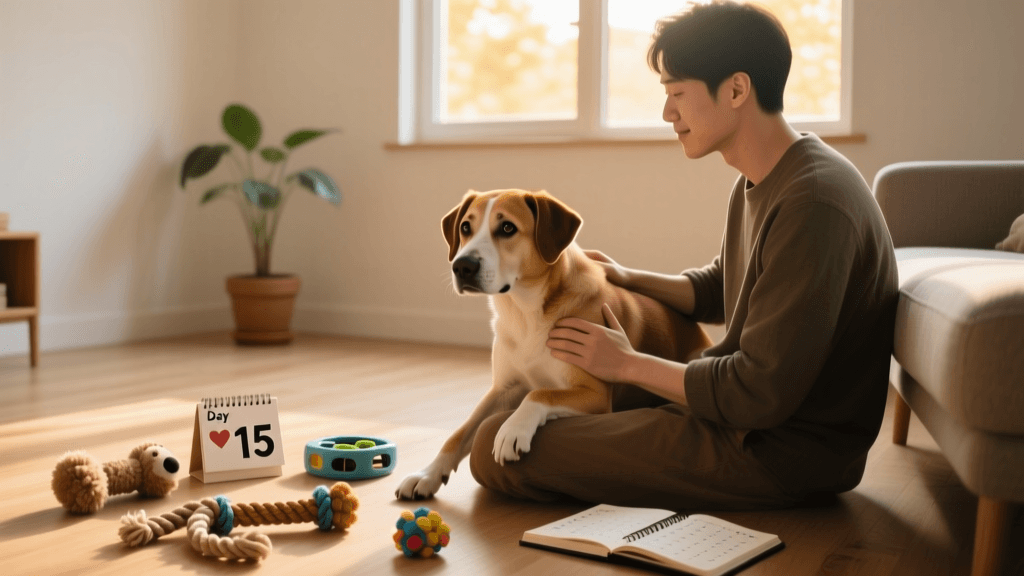
Keep a simple journal on your phone during these first 30 days. Note when your dog first approaches you voluntarily, when they first sigh and relax in your presence, and when they begin to greet you at the door. These micro-milestones are the true indicators of a bond forming. By utilizing structured enrichment, respecting the 3-3-3 timeline, and prioritizing your dog's emotional comfort over your desire for immediate cuddles, you are laying the groundwork for a deeply loyal, confident, and happy companion for years to come.
hannah-wickes
All our authors care for dogs every day — read more of their work on the authors page.