Top 7 Costly Mistakes to Avoid When Getting a New Dog
Avoid these 7 common financial and puppy-proofing mistakes when getting a new dog. Learn real costs, safety tips, and prep checklists for new owners.
Introduction
Bringing a new dog into your home is one of the most rewarding experiences in life, but it is also a massive responsibility. Whether you are adopting a rescue from a local shelter or purchasing a purebred puppy from a reputable breeder, the excitement of the first few days can easily blind you to critical errors in preparation. Many first-time dog owners make well-meaning but costly mistakes that can compromise their pet's safety, drain their bank accounts, and create long-term behavioral issues. At Paws-Tales, we want to ensure your transition into dog ownership is as smooth as possible. Below, we detail the top seven most common mistakes new dog owners make regarding budgeting, puppy-proofing, and early care, along with actionable advice on how to avoid them.
Mistake 1: Underestimating the True Financial Commitment
One of the most frequent errors new owners make is budgeting only for the adoption fee or the initial purchase price of the dog. The reality is that the first year of dog ownership is significantly more expensive than subsequent years due to initial veterinary care, gear, and home modifications. Failing to prepare for these costs can lead to financial stress and, in worst-case scenarios, the surrender of the dog to a shelter.
Before bringing your new dog home, review this realistic breakdown of expected expenses. Keep in mind that costs can vary widely based on your location, the size of your dog, and whether you adopt or buy.
| Expense Category | Estimated First-Year Cost | Annual Ongoing Cost |
|---|---|---|
| Adoption or Purchase Fee | $50 - $2,500+ | N/A |
| Initial Vet Exam & Vaccines | $150 - $400 | $100 - $250 |
| Spay/Neuter Surgery | $200 - $600 | N/A |
| Microchipping & Registration | $50 - $75 | $0 - $20 (annual fees) |
| Crate, Bed, and Gates | $100 - $300 | $50 (replacements) |
| Collar, Leash, and Harness | $40 - $100 | $30 (replacements) |
| High-Quality Food & Treats | $400 - $900 | $400 - $900 |
| Flea, Tick, & Heartworm Prevention | $200 - $400 | $200 - $400 |
| Toys, Chews, and Enrichment | $100 - $250 | $100 - $250 |
| Professional Grooming (if applicable) | $300 - $800 | $300 - $800 |
Actionable Advice: Set up a dedicated "pet emergency fund" with at least $1,000 in liquid savings before your dog arrives. This ensures you are not caught off guard by unexpected illnesses or emergency veterinary visits during those crucial first few months.
Mistake 2: Ignoring Hidden Household Toxins
Puppies and curious adult dogs explore the world with their mouths, which makes household toxins a severe and often overlooked danger. Many new owners assume that if a food is safe for humans, it is safe for dogs, or that all houseplants are harmless greenery. This assumption can lead to fatal poisoning incidents.
Common kitchen hazards include xylitol (an artificial sweetener found in sugar-free gum, baked goods, and some peanut butters), grapes, raisins, onions, garlic, and macadamia nuts. Xylitol is particularly dangerous; even small amounts can cause a rapid, life-threatening drop in blood sugar and acute liver failure in dogs. The FDA explicitly warns pet owners to read every ingredient label before sharing human food or using peanut butter in enrichment toys like the Kong Classic.
Furthermore, many popular houseplants are highly toxic to canines. Sago palms, oleander, lilies, and dieffenbachia can cause symptoms ranging from severe gastrointestinal distress to fatal organ failure.
Actionable Advice: Audit your pantry and relocate all sugar-free products to high, secure cabinets. Before purchasing any new houseplants, cross-reference them with the ASPCA Animal Poison Control database to ensure they are completely non-toxic to pets.
Mistake 3: Buying the Wrong Size Crate and Gear
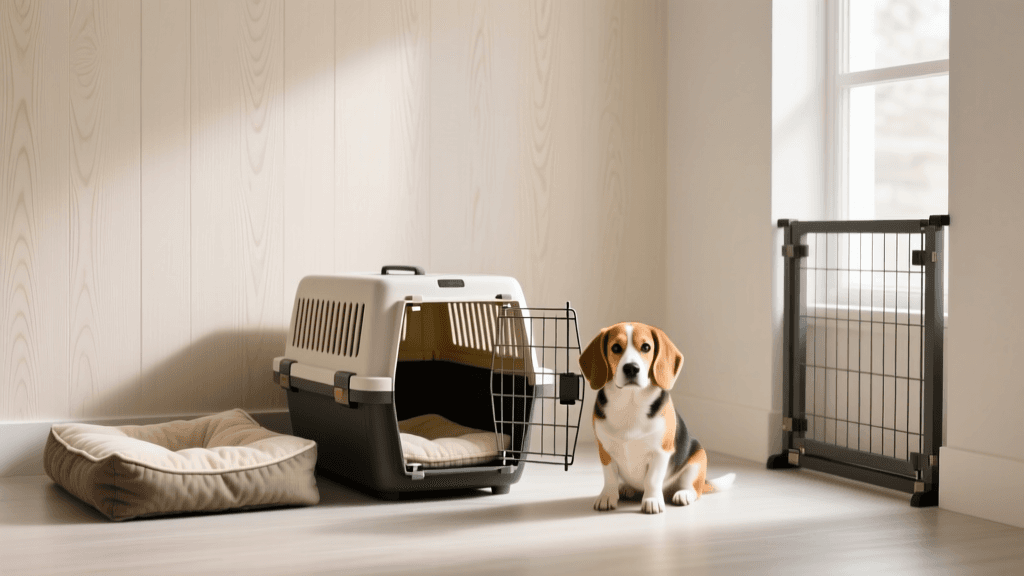
A crate is an essential tool for house training and providing a safe den for your dog, but buying the wrong size is a common and frustrating mistake. A crate that is too large allows a puppy to eliminate in one corner and sleep in the other, completely defeating the purpose of crate training. Conversely, a crate that is too small is uncomfortable and can cause joint stress or anxiety.
Actionable Advice: Measure your dog properly. For a fully grown dog, measure from the tip of their nose to the base of their tail, and add 2 to 4 inches for the length. Measure from the floor to the top of their head (or the tip of their ears if they stand erect), and add 2 inches for the height. If you are getting a puppy, buy a wire crate like the MidWest iCrate that comes with an adjustable divider panel. This allows you to expand the living space as the puppy grows without having to purchase multiple crates.
Similarly, avoid buying cheap, thin nylon harnesses that can cause tracheal damage. Invest in a front-clip, no-pull harness and measure your dog's girth (the widest part of the ribcage just behind the front legs) to ensure a snug, chafe-free fit.
Mistake 4: Failing to Register the Microchip
Many new owners believe that once the shelter or breeder implants a microchip, their job is done. This is a dangerous misconception. A microchip is not a GPS tracker; it is a passive RFID device that only provides an identification number when scanned by a vet or shelter. If that number is not linked to your current contact information in a national registry, the chip is virtually useless.
The American Veterinary Medical Association (AVMA) emphasizes that microchips are only as effective as the registration databases they are linked to. If you adopt a dog, the chip may still be registered to the shelter or the previous owner.
Actionable Advice: As soon as you finalize the adoption or purchase, locate the microchip brand (e.g., HomeAgain, Petlink, 24PetWatch) and create an online account. Register the chip in your name, add your mobile number, and list an emergency secondary contact. Set a recurring annual calendar reminder to log in and verify that your address and phone number are up to date.
Mistake 5: Skipping a Pre-Adoption Home Audit
Puppy-proofing is often done haphazardly, with owners simply putting away shoes and obvious choking hazards. However, dogs are incredibly resourceful and can access areas you might not consider. Failing to secure heavy furniture, exposed electrical wires, and accessible trash cans can result in thousands of dollars in property damage or emergency vet bills.
Actionable Advice: Get down on your hands and knees to view your home from a dog's perspective. Use cord concealers to hide electrical wires behind entertainment centers. Swap out open-top trash cans for heavy, locking bins like the simplehuman lock-top models to prevent dumpster-diving, which frequently leads to intestinal blockages. Finally, use hardware-mounted baby gates at the top of staircases and to block off high-risk rooms like kitchens and bathrooms, as pressure-mounted gates can easily be pushed over by medium-to-large breeds.
Mistake 6: Delaying Pet Insurance Enrollment
Waiting until your dog gets sick or injured to look into pet insurance is a massive financial mistake. Pet insurance providers do not cover pre-existing conditions. If your dog develops a limp, an ear infection, or allergies before you enroll, any future issues related to those conditions will be permanently excluded from your coverage.
Actionable Advice: Enroll in a comprehensive pet insurance policy (such as Trupanion, Healthy Paws, or Lemonade) before your dog's first veterinary wellness exam. By enrolling early and serving the standard 14-day waiting period while your dog is perfectly healthy, you ensure that any future orthopedic issues, hereditary conditions, or accidental injuries are covered. Premiums typically range from $30 to $70 per month, which is a fraction of the $3,000 to $7,000 cost of emergency surgeries like gastric dilatation-volvulus (bloat) or foreign body removal.
Mistake 7: Overlooking the 3-3-3 Decompression Rule
While not a financial or physical safety mistake, failing to respect the psychological transition of a new dog is a primary cause of early behavioral issues and owner surrender. New owners often overwhelm their dogs with house tours, immediate trips to the dog park, and a revolving door of friends and family wanting to meet the new pet on day one.
Actionable Advice: Adhere strictly to the 3-3-3 Rule of dog adoption:
- 3 Days: Your dog may feel overwhelmed, scared, and unsure of their surroundings. They might not eat or drink normally and will likely hide or sleep excessively. Give them a quiet, designated safe space.
- 3 Weeks: Your dog is starting to settle in, figuring out your routine, and showing their true personality. This is when minor behavioral quirks may appear as they test boundaries.
- 3 Months: Your dog finally feels completely at home, building trust and a deep bond with you.
Keep the first week incredibly boring. Limit visitors, stick to a strict feeding and potty schedule, and allow your dog to decompress at their own pace.
Conclusion
Getting a new dog is a life-changing event that requires careful forethought, financial planning, and environmental preparation. By avoiding these seven common mistakes—budgeting accurately, eliminating household toxins, buying properly sized gear, registering microchips, conducting a thorough home audit, securing early pet insurance, and respecting the decompression period—you set the stage for a lifelong, healthy, and happy relationship with your new canine companion. Welcome to the incredible journey of dog ownership!
marcus-aldridge
All our authors care for dogs every day — read more of their work on the authors page.