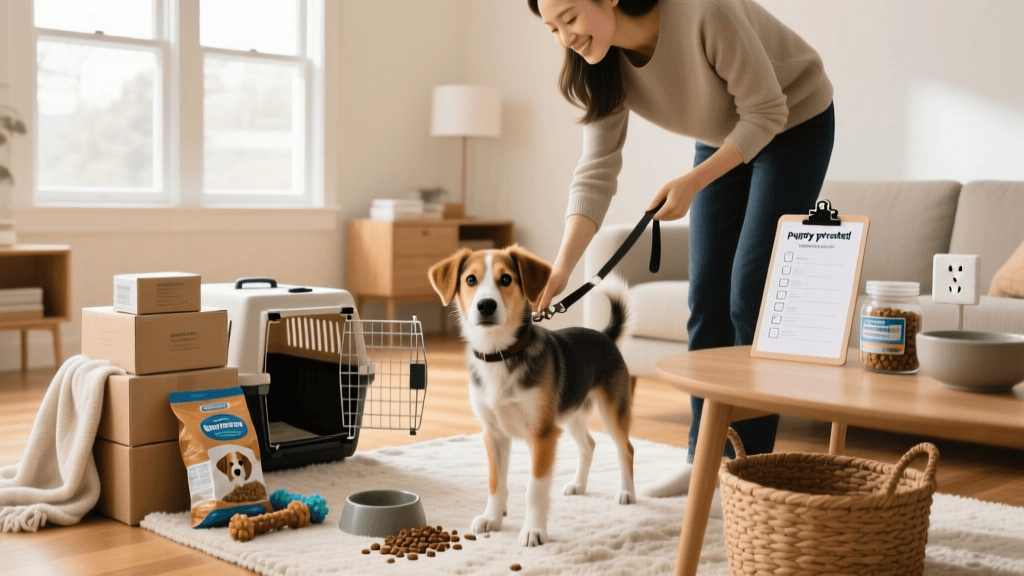
Preparing Your Home for a Rescue: 3 Behavior Case Studies
Discover how to prepare your home for a rescue dog. Explore three behavior case studies on setting up decompression zones and managing early anxiety.

The Hidden Toll of Shelter Stress and the 3-3-3 Rule
Bringing home a rescue dog is a profoundly rewarding experience, but the transition from a high-stress shelter environment to a quiet living room is rarely seamless. According to the Humane Society of the United States, the first few days in a new home are critical for establishing trust and baseline security. Behaviorists frequently reference the '3-3-3 Rule': three days to decompress, three weeks to learn your routine, and three months to truly feel at home.
However, many new owners misinterpret the first three days. A dog that is sleeping constantly or hiding isn't necessarily 'settling in'—they are often experiencing a cortisol hangover. Shelter environments elevate canine stress hormones to unprecedented levels. When a dog is adopted, it takes a minimum of 72 hours for circulating cortisol to begin dropping, and up to three months for their nervous system to fully regulate. To support this physiological reset, behaviorists recommend establishing a 'decompression zone.' Below, we examine three real-world behavior case studies to illustrate how to tailor your home setup for specific rescue profiles.
Case Study 1: Bella the Overstimulated Hound
The Behavioral Profile
Bella, a 3-year-old Beagle mix, spent four months in a municipal shelter. Upon adoption, her owners noted severe environmental sensitivity: she paced relentlessly, panted heavily, and reacted explosively to neighborhood sounds like garbage trucks and passing dogs. Her shelter kennel had been situated near the high-traffic intake area, resulting in chronic auditory overstimulation.
The Environmental Setup
Bella's decompression zone was established in a spare bedroom, focusing heavily on auditory and olfactory regulation. The goal was to lower her heart rate and provide predictable, low-arousal enrichment.
- Auditory Masking: We installed a LectroFan High Fidelity White Noise Machine (approx. $45) near the window to mask outdoor triggers. The continuous fan sound proved far more effective than classical music for blocking sudden, sharp noises.
- Olfactory Enrichment: Because hounds process the world through their noses, mental fatigue was achieved without physical exertion. We utilized a PAW5 Wooly Snuffle Mat ($35) for her morning meals, forcing her to forage for kibble. Ten minutes of snuffling burns as much mental energy as a one-mile walk.
- Chewing Outlets: To soothe her anxiety, she was provided with a Kong Classic ($15) stuffed with frozen goat milk and pumpkin puree. The act of chewing releases endorphins in the canine brain, acting as a natural sedative.
Timeline & Result: Bella was kept on a strict 'no walks' protocol for 14 days, utilizing only a private, fenced backyard for potty breaks. By day 10, her pacing ceased, and she began voluntarily offering relaxed, deep-breathing sleep states in her bed.
Case Study 2: Max the Fearful Senior
The Behavioral Profile
Max, an 8-year-old German Shepherd mix, was surrendered due to a divorce. He exhibited severe spatial insecurity, slipping on hardwood floors, and mild resource guarding around his food bowl. As the ASPCA notes, older dogs with arthritis or joint pain often develop fear-based reactivity when they feel physically unstable in their environment.
The Environmental Setup
Max's setup prioritized tactile security, joint support, and safe feeding stations to eliminate the need for spatial guarding.
- Tactile Security: Hardwood floors were covered with Ruggable 2x7 Washable Runners ($150 each) to create secure 'highways' through the house. This gave Max the confidence to navigate without fear of splaying his hips.
- Crate Modification: Max's 42-inch wire crate was placed in a low-traffic corner and covered with a MidWest Homes for Pets Crate Cover ($35). Leaving the front flap open but the top and sides covered created a 'den' effect, reducing visual stimuli while preventing the feeling of being trapped.
- Scatter Feeding Protocol: To address resource guarding, Max's meals were transitioned from a single bowl to scatter-feeding in the yard and using a Outward Hound Brick Puzzle ($15) in his decompression zone. This removed the 'bowl' as a defensible resource and turned mealtime into a solitary, low-stress activity.
Timeline & Result: Within three weeks, Max's slipping incidents dropped to zero, and his low-level growling when humans walked past his eating area completely extinguished as his physical confidence grew.
Case Study 3: Scout the High-Arousal Herder
The Behavioral Profile
Scout, a 2-year-old Border Collie mix, displayed intense barrier frustration and impulse control issues. In the shelter, he would hurl himself at the kennel door whenever staff walked by. In his new home, this translated to nipping at children's ankles and aggressive barking at the front window.
The Environmental Setup
Scout required a setup that managed his visual triggers while providing appropriate, high-intensity outlets for his herding instincts. The American Kennel Club emphasizes that managing the environment is the first step in modifying high-arousal behaviors before formal training even begins.
- Visual Barriers: We applied Arthome One Way Window Film ($25) to the lower 30 inches of the front-facing windows. This allowed natural light in but completely blocked Scout's view of pedestrians and passing cars, instantly reducing his daily barking episodes by 90%.
- Indoor Tether Station: A Leash Boss Heavy Duty Tie Out ($30) was installed on a wall stud near the living room. This allowed Scout to be part of the family without having the freedom to practice ankle-nipping. He was tethered with a stuffed Kong during high-traffic times (e.g., kids coming home from school).
- Appropriate Herding Outlets: To replace the children as herding targets, we introduced a Chase-It Interactive Flirt Pole ($40). Used in the yard for 15 minutes a day with strict 'drop it' rules, this satisfied his prey drive safely.
Timeline & Result: After 21 days of environmental management and structured flirt-pole play, Scout's baseline arousal dropped significantly, allowing his owners to begin counter-conditioning training with a certified behaviorist.
The Ultimate Decompression Toolkit: Comparison Chart
Setting up a decompression zone doesn't require a massive budget, but it does require strategic purchases. Below is a comparison of essential tools based on the behavioral profiles discussed.
| Product Category | Specific Recommendation | Estimated Cost | Primary Behavioral Target |
|---|---|---|---|
| White Noise Machine | LectroFan High Fidelity | $45 | Auditory sensitivity, shelter noise trauma |
| Washable Runners | Ruggable 2x7 Runners | $150 | Spatial insecurity, senior joint pain |
| Privacy Window Film | Arthome One Way Film | $25 | Barrier frustration, visual reactivity |
| Olfactory Mat | PAW5 Wooly Snuffle Mat | $35 | Overstimulation, high energy without space |
| Crate Cover | MidWest Canvas Cover | $35 | General anxiety, need for den security |
Implementing the Two-Week Protocol
Regardless of the specific products you use, the success of a decompression zone relies on strict adherence to a timeline. For the first 14 days, new owners should implement a 'Two-Week Shutdown.' This does not mean locking the dog in a room; rather, it means severely limiting their world to reduce decision fatigue.
Key Rules for the First 14 Days:
- No Off-Leash Dog Parks or Pet Stores: These environments flood a dog's nervous system with unfamiliar scents and unpredictable dogs.
- Limited Guest Access: Well-meaning friends wanting to 'meet the new dog' will spike cortisol levels. Restrict visitors for the first three weeks.
- Predictable Potty Schedules: Take the dog out on a leash to the exact same spot in the yard at the exact same times. Predictability breeds confidence.
- Hand-Feeding: Ditch the food bowl for the first week. Hand-feeding or using puzzle toys builds a positive association with your hands and establishes you as the provider of good things, which is crucial for dogs with a history of neglect or resource guarding.
Conclusion: Patience is the Ultimate Tool
Preparing your home for a rescue dog is about more than buying a bed and a leash; it is about engineering an environment that actively lowers stress. By studying the behavioral profiles of dogs like Bella, Max, and Scout, we can see that targeted environmental modifications—from white noise to visual barriers—can dramatically accelerate the bonding process. Remember that a dog's behavior on day one is rarely their true personality; it is a trauma response. By providing a structured, thoughtful decompression zone, you give your new companion the time and space they need to finally show you who they truly are.
aaron-whyte
All our authors care for dogs every day — read more of their work on the authors page.