Behavioral Decompression Guide For Adopted Rescue Dogs
Learn expert behavioral decompression strategies for adopted dogs. Master the 3-3-3 rule, setup protocols, and stress-reduction techniques.

The Neurobiology of Shelter Stress and Decompression
When you adopt a dog from a shelter or rescue organization, you are not just bringing home a new pet; you are initiating a complex neurological transition. From an expert behavior analysis perspective, the shelter environment is a crucible of chronic stress. Dogs in shelters are subjected to sleep deprivation, unpredictable noise levels (often exceeding 100 decibels), and a lack of environmental control. This triggers a prolonged activation of the Hypothalamic-Pituitary-Adrenal (HPA) axis, resulting in elevated baseline cortisol levels.
Cortisol, the primary stress hormone, has a significant half-life. Veterinary behaviorists note that it can take anywhere from two to six weeks for a dog's neurochemistry to return to baseline after leaving a high-stress environment. This period of physiological recalibration is known as behavioral decompression. Failing to account for allostatic overload—the cumulative wear and tear on the body from chronic stress—often leads to misinterpretations of the dog's true personality, resulting in premature returns to the shelter or the development of maladaptive coping mechanisms.
According to veterinary behaviorists, a dog's cortisol levels can remain elevated for weeks after leaving a shelter, meaning the dog you meet on day one is not the dog you will have on day thirty.
Designing the Behavioral Decompression Zone
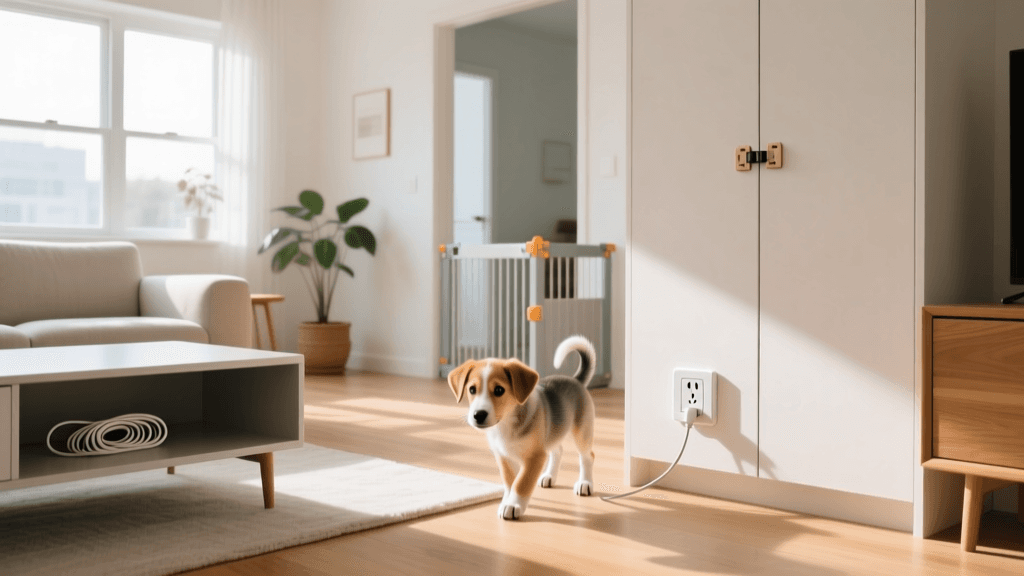
Before bringing your adopted dog home, you must establish a dedicated Decompression Zone. This is a low-stimulus, highly predictable environment that allows the dog's parasympathetic nervous system (the "rest and digest" network) to engage. Do not give a newly adopted dog free roam of the house; spatial overwhelm triggers anxiety and inappropriate elimination.
Essential Equipment and Spatial Measurements
- Primary Containment (Crate): For a medium-sized dog (30-50 lbs), use a MidWest iCrate measuring 36" L x 23" W x 25" H (Approx. cost: $65). The crate should be large enough for the dog to stand and turn around, but use a wire divider to block off excess space, which encourages denning behavior and prevents soil-marking.
- Perimeter Control (Baby Gate): Use a Regalo Easy Step Walk Thru Gate (Approx. cost: $40) to block off the decompression room (preferably a quiet bedroom or home office). This allows visual access to the household without physical overwhelm.
- Olfactory Reset (Enzymatic Cleaner): Keep Nature's Miracle Advanced Stain and Odor Eliminator (Approx. cost: $12) on hand. Shelter dogs often have a history of indoor elimination; enzymatic breakdown of uric acid crystals is vital to prevent recursive marking.
- Pheromone Therapy: Plug in an Adaptil DAP (Dog Appeasing Pheromone) Diffuser (Approx. cost: $25) in the decompression room 24 hours before the dog arrives. This synthetic analogue of the maternal nursing pheromone has been clinically shown to reduce panting, pacing, and vocalization in novel environments.
The 3-3-3 Rule: A Behavioral Timeline
The widely recognized "3-3-3 Rule" provides a structural framework for understanding the psychological milestones of a newly adopted dog. Below is a behavioral analysis of what to expect and how to respond during each phase.
| Timeframe | Behavioral State | Cortisol / Stress Level | Owner Action Plan |
|---|---|---|---|
| First 3 Days | Overwhelmed, Shut-Down, or Hyper-Vigilant | Peak / High | Strict decompression. Potty breaks on-leash only. No guests, no other pets, no trips to pet stores. Feed meals in the crate to build positive associations. |
| First 3 Weeks | Testing Boundaries, Routine Formation | Moderate / Fluctuating | Establish rigid daily schedules for feeding and walking. Begin low-pressure classical conditioning. Introduce household members one at a time in neutral spaces. |
| First 3 Months | Attachment, True Personality Emergence | Baseline / Low | Begin structured obedience training. Expand environmental enrichment. Address any emerging resource guarding or barrier frustration with a professional. |
For a comprehensive overview of this timeline, the American Kennel Club (AKC) provides excellent foundational guidelines on managing the transition periods of rescue dogs.
Evidence-Based Calming Protocols
Behavioral decompression requires active engagement of the dog's parasympathetic nervous system. We achieve this through species-specific consummatory behaviors: chewing, licking, and foraging.
Mastication and Endorphin Release
Chewing is a self-soothing behavior that releases endorphins and serotonin in the canine brain. Provide a Kong Classic (Medium, Red - Approx. cost: $15) stuffed with a mixture of plain pumpkin puree, kibble, and a smear of xylitol-free peanut butter, then frozen for four hours. The prolonged extraction process lowers heart rate and provides vital mental stimulation without physical exhaustion.
Licking and Foraging
Licking is inherently rhythmic and calming. Utilize a silicone LickiMat Soother (Approx. cost: $12) spread with plain Greek yogurt or bone broth (ensure no onion/garlic ingredients). Additionally, replace traditional food bowls with a Snuffle Mat or scatter feeding in the yard. This engages the olfactory cortex, which tires the dog out mentally and satisfies the biological imperative to scavenge.
Auditory Entrainment
Studies in bioacoustics demonstrate that classical music, specifically tracks engineered with simplified arrangements and slower tempos, can significantly reduce shelter and home stress. Albums like Through a Dog's Ear utilize psychoacoustic principles to lower the canine heart rate. Play this at a low volume (around 50 decibels) in the decompression zone during nap times.
Identifying Displacement and Shut-Down Behaviors
One of the most critical errors new adopters make is misinterpreting a "shut-down" dog as a "calm" or "well-behaved" dog. In behavior analysis, learned helplessness occurs when a dog realizes it has no control over its environment and simply stops reacting. This is not relaxation; it is a profound state of psychological surrender.
Conversely, you must learn to read displacement behaviors. These are normal behaviors displayed out of context when a dog experiences internal conflict or stress. Watch for:
- Lip Licking and Yawning: When not tired or eating, these are primary calming signals indicating the dog is overwhelmed by a stimulus (e.g., a child approaching too quickly).
- Whale Eye: When the dog turns its head away but keeps its eyes fixed on a stressor, exposing the whites of the eyes (sclera).
- Scratching or Shaking Off: A sudden, vigorous "wet dog shake" when not wet is a physiological mechanism to literally "shake off" adrenaline after a stressful encounter.
If you observe these signals, immediately increase the distance between your dog and the stressor. Do not force interactions. As noted by The Humane Society of the United States, allowing the dog to retreat and choose when to engage is fundamental to building trust and preventing fear-based aggression.
When to Consult a Certified Behaviorist
While the 3-3-3 rule and decompression protocols resolve the majority of transitional anxieties, certain behavioral presentations require immediate intervention by a qualified professional. You should bypass general obedience trainers and seek a Certified Applied Animal Behaviorist (CAAB) or a consultant from the International Association of Animal Behavior Consultants (IAABC) if you observe:
- Severe Resource Guarding: Freezing, growling, or snapping when approached near food, high-value chews, or stolen items.
- Barrier Frustration / Reactivity: Lunging, barking, or redirecting bites onto the leash or handler when seeing other dogs on walks.
- Separation Anxiety (True Isolation Distress): Destructive behavior directed exclusively at exit points (doors, window frames), self-mutilation, or continuous vocalization recorded on camera when left alone.
Adopting a rescue dog is a profound commitment to their psychological rehabilitation. By respecting the neurobiology of stress, enforcing a strict decompression protocol, and reading their subtle body language, you lay the neuro-pathways for a secure, confident, and deeply bonded companion. Patience during the first 30 days is the greatest investment you can make in the next 10 years of your dog's life.
priya-sutaria
All our authors care for dogs every day — read more of their work on the authors page.