Alone Time Training For Newly Adopted Rescue Dogs 2026
Learn how to prevent separation anxiety in newly adopted rescue dogs with our 2026 alone-time desensitization protocol, smart camera picks, and routines.
The Reality of Bringing a Rescue Dog Home in 2026
Bringing a newly adopted rescue dog into your home is one of the most rewarding experiences a person can have. However, as return-to-office mandates and hybrid work schedules continue to evolve in 2026, new dog owners are facing a significant challenge: leaving their new companion alone. Unlike puppies raised from birth in a controlled environment, rescue dogs often come with unknown histories, making them particularly susceptible to stress when left by themselves. Establishing a robust alone-time routine from day one is not just a convenience; it is a critical component of responsible dog ownership and essential for preventing severe behavioral issues.
Understanding Separation Anxiety vs. Isolation Distress
Before diving into training protocols, it is vital to distinguish between true separation anxiety and isolation distress. According to the ASPCA, separation anxiety is triggered specifically by the departure of a primary attachment figure. In contrast, isolation distress occurs when a dog is simply left alone, regardless of who is leaving. A dog with isolation distress will often settle down if left with a pet sitter or a familiar friend, whereas a dog with true separation anxiety will panic even if other people are present, simply because their specific owner is gone.
Rescue dogs frequently exhibit isolation distress during their first few weeks in a new home. They have just lost their previous living situation, shelter environment, or foster family, and their new bond with you is still fragile. Jumping straight into leaving them alone for eight hours is a recipe for disaster. Instead, a methodical, science-backed desensitization approach is required to build their confidence and teach them that your departures are temporary and safe.
The 30-Day Desensitization Protocol for Rescue Dogs
To prevent anxiety from taking root, new owners must implement a gradual alone-time training protocol. This 2026 updated framework focuses on micro-departures and trigger desensitization.
Week 1: The Shadow Phase and Safe Spaces
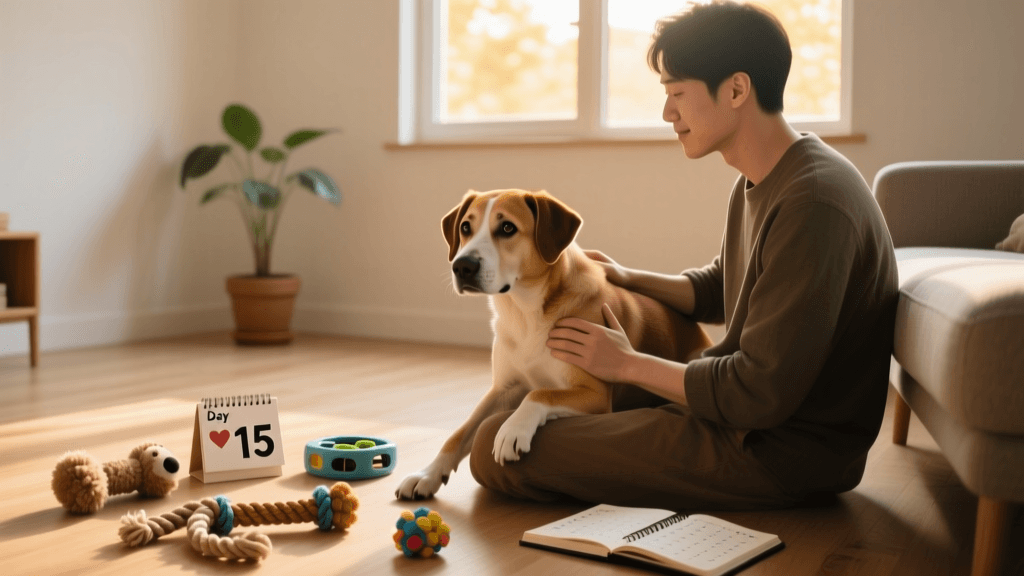
During the first seven days, your goal is to build trust without forcing independence. Do not leave the dog completely alone. If you must leave the house, arrange for a pet sitter, use a doggy daycare, or take the dog with you. Inside the home, begin establishing a 'safe zone' (such as a crate or a puppy-proofed pen) where the dog receives high-value chews, like bully sticks or frozen enrichment toys. The goal is to create a positive association with the space where they will eventually spend time alone.
Week 2: Micro-Departures and Door Desensitization
Begin practicing 'fake departures.' Pick up your keys, put on your shoes, and then sit back down on the couch. Do this 10 to 15 times a day until the dog stops reacting to these pre-departure cues. Next, step outside the front door, close it, and immediately return. Do not make a fuss when you leave or when you return. Keep your exits and entrances incredibly boring. Gradually increase the time outside from one second to five seconds, then 30 seconds, and eventually up to two minutes, provided the dog remains calm on your smart camera monitor.
Week 3: Extending Duration and Environmental Enrichment
Once your dog can handle a two-minute departure without pacing, whining, or scratching at the door, begin extending the time to 10, 15, and then 30 minutes. During these absences, leave the dog in their safe zone with a long-lasting enrichment activity. Licking and chewing release endorphins in a dog's brain, which naturally soothes the nervous system. A frozen Kong filled with dog-safe peanut butter and plain yogurt is an excellent tool for this phase.
Week 4: Real-World Application
By the fourth week, you should be able to leave the house for 45 to 60 minutes to run errands. Continue to monitor your dog via a pet camera. If you notice signs of stress, you have moved too quickly. Drop back to a shorter duration where the dog was successful and build up more slowly. Remember, progress is rarely linear, and patience is your most valuable training tool.
2026 Smart Home Tech for Alone Time Monitoring
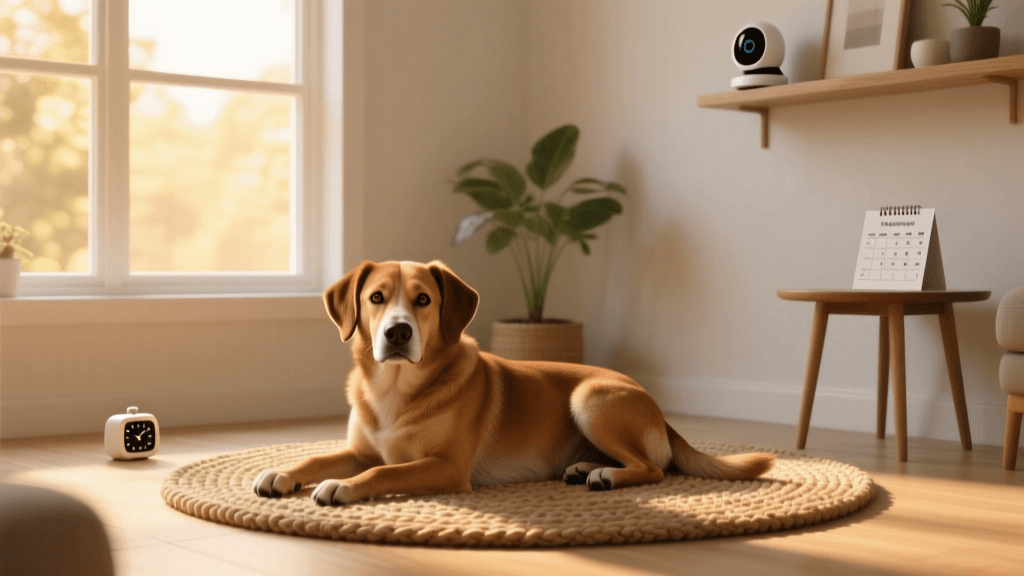
You cannot manage what you cannot measure. In 2026, smart pet cameras have become indispensable tools for new dog owners. They allow you to monitor your dog's stress levels, dispense treats, and even communicate via two-way audio. However, experts warn that two-way audio can sometimes increase anxiety in rescue dogs if they hear your voice but cannot find you. Use audio features sparingly and observe your dog's reaction.
| Camera Model | Key Features for Anxiety | Approx. Price (2026) | Best For |
|---|---|---|---|
| Furbo 360 Pro | Rotating view, auto-treat toss, bark alerts | $219 | Dogs who need visual stimulation and treat rewards |
| Wyze Cam v4 | Color night vision, AI pet detection, affordable | $45 | Budget-conscious owners needing basic monitoring |
| Petcube Bites 3 | Laser pointer, treat dispenser, vet chat integration | $179 | High-energy dogs needing interactive play while alone |
| Eufy Indoor Cam S350 | Dual-lens tracking, local storage, no monthly fees | $129 | Privacy-focused owners tracking pacing behaviors |
Designing the Ultimate Safe Zone
A dog's environment plays a massive role in how they handle solitude. A sprawling, empty house can feel overwhelming and trigger patrol behaviors, leading to exhaustion and anxiety. Confining your rescue dog to a thoughtfully designed safe zone reduces their cognitive load.
- Visual Barriers: If your dog barks at windows or passing cars, use frosted window film or close the blinds. Visual triggers spike cortisol levels, making it impossible for the dog to rest.
- Auditory Masking: Silence is deafening to a dog with isolation distress. Use a white noise machine or a smart speaker playing classical music or specially designed canine relaxation playlists. This masks outdoor noises like delivery trucks or neighbors.
- Olfactory Comfort: Pheromone therapy has advanced significantly. The Adaptil Optimum diffuser, widely recommended by veterinary behaviorists in 2026, releases a synthetic version of the dog-appeasing pheromone, which has been clinically shown to reduce signs of stress in confined dogs.
- Temperature Control: Ensure the safe zone is climate-controlled. A dog that is too hot or too cold will become restless and unable to settle into a deep sleep.
Recognizing Clinical Separation Anxiety
Despite your best efforts, some rescue dogs possess deep-seated neurochemical imbalances that require professional intervention. It is crucial to recognize the difference between mild boredom and clinical separation anxiety. The American Kennel Club notes that true separation anxiety often manifests in extreme, self-destructive behaviors that occur exclusively when the owner is absent.
Red flags that indicate you need to consult a certified veterinary behaviorist include:
- Self-mutilation, such as chewing on their own paws or tail until they bleed.
- Destructive behavior focused entirely on exit points, like clawing through drywall or breaking teeth on door frames.
- Inappropriate elimination (urination or defecation) in a previously house-trained dog, occurring only during absences.
- Excessive drooling, panting, or vomiting shortly after the owner departs.
- Refusal to eat high-value treats or food when left alone, indicating a complete shutdown of the digestive system due to panic.
If your rescue dog displays any of these severe symptoms, stop the alone-time training protocol immediately. Forcing a panicked dog to 'cry it out' or using punishment-based bark collars will only exacerbate the trauma and worsen the condition. Instead, seek guidance from the Humane Society or a board-certified veterinary behaviorist who can discuss anti-anxiety medications alongside a modified behavioral modification plan.
Final Thoughts on Patience and Consistency
Getting a dog is a long-term commitment that extends far beyond the initial adoption day. In 2026, we have more tools, technology, and behavioral science at our disposal than ever before, but none of it replaces the foundational element of dog ownership: patience. By respecting your rescue dog's emotional boundaries, utilizing gradual desensitization, and creating a secure environment, you can help your new companion overcome their fears and learn that being alone is simply a quiet time to rest, not a reason to panic.
marcus-aldridge
All our authors care for dogs every day — read more of their work on the authors page.