Best Puppy Breeds For Remote Workers In 2026: WFH Guide
Discover the best puppy breeds for remote workers in 2026. Learn WFH potty training schedules, separation anxiety prevention, and top breed picks.
The Work-From-Home Puppy Dilemma in 2026
As hybrid and fully remote work models solidify into the permanent standard in 2026, more professionals are welcoming puppies into their home offices. Working from home offers an unparalleled advantage for early puppy care: you are present for frequent potty breaks, immediate socialization, and constant bonding. However, the WFH lifestyle also presents a unique, hidden danger. When you are home 24/7, puppies often fail to develop the self-soothing skills required for the days you eventually return to the office, run errands, or work from a local coffee shop.
Choosing the right breed is the first critical step in ensuring a harmonious home office. You need a dog that is relatively quiet during Zoom calls, content to nap under your desk, and adaptable to the shifting schedules of the modern hybrid worker. In this comprehensive 2026 guide, we break down the best puppy breeds for remote workers, provide a structured WFH puppy care schedule, and share expert strategies to prevent separation anxiety.
Top 5 Puppy Breeds for Remote Workers
Not all puppies are suited for the home office environment. High-drive working breeds, like Border Collies or Belgian Malinois, will quickly become destructive if their physical and mental needs are not met between your morning stand-up and afternoon deep-work blocks. Instead, remote workers should look for companion breeds with moderate energy levels, low vocalization tendencies, and high adaptability.
1. Cavalier King Charles Spaniel
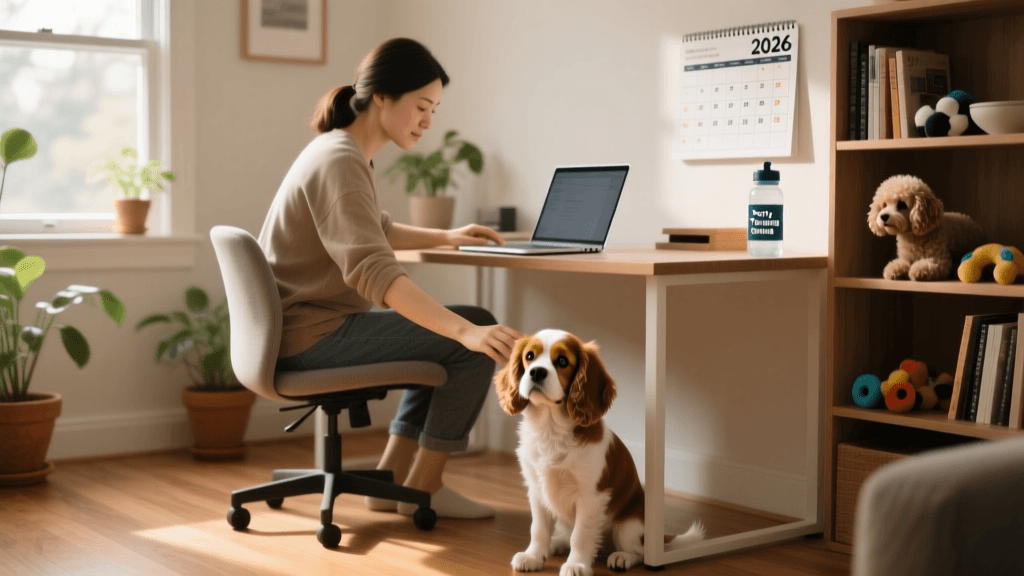
The Cavalier King Charles Spaniel remains the undisputed champion of the home office. Bred specifically to be a comforting companion, the Cavalier is exceptionally attuned to its owner's emotions and work rhythms. They are notoriously quiet, rarely barking at delivery drivers or passing cars, making them perfect for uninterrupted virtual meetings. In 2026, reputable breeders are heavily focusing on health testing for mitral valve disease, so ensure your breeder provides up-to-date cardiac clearances. They require moderate exercise—a 30-minute walk during your lunch break is usually sufficient.
2. Bichon Frise
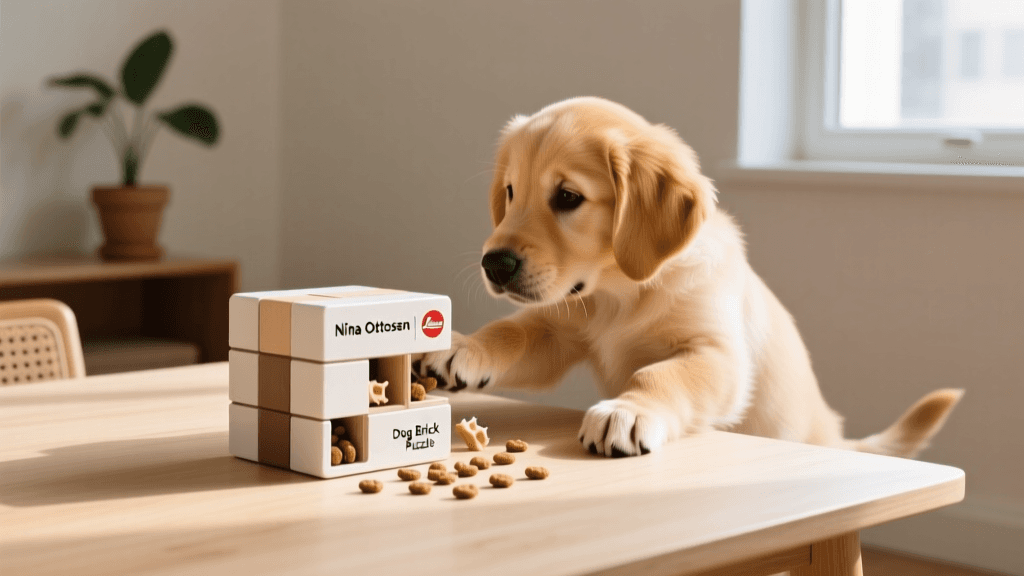
If you work from home and suffer from pet allergies, the Bichon Frise is an outstanding choice. Known for their hypoallergenic, powder-puff coats, Bichons are cheerful, highly trainable, and thrive on human interaction. They are intelligent enough to learn a 'settle' command quickly, meaning they will happily chew on a puzzle toy under your desk while you work. The trade-off is their grooming requirement; you will need to budget for professional grooming every 4 to 6 weeks to prevent painful matting.
3. Miniature Goldendoodle
The Miniature Goldendoodle continues to dominate the WFH scene in 2026 due to its high emotional intelligence and low-shedding coat. Weighing between 15 and 35 pounds, the miniature variety is small enough to travel with you on 'workcation' trips or to dog-friendly co-working spaces. They are highly food-motivated, which makes potty training and basic obedience remarkably fast. However, they do require dedicated mental stimulation; keep a stash of frozen enrichment toys in your freezer for your busiest work days.
4. Papillon
Do not let the Papillon's tiny, delicate appearance fool you; this breed is essentially a large dog in a small, portable package. Papillons are incredibly smart, ranking among the top toy breeds for obedience and agility. For remote workers who like to take their laptops to parks or cafes, the Papillon is the ultimate travel companion. They are alert and will let you know if someone is at the door, but they are not prone to the nuisance barking that plagues many other toy breeds.
5. Boston Terrier
Affectionately known as the 'American Gentleman,' the Boston Terrier is a compact, low-shedding breed that adapts beautifully to apartment living and home offices. They have a comical, affectionate nature and are generally content to snooze on a nearby dog bed while you type away. Bostons are brachycephalic (flat-faced), meaning they cannot tolerate intense heat or strenuous exercise. This actually makes them ideal for WFH professionals, as their exercise needs are easily met with a couple of short, leisurely walks around the neighborhood.
2026 WFH Breed Comparison Chart
| Breed | Adult Weight | Barking Level | Alone-Time Tolerance | 2026 Avg Puppy Cost |
|---|---|---|---|---|
| Cavalier King Charles Spaniel | 12-18 lbs | Low | Moderate | $2,500 - $3,500 |
| Bichon Frise | 12-18 lbs | Moderate | Low | $2,000 - $3,000 |
| Miniature Goldendoodle | 15-35 lbs | Moderate | Moderate | $2,800 - $4,000 |
| Papillon | 5-10 lbs | Low | Moderate | $1,800 - $2,500 |
| Boston Terrier | 12-25 lbs | Low | High | $1,500 - $2,500 |
Structuring Your WFH Day for Puppy Care
One of the biggest mistakes remote workers make is treating their puppy like a background accessory. Puppies require structured routines to thrive. According to the ASPCA's housetraining guidelines, consistency is the absolute key to a well-adjusted, house-trained dog. Here is how to integrate puppy care into your 2026 remote work schedule.
The Pomodoro Potty Method
Puppies under 16 weeks have very limited bladder control. Utilize a modified Pomodoro technique for your workday: work in focused 50-minute blocks, followed by a 10-minute puppy break. During this 10-minute window, take your puppy outside on a leash to their designated potty spot. Reward heavily with high-value treats (like freeze-dried liver) immediately after they eliminate. This prevents indoor accidents and gives your brain a necessary screen-time break.
Enforcing Puppy Naps During Deep Work
Puppies need between 18 and 20 hours of sleep a day. An overtired puppy will become 'bitey,' hyperactive, and unable to focus on training. When you have a 2-hour deep work block or a critical client presentation, your puppy should be in their crate or a secure playpen with a white noise machine running. Provide a frozen Kong stuffed with puppy-safe peanut butter to encourage self-soothing and sleep. This enforces the nap and keeps them entirely silent during your calls.
Preventing Separation Anxiety in Hybrid Workers
Because you are home almost all the time, your puppy will naturally assume that your constant presence is the baseline of reality. When you inevitably leave for a hybrid office day, a grocery run, or a weekend trip, the sudden absence can trigger severe separation anxiety. The American Kennel Club (AKC) notes that separation anxiety is one of the most common behavioral issues in modern pet dogs, largely exacerbated by the post-pandemic work-from-home boom.
Fake Departures and Desensitization
You must actively practice leaving your puppy alone, even when you have nowhere to be. Start by putting your puppy in their safe zone (crate or pen) with a long-lasting chew. Pick up your keys, put on your shoes, walk out the front door, and immediately get into your car. Wait 30 seconds, then come back inside. Do not greet the puppy when you return. Gradually increase the time you spend outside to 5 minutes, then 15, then an hour. This teaches the puppy that your departures are boring, temporary, and always followed by a return.
Utilizing 2026 Smart Pet Tech
Modern smart home technology is a remote worker's best friend for monitoring alone-time training. Devices like the latest generation of smart pet cameras allow you to drop treats remotely and monitor your puppy's stress levels via AI-driven vocalization alerts. If your camera alerts you that your puppy is whining 10 minutes after you leave, you know you pushed the time limit too far. Scale back your departure time to 5 minutes the next day and build up more slowly.
Socialization for the Homebound Professional
The primary socialization window for puppies closes around 14 to 16 weeks of age. If you are working from home, you might accidentally isolate your puppy, leading to fearfulness or reactivity later in life. You must intentionally schedule 'field trips' into your weekly calendar.
- Hardware Store Visits: Take your puppy (carried in a sling if they haven't finished their vaccination series) to a local home improvement store to experience the sounds of forklifts, automatic doors, and diverse groups of people.
- Cafe Patios: Bring a mat and a chew toy to an outdoor cafe. Reward your puppy for settling on the mat while the environment bustles around them.
- Office Building Lobbies: Practice 'sit for greetings' with security guards and office workers during their lunch rushes.
Managing Teething and Zoom Calls
Between 3 and 6 months of age, your puppy will begin teething. This is when the urge to chew becomes overwhelming, and the sharp 'puppy needle' teeth can do serious damage to your expensive home office equipment, including mouse cords, laptop chargers, and desk legs.
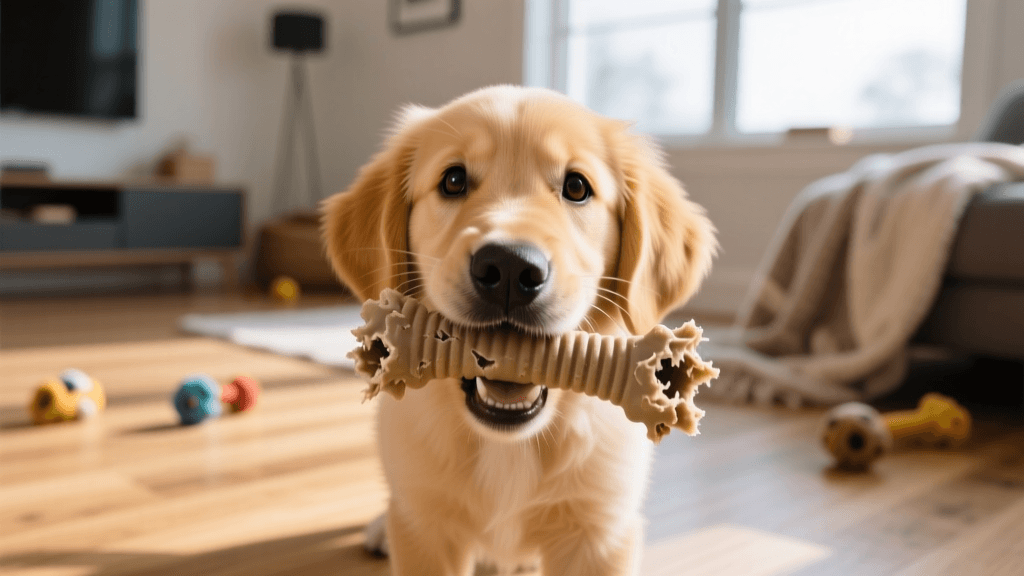
To protect your workspace, practice rigorous cable management using cord concealers and bitter apple spray on desk legs. More importantly, provide appropriate outlets for the chewing urge. In 2026, veterinary behaviorists highly recommend natural rubber chew toys that can be soaked in low-sodium bone broth and frozen. The cold temperature soothes inflamed gums, and the durable texture satisfies the chewing instinct without the squeaking noise that disrupts virtual meetings.
Conclusion
Being a remote worker in 2026 provides a fantastic foundation for raising a well-adjusted, deeply bonded puppy. By selecting a breed that matches your lifestyle—like the quiet Cavalier or the adaptable Miniature Goldendoodle—you set yourself up for success. However, the convenience of working from home must be balanced with intentional alone-time training and rigorous socialization outings. By structuring your day with the Pomodoro potty method and utilizing smart tech to monitor separation anxiety prevention, you can enjoy the best of both worlds: a productive career and a happy, thriving canine companion by your side.
priya-sutaria
All our authors care for dogs every day — read more of their work on the authors page.