Nina Ottosson Dog Brick Puppy Puzzle Training Tips 2026
Master the Nina Ottosson Dog Brick puzzle with your puppy in 2026. Discover step-by-step training, treat recipes, and mental enrichment tips for growing dogs.
The Rise of Cognitive Canine Care in 2026
As we navigate through 2026, the landscape of puppy care has evolved significantly. While physical exercise like leash walking and fetch remains important, veterinary behaviorists and certified dog trainers now heavily emphasize the critical role of mental enrichment. For a growing puppy, cognitive fatigue is just as important as physical exhaustion. In fact, experts note that fifteen minutes of focused puzzle play can tire a puppy out just as much as a thirty-minute walk. This is where interactive puzzle toys come into play, and the Nina Ottosson Dog Brick remains one of the most highly recommended tools for early canine cognitive development.
If you have recently brought a new puppy home, introducing them to puzzle games early on can prevent destructive behaviors, reduce separation anxiety, and build their problem-solving confidence. According to the American Veterinary Medical Association (AVMA), providing structured mental stimulation is a cornerstone of preventing behavioral issues in adolescent dogs. In this comprehensive guide, we will break down exactly how to introduce, train, and maximize the Nina Ottosson Dog Brick for your puppy.
Anatomy of the Nina Ottosson Dog Brick
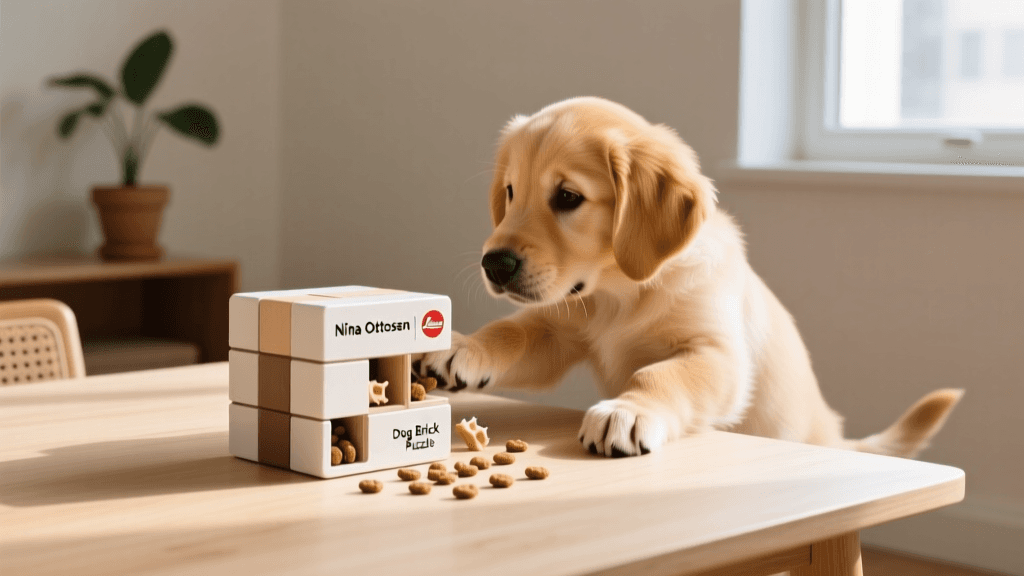
Before diving into the training steps, it is essential to understand the mechanics of the Dog Brick. Rated as a Level 2 to Level 3 puzzle depending on how you set it up, this toy features three distinct types of hidden compartments:
- Flip Caps: Round covers that hinge open to reveal a treat cavity underneath.
- Sliding Bones: Bone-shaped plastic pieces that slide along a track to uncover hidden rewards.
- Base Compartments: The actual hollowed-out spaces where the kibble or treats are placed.
The beauty of the Dog Brick lies in its adjustability. You can make it incredibly easy for an eight-week-old puppy or moderately challenging for a six-month-old adolescent. The durable, BPA-free, phthalate-free, and PVC-free plastic is safe for puppies, though it is crucial to remember that this is an interactive puzzle, not a chew toy.
Step-by-Step Puppy Training Guide
Introducing a puzzle toy to a puppy requires patience. If the task is too difficult, your puppy may experience "puzzle rage," leading to frustration, barking, or abandoning the toy altogether. Follow these phased steps to ensure a positive experience.
Phase 1: Scent and Discovery (Weeks 8 to 10)
When your puppy first encounters the Dog Brick, the goal is simply to build a positive association with the toy. Do not close any of the compartments.
- Remove all the sliding bones and flip caps entirely, or push them completely out of the way so the base compartments are wide open.
- Fill every open compartment with high-value, strong-smelling treats. Freeze-dried liver or tiny pieces of boiled chicken work exceptionally well for this stage.
- Place the puzzle on the floor and encourage your puppy to investigate. Let them eat the treats immediately.
- Praise them enthusiastically. The objective here is to teach them that this specific plastic board equals delicious food.
Phase 2: The Flip and Slide (Weeks 10 to 14)
Once your puppy confidently eats from the open compartments, it is time to introduce the mechanical parts of the puzzle.
- Replace the flip caps and sliding bones, but leave them slightly ajar. The treats should still be partially visible.
- Place a few treats in the open compartments and a few under the slightly open caps and bones.
- Guide your puppy to the toy. If they sniff at a closed cap but do not know how to open it, gently tap the cap with your finger to show them it moves.
- Allow them to use their nose or paws to nudge the pieces open. Reward them immediately when they succeed.
Phase 3: The Full Brick Challenge (Months 4 and Beyond)
As your puppy matures and their problem-solving skills sharpen, you can increase the difficulty.
- Close the flip caps completely and push the sliding bones all the way over the tracks so the treats are entirely hidden.
- Place the puzzle down and step back. Give your puppy time to figure out the dual-action mechanics required to access the food.
- If they get frustrated and walk away, do not force them. Simply make the puzzle easier by opening a few compartments and try again later.
Best Treat Fillers for the Dog Brick
Choosing the right filler is crucial for maintaining your puppy's interest while managing their daily caloric intake. The American Kennel Club (AKC) Training Resources recommends accounting for puzzle treats in your puppy's daily food allowance to prevent rapid weight gain. Below is a structured guide to the best fillers for the Dog Brick in 2026.
| Filler Type | Example | Difficulty Level | Caloric Impact |
|---|---|---|---|
| Dry Kibble | Puppy's regular daily kibble | Easy (Falls out quickly) | Low (Part of daily diet) |
| Freeze-Dried Treats | Single-ingredient beef liver or salmon | Medium (Requires grabbing) | Medium (High value, use sparingly) |
| Soft Pastes | Xylitol-free peanut butter or pumpkin puree | Hard (Requires licking) | High (Smear thinly to control calories) |
| Frozen Fillers | Plain Greek yogurt mixed with mashed blueberries | Expert (Requires prolonged licking) | Low to Medium (Great for teething relief) |
Pro Tip for Teething Puppies: If your puppy is between three and six months old and experiencing teething discomfort, mix plain Greek yogurt with a little water, pour it into the open compartments, and place the puzzle in the freezer for two hours. The frozen yogurt provides soothing relief for sore gums while encouraging mental engagement.
Timing and Frequency of Puzzle Sessions
Puppies have notoriously short attention spans. In 2026, modern canine enrichment protocols dictate that puzzle sessions should be kept brief and highly rewarding. Limit your puppy's time with the Dog Brick to 10 to 15 minutes per session. You can offer this once in the morning and once in the evening.
Using the puzzle as a replacement for a traditional food bowl is an excellent strategy. Instead of feeding your puppy their morning kibble out of a stainless steel bowl, use the kibble to fill the Dog Brick. This turns a mundane five-minute meal into a stimulating fifteen-minute brain game, slowing down fast eaters and preventing gastrointestinal issues like bloat.
Common Puppy Puzzle Mistakes to Avoid
Even with the best intentions, puppy owners can inadvertently create negative associations with puzzle toys. Avoid these common pitfalls:
- Leaving the Puppy Unsupervised: The Dog Brick is an interactive toy, not a pacifier. Puppies, especially during the teething phase, may try to chew the plastic sliding bones, which can lead to choking hazards or broken teeth. Always supervise play and put the toy away when the session is over.
- Skipping the Easy Phases: Jumping straight to Phase 3 will overwhelm a young puppy. Always start at Phase 1, even if your puppy seems incredibly smart. Building confidence is just as important as building cognitive skills.
- Using Low-Value Treats: If the reward is not worth the effort, the puppy will simply walk away. Ensure the treats inside the puzzle are more exciting than the food they get in their regular bowl.
- Punishing Frustration: If your puppy barks or paws aggressively at the toy out of frustration, do not scold them. Simply remove the toy, make it easier, and try again later. The ASPCA General Dog Care guidelines emphasize that positive reinforcement is the only effective method for shaping puzzle-solving behaviors.
Cleaning and Maintaining Your Puzzle Toy
Hygiene is a critical aspect of puppy care. Saliva, treat residue, and dirt can quickly accumulate in the crevices of the Dog Brick, leading to bacterial growth. To clean the puzzle, remove all sliding bones and flip caps. Wash the pieces by hand using warm water and a mild, pet-safe dish soap. Use a small brush, like an old toothbrush, to scrub the deep base compartments.
Important Warning: Never place the Nina Ottosson Dog Brick in the dishwasher. The high heat and harsh detergents can warp the plastic, melt the components, and ruin the smooth sliding mechanics of the puzzle. Always air dry the pieces completely before reassembling and storing them for the next session.
Conclusion
Investing time in mental enrichment during your puppy's first year yields lifelong benefits. The Nina Ottosson Dog Brick is more than just a toy; it is a developmental tool that fosters confidence, reduces anxiety, and strengthens the bond between you and your dog. By following this phased training approach, utilizing high-value fillers, and prioritizing safety, you will set your puppy up for cognitive success in 2026 and beyond. Remember to keep sessions short, positive, and always supervised, and watch your puppy blossom into a sharp, happy, and well-adjusted adult dog.
tom-renshaw
All our authors care for dogs every day — read more of their work on the authors page.