Training the Best Dog Breeds for Remote Workers in 2026
Discover how to mat-train the best dog breeds for remote workers in 2026. Keep your WFH companion calm during Zoom calls with these expert tips.
The 2026 WFH Landscape and the Canine Companion
As we navigate the hybrid and fully remote work landscape of 2026, the home office has permanently evolved. For millions of professionals, the ultimate coworker is no longer a colleague on a screen, but a four-legged companion sleeping quietly under the desk. However, adopting a dog specifically for a work-from-home (WFH) lifestyle requires more than just picking a cute puppy; it demands targeted behavioral conditioning and obedience training. Even the most naturally docile breeds need to be taught the boundaries of a professional environment. A sudden bark during a high-stakes virtual presentation or a paw on the keyboard can derail your productivity.
In this comprehensive 2026 training guide, we will explore the best dog breeds suited for remote workers and provide actionable, step-by-step training protocols to ensure your dog remains a calm, silent, and supportive presence during your 9-to-5 workday.
Top 5 Dog Breeds for Remote Workers
Before diving into the training protocols, it is essential to understand the baseline temperament of the breeds best suited for home office environments. These breeds share a common trait: low to moderate energy levels and a high desire for proximity without the need for constant interaction.
- Greyhound: Often misunderstood as hyperactive, retired racing Greyhounds are famously known as '45-mph couch potatoes.' They sleep up to 18 hours a day and rarely bark, making them ideal for quiet home offices.
- Cavalier King Charles Spaniel: Bred purely for companionship, Cavaliers are deeply affectionate and perfectly content to curl up on a nearby dog bed while you type away.
- Basset Hound: With their low stamina and heavy bone structure, Basset Hounds prefer lounging to running. Their stubbornness requires patient training, but their quiet demeanor is a massive asset for remote workers.
- English Bulldog: Bulldogs have low endurance and are prone to afternoon naps. They are highly attuned to their owners' emotions and will happily snore through your longest spreadsheet sessions.
- Shih Tzu: Originally bred to sit in the laps of Chinese royalty, the Shih Tzu requires minimal exercise and thrives on simply being in the same room as their human.
The 'Place' Command: Essential Mat Training for Zoom Calls
The cornerstone of training any WFH dog is the 'Place' command. Unlike a 'Down-Stay,' which requires the dog to remain frozen in a specific posture, the 'Place' command allows the dog to relax, stretch, and sleep on a designated mat, provided they do not break the boundary of the mat. According to the American Kennel Club (AKC), teaching a solid 'Place' command gives your dog a clear job and a safe space to retreat to when the home office gets busy.
Step 1: Luring and Targeting the Mat
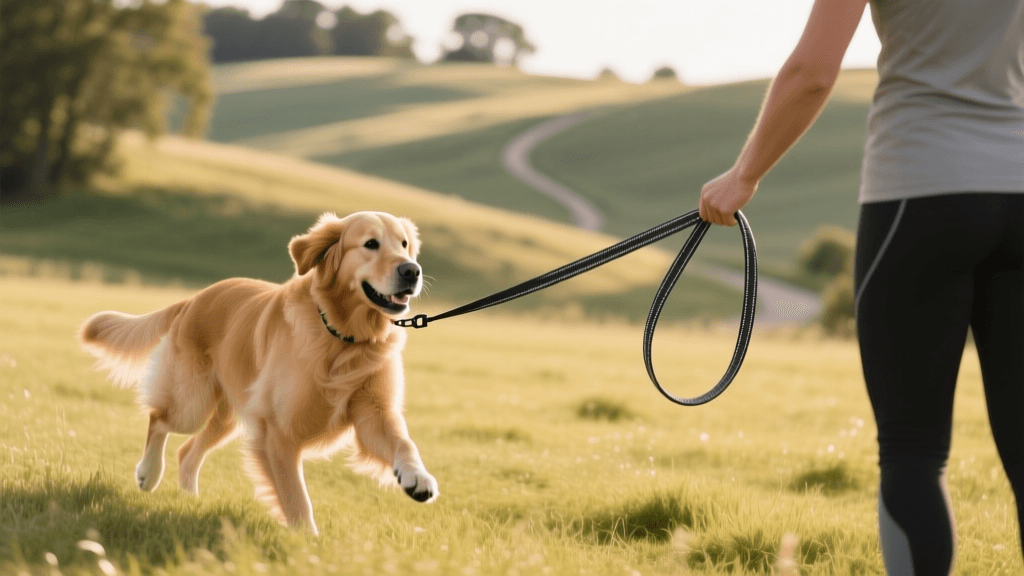
Choose a specific, high-quality orthopedic mat (such as the 2026 Snout Calming Mat) and place it near your desk, but out of the way of your rolling chair. With your dog on a leash, toss a high-value treat onto the mat. When all four paws step onto the mat, click your clicker or say 'Yes!' and reward them. Repeat this 20 times per session until the dog eagerly runs to the mat upon seeing it.
Step 2: Adding the Verbal Cue and Duration
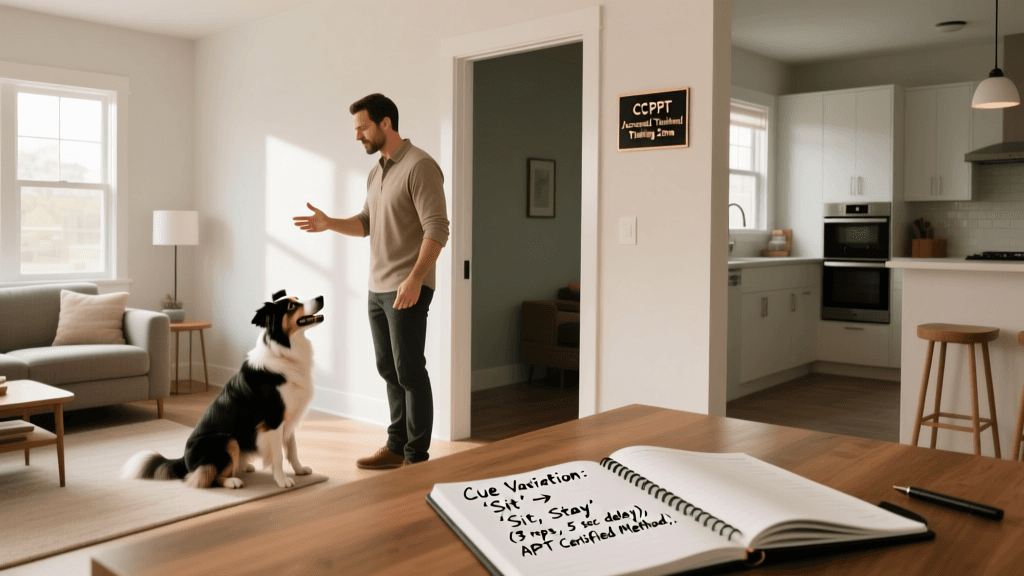
Once your dog reliably targets the mat, introduce the verbal cue 'Place' right before they step onto it. To build duration, delay the reward. Ask for 'Place,' wait two seconds, then reward while they are still on the mat. Gradually increase the time between rewards from two seconds to two minutes, then ten minutes. If the dog leaves the mat, calmly guide them back without a reward and reset the timer.
Step 3: Distance and Distraction Proofing
The ultimate test of the 'Place' command is distance. Begin taking steps away from the mat while your dog holds their position. Eventually, you should be able to sit at your desk, type on your keyboard, and participate in video calls while your dog remains relaxed on their mat. Reward calm behavior intermittently throughout your workday to reinforce that staying on the mat yields long-term benefits.
Desensitizing Your Dog to Home Office Noises
Remote workers in 2026 rely heavily on digital notifications, mechanical keyboards, and smart home doorbells. For breeds like the Basset Hound or Shih Tzu, sudden digital chimes can trigger alert barking. Behavioral conditioning through desensitization and counter-conditioning is vital.
Record the specific sounds that trigger your dog (e.g., the Slack notification ping, the Zoom meeting chime, or the Ring doorbell). Play the sound at a volume so low that your dog notices it but does not react. Immediately feed a high-value treat. Slowly increase the volume over several weeks. This process rewires the dog's brain to associate the stressful notification sound with a positive reward, effectively neutralizing the barking response.
Comparison Chart: WFH Breeds and Their Training Needs
| Breed | Energy Level | Trainability | Primary WFH Training Focus |
|---|---|---|---|
| Greyhound | Low (Indoors) | Moderate | Mat comfort and settling on hard surfaces |
| Cavalier King Charles | Low-Moderate | High | Separation anxiety prevention when you leave the room |
| Basset Hound | Low | Low (Stubborn) | Recall and noise desensitization using food motivation |
| English Bulldog | Very Low | Moderate | Potty scheduling and managing snoring/breathing on calls |
| Shih Tzu | Low | Moderate | Independent play and reducing lap-climbing during meetings |
Managing Separation Anxiety in the Hybrid Era
One of the greatest risks for WFH dogs is developing separation anxiety. Because you are home 40+ hours a week, your dog becomes accustomed to your constant presence. If you have to return to a physical office or travel for business in 2026, this sudden absence can lead to destructive behaviors and distress. The ASPCA emphasizes that preventing separation anxiety requires proactive training, even if you currently work from home full-time.
To future-proof your dog's mental health, practice 'micro-departures.' Leave your home for 15 minutes to grab the mail or take a solo walk without the dog. Provide them with a long-lasting enrichment toy, like a frozen Kong stuffed with peanut butter, right before you leave. This teaches the dog that your departures are predictable, brief, and associated with positive experiences. Never make a grand fuss when leaving or returning to the house; keep transitions incredibly boring.
The 2026 Remote Worker's Dog Training Gear
Equipping your home office with the right tools can drastically accelerate your dog's training. Here are the top recommended items for 2026:
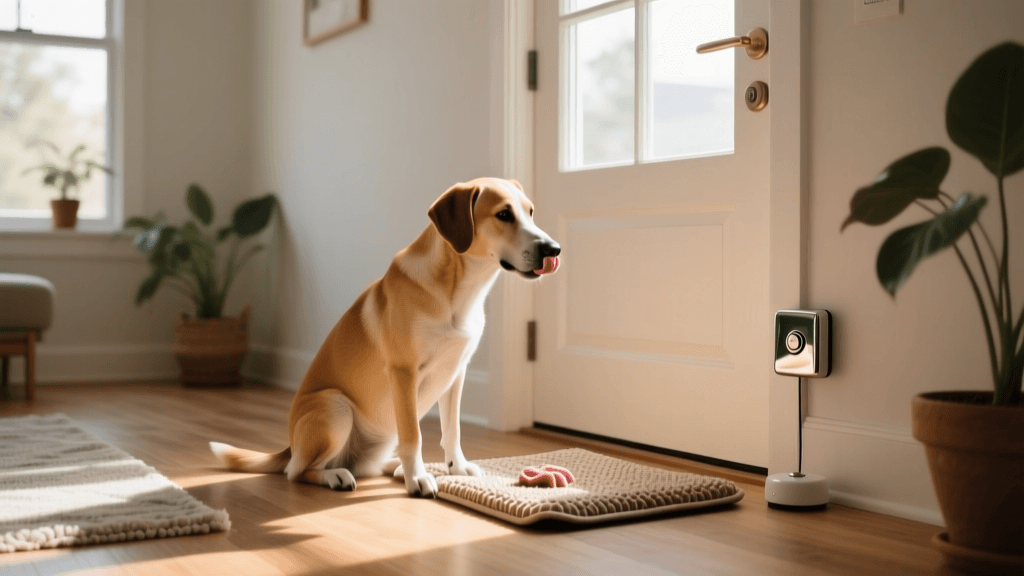
- Furbo 4K Treat Tossing Camera (2026 Model): This device allows you to monitor your dog's mat training from your phone and remotely toss treats to reward silent, calm behavior while you are in another room or on a long call.
- Snout 2026 Orthopedic Calming Mat: Greyhounds and Bulldogs have low body fat and joint sensitivities. A high-density memory foam mat ensures they remain physically comfortable, which is a prerequisite for a long-duration 'Place' command.
- Snuffle Mats for Lunch Breaks: Mental enrichment tires a dog out faster than physical exercise. Using a snuffle mat during your 30-minute lunch break satisfies the foraging instincts of scent-driven breeds like the Basset Hound, guaranteeing a deep afternoon nap while you tackle your afternoon inbox.
Conclusion: Building a Professional Partnership
Having a dog in your home office in 2026 is a profound joy that boosts mental health and reduces workplace stress. However, a harmonious environment is not an accident; it is the result of consistent, empathetic, and structured training. By selecting the right low-energy breed, mastering the 'Place' command, desensitizing them to digital noises, and proactively managing separation anxiety, you transform your dog from a potential distraction into the ultimate professional companion. Invest the time in these behavioral conditioning techniques, and your four-legged coworker will earn an employee of the month award every single day.
marcus-aldridge
All our authors care for dogs every day — read more of their work on the authors page.