Force-Free Doorbell Reactivity Training Guide 2026
Learn how to stop doorbell barking using force-free counter-conditioning and lick mats. A step-by-step positive reinforcement guide for 2026.
The End of Doorbell Dread: Force-Free Training in 2026
For many dog owners, the sound of the doorbell is less of a cheerful chime and more of a starting pistol for chaos. Doorbell reactivity—characterized by frantic barking, lunging, and heightened arousal—is one of the most common behavioral challenges reported by pet parents. In 2026, the veterinary behavior community overwhelmingly rejects outdated, punitive methods like shock collars or citronella sprays. Instead, modern force-free training relies on desensitization and counter-conditioning to fundamentally change how a dog feels about the trigger. By utilizing positive reinforcement and strategic enrichment tools like lick mats, we can transform the doorbell from a terrifying or overstimulating alarm into a predictable cue for a relaxing, high-value reward.
The Neuroscience of Licking and Counter-Conditioning
To understand why force-free methods are so effective, we must look at the neuroscience of canine behavior. When a dog reacts to the doorbell, their sympathetic nervous system triggers a fight-or-flight response. Flooding them with corrections only suppresses the outward behavior while spiking their internal cortisol levels. Conversely, the repetitive action of licking stimulates the parasympathetic nervous system, releasing endorphins and dopamine. This self-soothing mechanism lowers the dog's heart rate and promotes a state of calm.
When we pair the previously stressful sound of the doorbell with the soothing act of licking a high-value treat, we engage in classical counter-conditioning. According to the ASPCA's guidelines on desensitization and counterconditioning, this process works best when the trigger is introduced at a low enough intensity that the dog remains under their reactivity threshold, allowing them to process the new, positive association without panic.
Your 2026 Force-Free Toolkit
To execute this protocol successfully, you need the right equipment. The modern positive reinforcement toolkit leverages both premium enrichment gear and smart home technology:
- Premium Silicone Lick Mats: In 2026, the LickiMat Soother Pro (retailing around $14.99) and the West Paw Toppl ($23.95) remain industry favorites due to their durability and intricate texture patterns that prolong engagement.
- Smart Doorbell System: Devices like the Ring Video Doorbell Plus or Nest Doorbell allow you to trigger the chime manually from your smartphone and, crucially, adjust the indoor chime volume from 100% down to 10%.
- High-Value Spreadable Treats: Plain Greek yogurt, unsalted pumpkin puree, and low-sodium bone broth are excellent bases. For dogs with food sensitivities, single-ingredient freeze-dried liver pastes are widely available at premium pet boutiques.
The 4-Step Desensitization Protocol
Step 1: Smart Home Sound Control and Baseline Testing
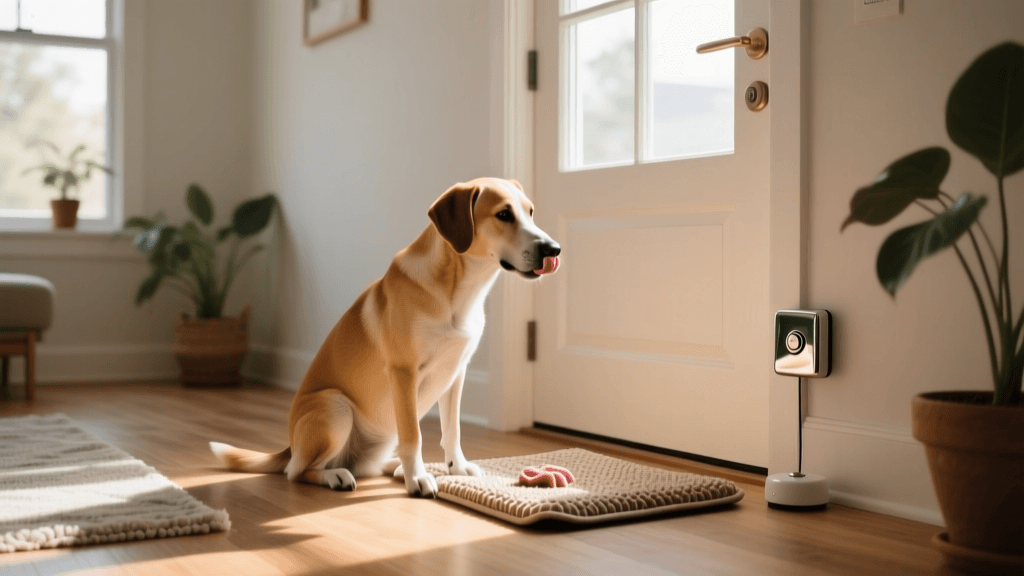
Before introducing any treats, you must establish a baseline. Using your smart doorbell app, set the indoor chime volume to its absolute lowest setting—often 10% or 20%. Stand in the room where your dog typically reacts most intensely, but keep them on a leash or behind a baby gate for safety. Trigger the chime from your phone. Observe your dog's body language. Do their ears perk up? Do they orient toward the door? Or do they immediately begin barking? If they bark, the volume is still too high. Mute the indoor chime entirely and use only the visual notification on your phone, or stand further away from the main entrance. The goal is to present the trigger at a 'sub-threshold' level, meaning the dog notices the sound but remains capable of learning and eating.
Step 2: Baseline Lick Mat Engagement
Introduce the lick mat without the doorbell sound present. Spread a generous layer of your chosen high-value treat mixture onto the mat and freeze it for at least two hours to increase the difficulty and duration of the licking session. Present the mat to your dog in a quiet, low-distraction environment. Allow them to lick and forage freely. This step serves two purposes: it confirms that your dog finds the treat mixture rewarding, and it builds a strong positive association with the lick mat itself. If your dog abandons the mat after thirty seconds, your treat value is too low, or the texture is too difficult. Adjust your recipe and try again until your dog will happily engage with the mat for three to five uninterrupted minutes.
Step 3: Pairing the Sound with the Mat
Now, we combine the two elements. Give your dog the frozen lick mat. Once they are happily engaged and licking rhythmically, trigger the doorbell at the lowest possible sub-threshold volume. The moment the chime sounds, praise your dog calmly and offer an additional high-value treat directly onto the mat if they continue licking. If they stop licking and stare at the door, do not correct them. Simply wait. If they do not return to the mat within five seconds, the trigger was too intense. End the session, remove the mat, and make a note to lower the volume or increase your distance from the door for the next session. Repeat this pairing process three to five times per session, keeping sessions short to prevent canine fatigue.
Step 4: Real-World Simulation and Generalization
Over the course of several weeks, gradually increase the volume of the doorbell or move closer to the actual front door, always ensuring your dog remains under threshold. Once your dog reliably remains calm and continues licking at 100% volume, it is time to introduce real-world variables. Have a trusted friend stand outside and press the physical doorbell while you are inside with the lick mat. The predictability of the setup prevents the dog from being overwhelmed. As highlighted by the American Veterinary Society of Animal Behavior (AVSAB), humane, reward-based training methods are not only more effective but also safeguard the human-animal bond by eliminating the fear and anxiety associated with aversive punishments.
Reactivity Threshold & Lick Mat Strategy Chart
| Trigger Intensity | Dog's State | Recommended Mat Type | Treat Value & Prep |
|---|---|---|---|
| Low (10% Volume / Muted) | Sub-threshold, relaxed, curious | LickiMat Soother (Standard) | Plain Greek Yogurt & Pumpkin (Unfrozen) |
| Medium (50% Volume / Distance) | Alert, ears forward, mild whining | West Paw Toppl (Small) | Bone Broth & Kibble (Frozen 1 hour) |
| High (100% Volume / Real Ring) | Over-threshold, barking, pacing | Stop Training / Management Only | N/A (Dog will not eat; reduce trigger) |
Troubleshooting Common Force-Free Hurdles
What if the dog refuses to eat? A common hurdle in force-free training is the 'refusal to eat' phenomenon. If your dog will not take treats or lick the mat, they are over threshold. Their sympathetic nervous system has hijacked their digestive capabilities. Do not force the issue or lure them with the treat. Simply increase the distance between the dog and the front door, or lower the volume of the chime.
Management is just as critical as training. In 2026, many behaviorists recommend using smart home routines to temporarily disable the physical doorbell chime during unmanaged times (like when you are not home to train), ensuring the dog does not rehearse the reactive barking behavior. Consistency in management prevents the neural pathways associated with reactivity from strengthening.
Why We Reject Aversive Methods
Historically, trainers might have recommended spraying a dog with water or using a static shock collar to interrupt barking. Modern behavioral science has thoroughly debunked these approaches. Aversive methods do not teach the dog what to do instead; they merely suppress the symptom while the underlying emotional distress remains unresolved. This often leads to 'fallout,' where the dog begins to associate visitors with pain or fear, potentially escalating from barking to biting. Force-free methods address the root cause—the dog's emotional response—creating a lasting, genuine behavioral change.
Conclusion
Embracing positive reinforcement for doorbell reactivity requires patience, precise management, and a deep understanding of canine body language. By leveraging the calming neuroscience of licking and the precision of modern smart home technology, you can help your dog navigate the excitement of visitors without the stress. For more foundational strategies on building a trusting relationship with your dog, explore the American Kennel Club's resources on positive reinforcement training. With consistency and compassion, the doorbell will soon become nothing more than a gentle cue for your dog to enjoy their favorite frozen treat.
marcus-aldridge
All our authors care for dogs every day — read more of their work on the authors page.