Best Puppy Breeds For Remote Workers In 2026: Top Picks
Discover the best puppy breeds for remote workers in 2026. Learn WFH potty training, teething tips, and socialization for Cavalier and Basset pups.
Why Your Choice of Puppy Breed Matters for Remote Work in 2026
As hybrid and fully remote work models continue to dominate the professional landscape in 2026, more professionals are using their flexible schedules to finally bring a puppy into their homes. However, raising a puppy during the first year of its life while simultaneously managing video calls, deep-work sessions, and virtual meetings requires a strategic approach. Not all breeds are suited for the home office environment. High-energy herding dogs or vocal hounds can disrupt your productivity and stress your puppy, leading to behavioral issues.
The ideal work-from-home (WFH) puppy breed possesses a moderate-to-low energy level, a quiet demeanor, and a strong desire to simply be near you without demanding constant entertainment. In this comprehensive guide, we will explore the best puppy breeds for remote workers, outline a first-year developmental timeline tailored to the WFH lifestyle, and provide actionable puppy care advice to ensure both you and your new companion thrive.
Top 3 Puppy Breeds for the Home Office
1. Cavalier King Charles Spaniel: The Ultimate Lap Warmer
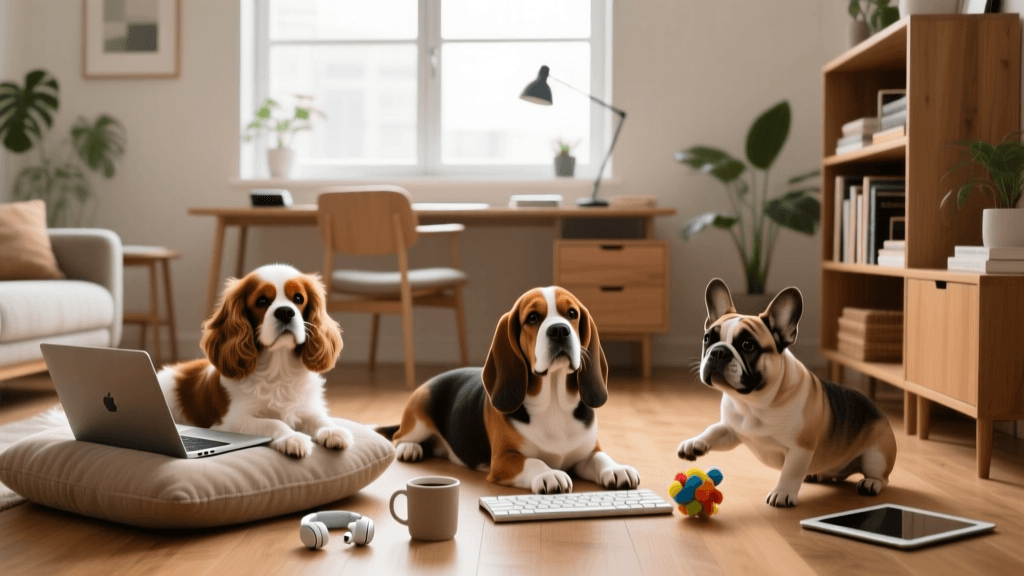
The Cavalier King Charles Spaniel is widely considered the gold standard for remote workers. Bred specifically as companion dogs, Cavaliers are exceptionally affectionate, quiet, and content to sleep at your feet or on your lap while you type away. During their first year, Cavalier puppies require standard socialization and basic obedience training, but they lack the intense drive of working breeds. Their moderate energy means a quick morning walk and an afternoon play session are usually sufficient to keep them happy and relaxed during your workday.
2. Basset Hound: The Snooze Button Companion
Don't let their soulful eyes fool you; Basset Hounds are famously low-energy and stubborn, making them fantastic WFH companions. A Basset Hound puppy will happily spend the majority of your eight-hour workday napping under your desk. While their puppy care routine requires patience—especially regarding potty training and recall—their lack of desire to run laps around your home office is a massive benefit for remote workers. They are generally quiet, though they can be vocal if left completely isolated for too long, which is rarely an issue when you are working from home.
3. French Bulldog: The Mute-Button Master
French Bulldogs remain incredibly popular in 2026 for apartment dwellers and remote workers alike. They are sturdy, playful in short bursts, and highly adaptable. A Frenchie puppy will demand your attention during their 15-minute play windows but will otherwise snore softly in their bed beside your standing desk. Because they are brachycephalic (flat-faced), they do not require extensive outdoor exercise, making them perfect for busy professionals who can only manage short neighborhood walks between meetings.
The WFH Puppy Care Timeline: Milestones & Management
Raising a puppy while working from home offers a distinct advantage: you are present to manage their environment. However, it also presents unique challenges, such as preventing separation anxiety and managing teething around expensive office equipment.
Months 1-3: Potty Training and Feeding Schedules
The first three months are critical for establishing routines. When working from home, it is easy to lose track of time and miss a puppy's potty window. To combat this, sync your puppy's schedule with your work calendar.
- Feeding Schedule: Offer meals at 7:00 AM (before your first meeting), 12:00 PM (during your lunch break), and 5:00 PM (when you log off). Remove the food bowl after 15 minutes to regulate their digestion and predict potty needs.
- Potty Training: Use the Pomodoro technique. Work for 45 minutes, then take a 10-minute break to take your puppy to their designated potty spot. According to the ASPCA's guide on housetraining puppies, consistent supervision and immediate positive reinforcement are the most effective ways to build reliable habits.
- WFH Gear: Invest in an indoor real-grass patch like DoggieLawn for your balcony or a spare room. This is a lifesaver for 2026 remote workers living in high-rise apartments during bad weather.
Months 4-6: Teething and Cable Management
As your puppy enters the teething phase, their urge to chew will peak. A home office is a minefield of hazardous, expensive items: ethernet cables, power strips, and wireless headset wires.
- Environment Management: Use cable management sleeves and cord concealers to hide all wires. Elevate power strips onto your desk or mount them to the wall.
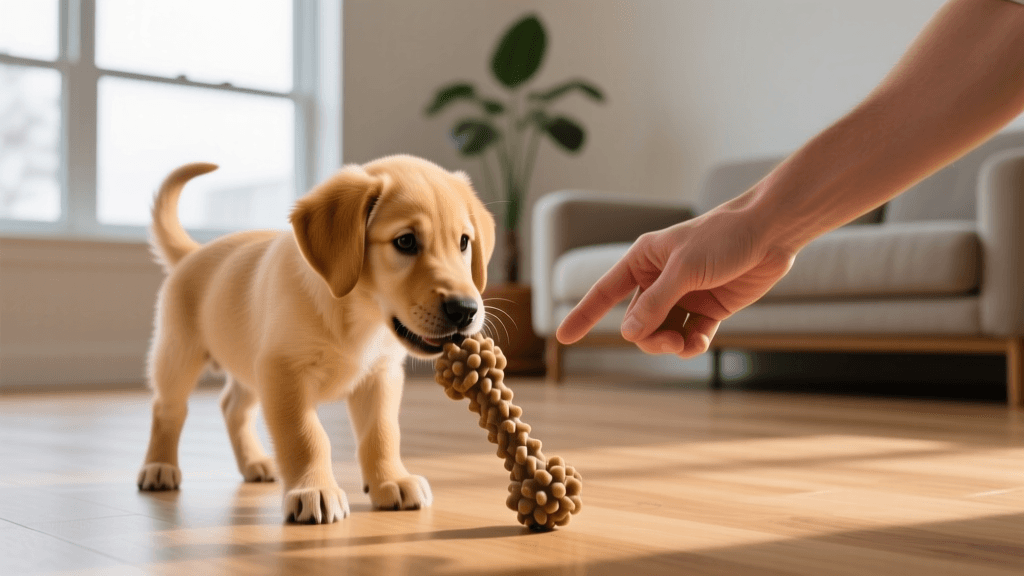
- Chew Alternatives: Keep a rotation of appropriate chew toys under your desk. The Kong Classic, stuffed with frozen puppy-safe peanut butter and kibble, can keep a teething puppy occupied for 30 minutes during a critical video presentation.
- Bite Inhibition: If your puppy nips at your ankles while you pace during a phone call, immediately stop moving and redirect them to a toy. Never punish; simply withdraw attention and offer an appropriate alternative.
Months 7-12: Beating Separation Anxiety and Socialization
The biggest trap for remote workers is raising a puppy that never learns to be alone. If your puppy spends 24/7 by your side during their first year, they may develop severe separation anxiety when you eventually return to an office, travel for business, or simply need to leave the house for groceries. The American Kennel Club's resource on separation anxiety emphasizes the importance of teaching dogs to feel safe and relaxed when isolated from their owners.
- Independence Training: Starting at month 4, use a playpen or a crate in a different room for 30 to 60 minutes a day while you work. Provide a long-lasting chew so they associate alone time with positive experiences.
- Departure Cues: Practice your 'leaving for work' routine (putting on shoes, grabbing keys, walking out the door) even if you are just going to the mailbox. This desensitizes your puppy to departure triggers.
- External Socialization: The AKC's puppy socialization guidelines stress that puppies need exposure to diverse environments, people, and sounds. Take your puppy to local coffee shops, co-working spaces, and busy parks on weekends to ensure they are well-adjusted outside the four walls of your home office.
Comparison Chart: Best WFH Puppy Breeds
| Breed | Energy Level | Barking Tendency | Potty Training Difficulty | WFH Suitability Score (2026) |
|---|---|---|---|---|
| Cavalier King Charles Spaniel | Low to Moderate | Low | Moderate | 9.5 / 10 |
| Basset Hound | Low | Moderate (Howling) | High (Stubborn) | 8.5 / 10 |
| French Bulldog | Low | Low | Moderate | 9.0 / 10 |
| Greyhound (Retired) | Low (Couch Potato) | Very Low | Low | 8.0 / 10 |
Essential 2026 WFH Puppy Gear
To maintain productivity and ensure your puppy's safety during their first year, equip your home office with the following modern tools:
- Furbo 360 Dog Camera: The latest 2026 models feature AI-driven bark alerts and treat-tossing capabilities, allowing you to check in on your puppy from a different room or while running errands.
- Snuggle Puppy Heartbeat Toy: Ideal for the first few weeks. The simulated heartbeat soothes puppies when you need to close your office door for a confidential meeting.
- Outward Hound Puzzle Toys: Mental stimulation is just as tiring as physical exercise. Use puzzle feeders during your lunch break to burn off your puppy's mental energy without requiring a long run.
- Orthopedic Memory Foam Bed: Place this directly under or beside your desk. Breeds like Bassets and Greyhounds appreciate joint support, and having a designated 'place' command mat helps them settle while you work.
Conclusion
Working from home in 2026 provides an unprecedented opportunity to raise a well-adjusted, deeply bonded puppy. By selecting a breed that aligns with your professional lifestyle—such as the Cavalier King Charles Spaniel, Basset Hound, or French Bulldog—and adhering to a strict developmental timeline for potty training, teething, and independence, you can create a harmonious environment. Remember that your presence is a privilege; use it to build a confident, quiet, and happy companion who will make your home office the best room in the house.
anouk-beaumont
All our authors care for dogs every day — read more of their work on the authors page.