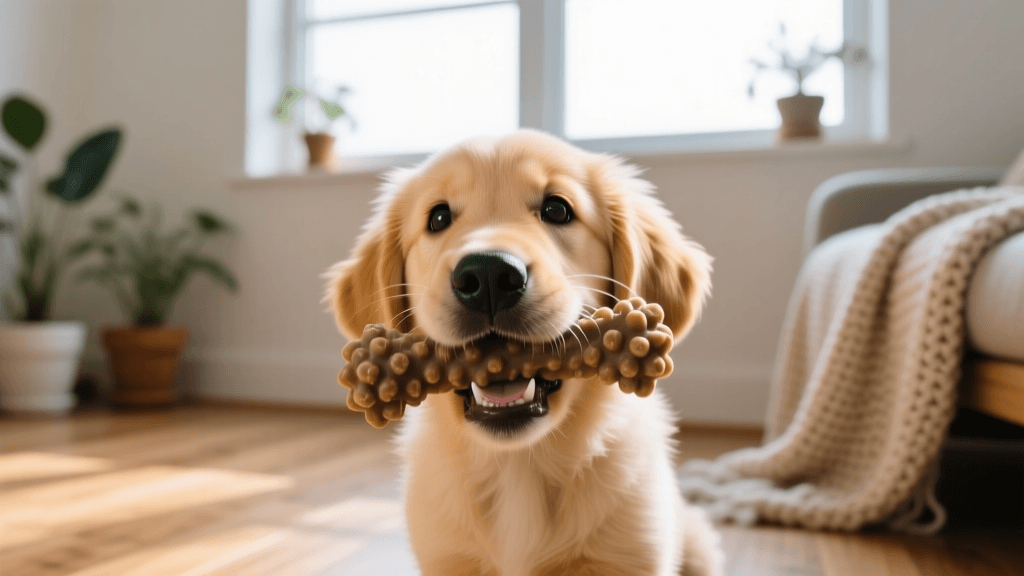
Puppy Biting: A Behaviorist's Guide to Bite Inhibition
Learn expert behavioral strategies to stop puppy biting. Discover timing, redirection techniques, and bite inhibition protocols for a well-mannered dog.
The Ethology of Puppy Mouthing: Why They Bite
When a new puppy enters the home, owners are frequently caught off guard by the sheer frequency and intensity of puppy biting. From a behavioral analysis perspective, it is critical to understand that mouthing is not an act of aggression or dominance. Puppies are born with a neurological imperative to explore their environment using their mouths, much like human infants use their hands. Furthermore, the canine jaw is a primary tool for social interaction, play solicitation, and prey-driven behaviors. According to the ASPCA, puppy mouthing is a completely normal developmental phase that peaks between 12 and 16 weeks of age, coinciding with early socialization periods and the initial stages of teething.
However, while the behavior is natural, the human skin is entirely too fragile to withstand it. The goal of early puppy training is not to suppress the dog's natural drive to use its mouth, but rather to teach 'bite inhibition'—the ability of the dog to control the force of its jaw pressure when interacting with human skin.
The Critical Window for Bite Inhibition
In a natural litter environment, puppies learn jaw pressure regulation from their siblings and mother. When a puppy bites a littermate too hard, the victim yelps and ceases playing. This immediate withdrawal of social reinforcement teaches the biter that hard bites result in the end of fun. Dr. Ian Dunbar, a pioneering veterinary behaviorist, emphasizes that this critical learning window occurs primarily between 8 and 16 weeks of age. As noted in his foundational texts on Dog Star Daily, if a puppy is separated from its litter early, or if the littermates were overly tolerant, the human owner must step in to replicate this feedback loop. Failure to establish bite inhibition during this sensitive period can result in an adult dog that lacks jaw control, turning minor stress-induced nips into severe puncture wounds.
Actionable Behavioral Protocols
To effectively modify puppy biting, we must apply the principles of operant conditioning. Below is a comparison chart of the three primary behavioral protocols utilized by certified behavior analysts to address puppy mouthing.
| Behavioral Protocol | Operant Quadrant | Application Strategy | Best Used For |
|---|---|---|---|
| Negative Punishment (Timeouts) | Removal of Appetitive Stimulus | Immediate withdrawal of human attention for 15-30 seconds | Hard bites that break or indent the skin |
| Differential Reinforcement (DRI) | Positive Reinforcement | Redirecting the bite to an incompatible object (toy) and rewarding | Soft mouthing and play solicitation |
| Withholding Reinforcement | Complete ignoring of the behavior (no eye contact, no movement) | Attention-seeking nips at clothing or ankles |
Protocol A: The 'Ouch' and Timeout Method (Negative Punishment)
When a puppy's teeth make contact with human skin and apply pressure, the immediate consequence must be the removal of the 'fun' environment. The moment the bite occurs, emit a calm, sharp marker word such as 'Ouch' or 'Too bad.' Do not yell, as high-pitched yelling can inadvertently trigger a puppy's prey drive or cause fearful avoidance. Following the marker, immediately stand up, fold your arms, and look at the ceiling for exactly 15 to 30 seconds. This is a 'social timeout.' If the puppy continues to jump and bite at your ankles, calmly step over a baby gate or into a 'boring' designated timeout room (like a laundry room with no toys) for 30 seconds. The timing is crucial: the removal of attention must occur within one second of the bite to ensure the puppy forms the correct behavioral association.
Protocol B: Differential Reinforcement of Incompatible Behavior (DRI)
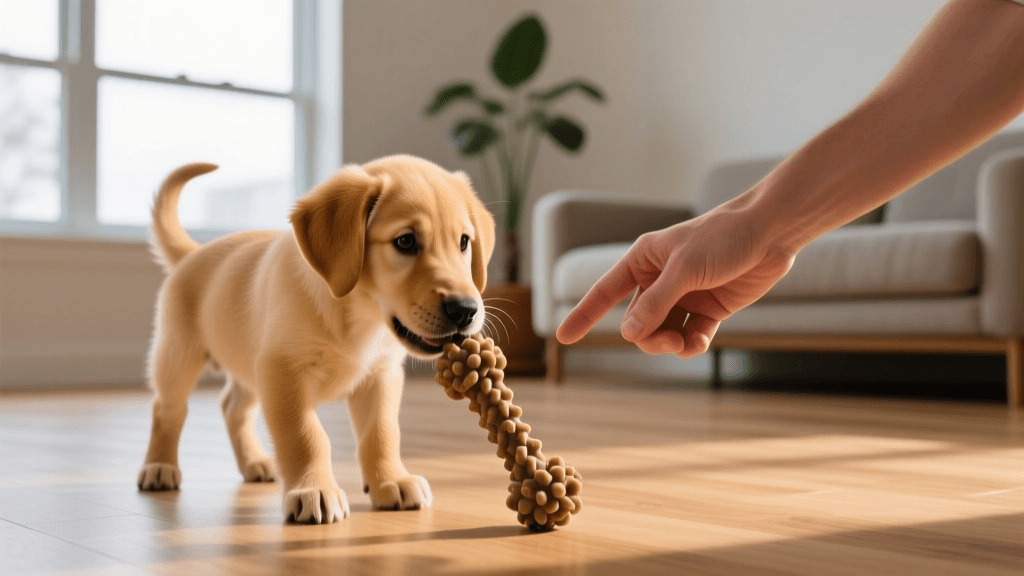
DRI involves reinforcing a behavior that cannot physically occur at the same time as the unwanted behavior. In this case, biting a toy is incompatible with biting human skin. Always keep a high-value, textured chew toy in your pocket during the peak biting hours (usually early morning and early evening). When the puppy approaches with the intent to mouth, present the toy before the teeth touch your skin. The moment the puppy's jaws clamp onto the toy, immediately offer verbal praise and a secondary reinforcer, such as a game of tug or a small piece of freeze-dried liver. This teaches the puppy that human skin yields nothing, but toys yield immense social and tangible rewards.
Environmental Management and Enrichment
Behavioral modification is nearly impossible if the puppy is under-stimulated or physically uncomfortable due to teething. Teething typically begins around 12 weeks and concludes by 6 months. During this window, the puppy's gums are inflamed, and chewing provides necessary pain relief. Owners must provide appropriate, durable outlets for this biological need. We recommend investing in the following specific enrichment tools:
- KONG Classic (Red): Priced around $15, this natural rubber toy is ideal for puppies. Stuff it with a mixture of plain Greek yogurt, mashed banana, and kibble, then freeze it for four hours. The cold temperature acts as a localized anesthetic for inflamed gums.
- West Paw Toppl: Costing approximately $20, this interlocking puzzle toy provides a longer-lasting mental challenge than a standard bowl. Freezing it with goat milk and bone broth encourages prolonged, focused licking, which releases endorphins and naturally calms the puppy's nervous system.
- Bully Max Natural Bully Sticks: At roughly $25 for a pack of six, these single-ingredient, high-protein chews satisfy the deep-seated urge to gnaw while scraping plaque from developing teeth. Always supervise the puppy and remove the stick when it becomes small enough to be a choking hazard.
Common Mistakes Owners Make: Behavioral Pitfalls
Out of frustration, many owners resort to positive punishment, such as tapping the puppy on the nose, holding the muzzle shut, or performing 'alpha rolls.' The American Veterinary Society of Animal Behavior (AVSAB) explicitly warns against the use of physical punishment in dog training. From a behavioral standpoint, physical aversives do not teach the puppy what to do; they only teach the puppy to fear the owner. Furthermore, physical punishment frequently triggers a 'fight or flight' response, which can escalate playful mouthing into genuine defensive aggression. Another common pitfall is the 'Extinction Burst.' If you decide to completely ignore a puppy's ankle-biting (Extinction), the puppy will initially bite harder and more frequently before the behavior stops. Many owners give in during this burst phase, inadvertently reinforcing the harder bite. Consistency and emotional neutrality are your most powerful tools.
Conclusion
Puppy biting is a complex interplay of teething discomfort, social exploration, and operant conditioning. By viewing the behavior through an analytical lens, owners can move away from frustration and toward structured, effective protocols. Implementing negative punishment for hard bites, utilizing DRI for soft mouthing, and providing robust environmental enrichment will systematically build jaw control. Remember that bite inhibition is a developmental milestone, not an overnight fix. With precise timing, unwavering consistency, and an understanding of canine ethology, you will guide your puppy through this critical phase, laying the foundation for a safe, well-mannered, and confident adult dog.
anouk-beaumont
All our authors care for dogs every day — read more of their work on the authors page.