Best WFH Dog Breeds 2026: Mat Training for Remote Workers
Discover the best dog breeds for remote workers in 2026. Learn expert mat training and boundary techniques to keep your WFH dog calm during Zoom calls.
The 2026 Remote Work Reality: Why Breed and Training Matter
As fully remote and hybrid work models solidify in 2026, the home office has become a permanent fixture for millions of professionals. While having a canine companion nearby during the workday is a major perk, it introduces unique behavioral challenges. A dog that barks at the doorbell during a crucial client presentation, or one that develops severe separation anxiety the moment you leave for a midday gym session, can quickly turn your home office into a stressful environment.
Choosing the right breed is only the first step. The true secret to a harmonious work-from-home (WFH) setup lies in targeted behavioral conditioning. Specifically, teaching your dog a rock-solid "Go to Place" command and establishing strict spatial boundaries are non-negotiable skills for the modern remote worker. In this comprehensive guide, we will explore the best dog breeds suited for the 2026 home office environment and provide a step-by-step training protocol to ensure your dog remains calm, quiet, and content while you tackle your daily tasks.
Top 3 Dog Breeds for the 2026 Home Office
Not all dogs are built for the sedentary lifestyle of a remote worker. High-drive working breeds like Border Collies or Belgian Malinois will quickly become destructive if left alone in a home office for eight hours. Instead, you want breeds with an "off-switch," moderate energy levels, and a natural inclination to lounge. Here are the top three breeds that excel in remote work environments when paired with proper training.
1. Cavalier King Charles Spaniel
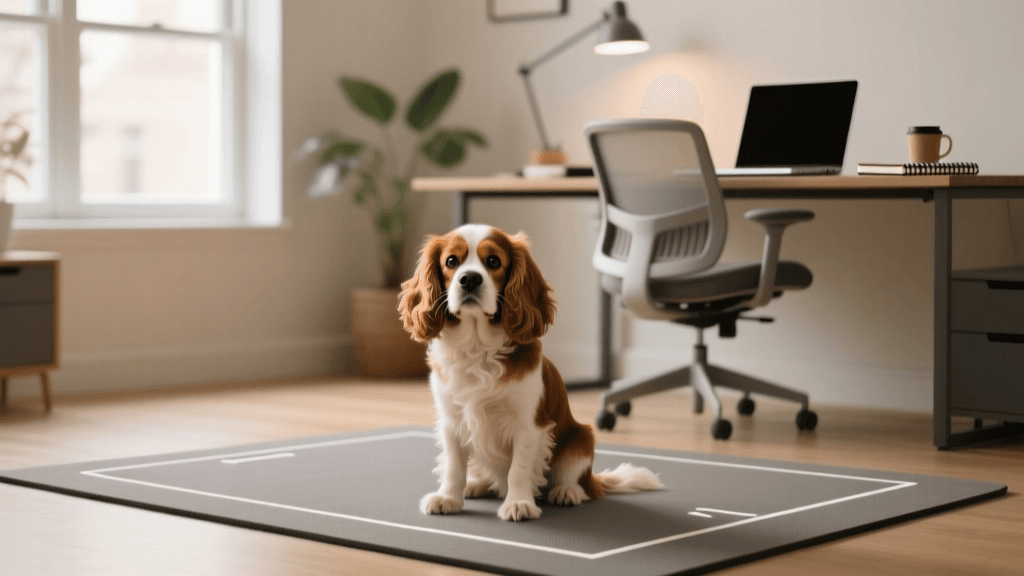
The Cavalier King Charles Spaniel is the quintessential lap dog, making them an exceptional choice for remote workers who want a quiet companion nearby. They are highly attuned to their owner's emotions and generally prefer to sleep at your feet rather than patrol the house. However, their deep attachment means they are prone to separation anxiety if you leave the house without properly conditioning them to be alone. Training a Cavalier requires focusing on independence and rewarding calm, settled behavior on a designated mat rather than allowing them to demand constant physical contact during work hours.
2. The Greyhound
Often misunderstood as high-energy athletes, retired racing Greyhounds are famously known as "45-mph couch potatoes." In a 2026 urban apartment or a compact home office, a Greyhound is an ideal WFH companion. They sleep up to 18 hours a day and rarely bark without a profound reason, making them virtually invisible during video calls. The primary training focus for a Greyhound in a home office is impulse control and teaching them to settle on a raised cot, as their thin coats and bony joints require orthopedic support to remain comfortable throughout your eight-hour shift.
3. The Basset Hound
If you want a dog that will anchor itself to the floor of your home office and refuse to move, the Basset Hound is your perfect match. Their low energy levels and stubborn nature mean they are highly unlikely to interrupt your workflow with demands to play fetch. The challenge with Bassets is their vocalization and food motivation. They are prone to "baying" if they hear a noise outside, and they will aggressively beg if they smell your lunch. Training a Basset Hound for the home office requires heavy use of high-value treat dispensers and desensitization to household noises.
WFH Breed Comparison Chart
Use the table below to compare how these top breeds adapt to the remote work lifestyle based on key behavioral metrics.
| Breed | Energy Level | Barking Tendency | WFH Suitability | Primary Training Focus |
|---|---|---|---|---|
| Cavalier King Charles Spaniel | Low to Moderate | Low | Excellent | Independence & Separation Anxiety Prevention |
| Greyhound | Low (Indoors) | Very Low | Excellent | Orthopedic Mat Settling & Impulse Control |
| Basset Hound | Very Low | Moderate (Bay/Vocal) | Good | Noise Desensitization & Begging Extinction |
The Ultimate "Go to Place" Training Protocol for Zoom Calls
Regardless of the breed you choose, the most critical skill for any WFH dog is the "Go to Place" command. This behavior chains together a target location (a mat or cot), a default down/stay position, and a calm emotional state. According to the American Kennel Club (AKC), teaching a designated "place" provides dogs with a secure boundary and gives owners a reliable way to manage their pets during busy moments.
Step 1: Select the Right Equipment
Ditch the flat, easily chewed fabric beds. For a home office, invest in a raised, durable cot. The Kuranda Chewproof PVC Dog Bed (retailing around $145 in 2026) is the industry standard for professional trainers. Its elevated design keeps dogs cool, provides joint support for breeds like the Greyhound, and creates a clear physical boundary that the dog can easily recognize. Place the cot in the corner of your office, out of the direct path of foot traffic but within your line of sight.
Step 2: Shape the Behavior with High-Value Rewards
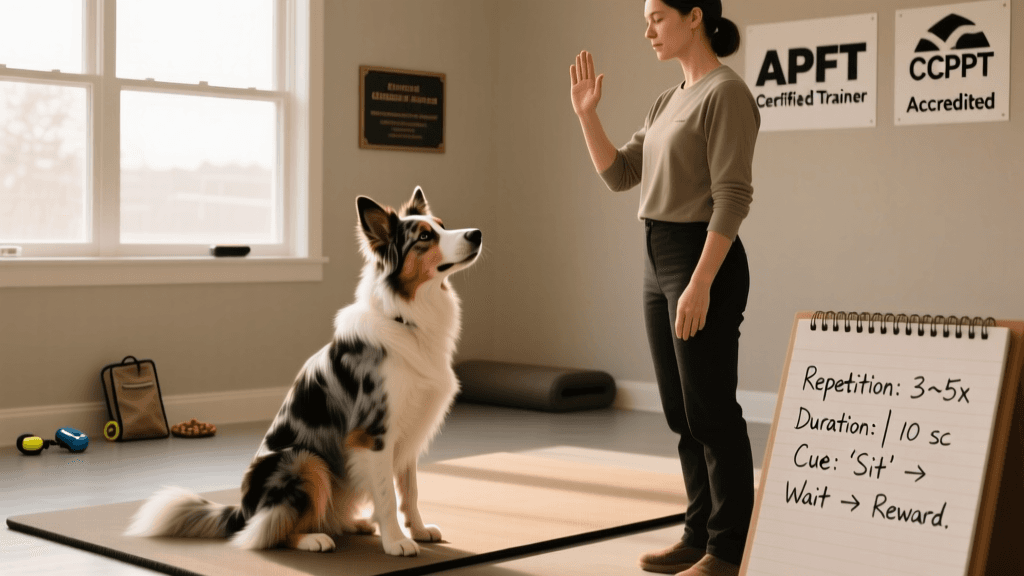
Begin with 10-minute training sessions before your workday starts. Toss a high-value treat (like freeze-dried beef liver) onto the cot. The moment all four paws touch the cot, mark the behavior with a clicker or a verbal "Yes!" and reward. Once the dog is reliably stepping onto the cot, require a "Down" position before delivering the reward. Keep your treat delivery rate high—one treat every 3 to 5 seconds—during the initial learning phase to build a strong positive association with the mat.
Step 3: Introduce Duration and the LickiMat
Once your dog understands that the cot means "lie down," you must build duration. This is where the LickiMat Soother (approximately $12) becomes your best friend. Spread plain, dog-safe Greek yogurt or pumpkin puree on the LickiMat and freeze it overnight. When you sit at your desk, give your dog the frozen LickiMat on their cot. Licking releases endorphins in dogs, naturally soothing them and keeping them occupied on their "place" for 20 to 30 minutes while you take a morning meeting.
Step 4: Add the Verbal Cue and Proof the Behavior
Only add the verbal cue "Go to Place" once the dog is reliably running to the mat for a treat. Begin to simulate WFH distractions. Ring your phone, play a recording of a doorbell at a low volume, or stand up quickly from your chair. If the dog breaks their "place" command, calmly guide them back without offering a treat. Reward heavily only when they remain on the mat despite the distraction. Over time, your dog will learn that the mat is their safe zone, and staying there yields the best rewards.
Beating the "Always Home" Separation Anxiety Trap
One of the most pervasive behavioral issues in 2026 is WFH-induced separation anxiety. Because remote workers are home 90% of the time, their dogs become entirely unaccustomed to being alone. When the owner inevitably leaves for a doctor's appointment or a rare in-office day, the dog panics. The ASPCA notes that dogs with separation anxiety exhibit destructive behavior, inappropriate elimination, and extreme vocalization when left alone, which can result in noise complaints from neighbors or property damage.
To prevent this, you must practice "in-home separations." Use baby gates to restrict your dog to a different room while you work for at least two hours a day. Alternatively, utilize crate training during your lunch break. Invest in a smart pet camera, such as the Furbo 360 Dog Camera ($199), which allows you to monitor your dog's stress levels and toss treats remotely when they exhibit calm behavior while you are in another part of the house.
Furthermore, desensitize your dog to your departure cues. Pick up your keys, put on your coat, and then sit back down at your desk. Do this five times a day. By stripping the anxiety away from these triggers, your dog will remain relaxed whether you are sitting three feet away on a Zoom call or leaving the house for the afternoon.
Conclusion
Integrating a dog into your remote work lifestyle in 2026 requires intentional breed selection and dedicated boundary training. By choosing a low-energy, adaptable breed like the Cavalier King Charles Spaniel, Greyhound, or Basset Hound, and implementing a strict "Go to Place" protocol using raised cots and enrichment tools like the LickiMat, you can cultivate a peaceful, productive home office. Remember that true companionship means teaching your dog how to be confident and relaxed, both by your side and on their own.
hannah-wickes
All our authors care for dogs every day — read more of their work on the authors page.