Top Dog Breeds for Remote Workers in 2026: WFH Guide
Discover the best dog breeds for remote workers in 2026. Learn how breed instincts, barking triggers, and independence affect your WFH productivity.
The Evolution of the Work-From-Home Dog in 2026
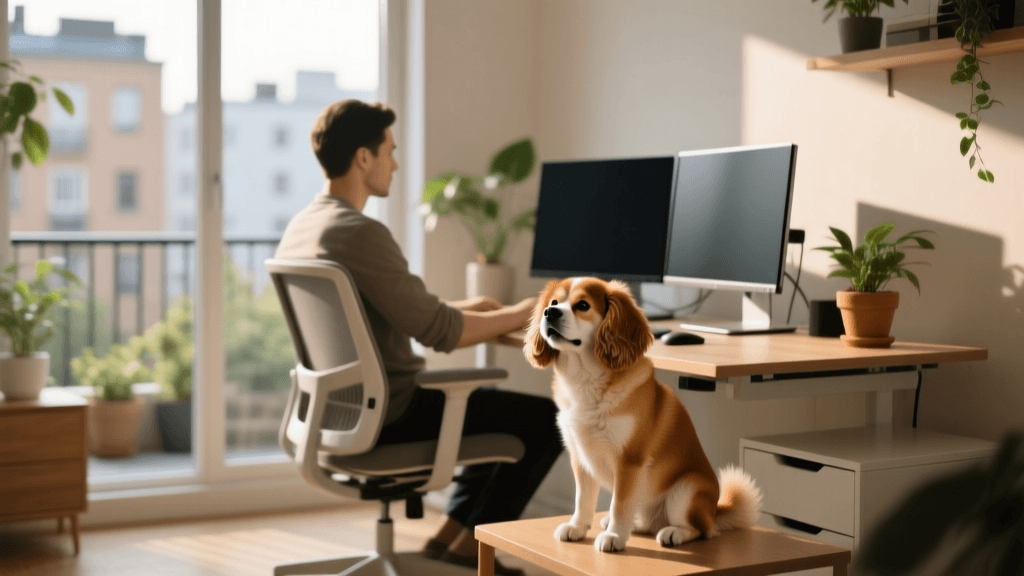
As remote and hybrid work models have permanently cemented themselves into the global corporate landscape in 2026, the home office has evolved from a temporary desk setup into a fully integrated living and working space. For dog owners, this shift presents a unique behavioral paradox: you are physically present for your dog 24/7, yet cognitively unavailable for long stretches of time. Understanding which dog breeds thrive in this specific environment requires looking beyond basic temperament and diving deep into canine psychology, breed-specific instincts, and neurological triggers.
Not all dogs are equipped for the work-from-home (WFH) lifestyle. A dog bred to work closely with a handler may develop severe frustration when ignored during a four-hour deep work session, while an independent basal breed might happily sleep under your desk. In this comprehensive guide, we analyze the psychological and instinctual traits that make certain breeds the ultimate remote work companions, helping you align your productivity needs with your dog's behavioral well-being.
Understanding Canine Psychology in a Home Office Environment
To select the right WFH companion, we must first understand how dogs perceive our working behavior. When you are typing at a desk, staring at a screen, or speaking animatedly on a video call, you are exhibiting behavior that can be deeply confusing to a dog. You are present, but your body language is closed off, and your attention is entirely focused on an inanimate object.
The Velcro Dog vs. The Independent Thinker
Dogs bred for cooperative tasks, such as herding or retrieving, often possess a strong 'handler focus.' They are genetically wired to look to their human for direction. When that direction is withheld because you are on a Zoom call, these dogs can experience frustration, leading to attention-seeking behaviors like pawing, whining, or dropping toys on your keyboard. Conversely, independent breeds—originally bred to make decisions on their own, such as livestock guardians or certain spitz breeds—do not require constant micro-interactions to feel secure. They possess an internal 'off-switch' that allows them to relax without direct human engagement.
Vocalization Instincts and Zoom Call Etiquette
Barking is a primary communication tool, but its triggers vary wildly by breed. Scent hounds may bay when they catch a whiff of a neighbor's dog through the window, while territorial breeds will alert-bark at the sound of a delivery driver. For remote workers, managing vocalization is critical. According to the Humane Society, understanding the root cause of barking—whether it is alarm, boredom, or demand—is the first step in behavioral modification. However, choosing a breed with a naturally low vocalization drive saves remote workers hours of training and prevents embarrassing interruptions during professional meetings.
Separation Anxiety in the Hybrid Era
Ironically, the constant presence of a remote worker can exacerbate separation anxiety when the human eventually leaves the house for errands or hybrid office days. Dogs that become overly enmeshed with their owner's constant presence may panic when left alone. The ASPCA notes that dogs with high clinginess are more prone to distress behaviors when routines change. Therefore, a breed that enjoys your company but is also comfortable entertaining itself is the ideal WFH candidate.
Top 5 Dog Breeds for Remote Workers
Based on behavioral traits, energy levels, and instinctual drives, here are the top breeds that seamlessly integrate into a remote worker's lifestyle in 2026.
1. Greyhound: The Sprinter Turned Lounger
Often misunderstood as high-energy athletes, Greyhounds are famously known as '45-mph couch potatoes.' Psychologically, they are sprinters, not endurance runners. Once their brief daily exercise needs are met, their nervous system down-regulates rapidly, and they seek out soft, warm places to sleep. They possess very low guarding instincts, meaning they rarely bark at doorbells or passing cars. A Greyhound will happily sleep on a dog bed beneath your desk for eight hours, requiring zero interaction while you focus on your tasks.
2. Basset Hound: The Low-Drive Scent Tracker
Basset Hounds are driven by their noses, but their physical energy output is remarkably low. They are stubborn and independent thinkers, which translates well to the home office. While they may occasionally let out a deep 'roo' if they smell something intriguing, they are generally quiet indoors. Their low prey drive and heavy bone structure mean they are unlikely to pace the house or become destructive out of boredom, making them excellent, low-maintenance desk companions.
3. Cavalier King Charles Spaniel: The Quiet Companion
If you desire a dog that wants to be near you but won't demand active play, the Cavalier is an exceptional choice. Bred specifically as lap dogs for royalty, their primary instinct is to provide quiet comfort. They lack the territorial aggression of many toy breeds, so they won't aggressively bark at the mail carrier. A Cavalier will happily drape themselves over your feet while you work, providing the psychological benefits of pet therapy without the distraction of high-octane energy.
4. Shiba Inu: The Independent Basal Breed
For remote workers who prefer a cat-like dog, the Shiba Inu is ideal. As a basal breed, they are highly independent and do not suffer from the handler-focused anxiety seen in working breeds. A Shiba will often choose to sleep in the same room as you, but on their own terms and in their own space. They are fastidious, quiet, and highly self-entertaining. However, they require secure outdoor spaces, as their prey drive remains intact.
5. Standard Poodle: The Trainable Intellectual
While Poodles are highly intelligent and energetic, their greatest asset for remote workers is their unparalleled trainability. A Standard Poodle can be taught a rock-solid 'place' command, remaining on a designated mat for hours while you work. Furthermore, their low-shedding coats are ideal for keeping a home office clean. They thrive on mental stimulation, which can be easily provided via puzzle feeders and snuffle mats under your desk, keeping their brains occupied without requiring your physical attention.
Breeds to Approach with Caution for WFH
Just as important as knowing which breeds fit is understanding which breeds might disrupt your workday due to their deep-seated instincts.
- Belgian Malinois & German Shepherds: These high-drive herding and protection breeds require a 'job.' Without one, they may assign themselves the job of herding your children, barking at every neighborhood sound, or developing obsessive-compulsive behaviors like shadow-chasing.
- Beagles & Coonhounds: Bred to vocalize when they catch a scent, these breeds can be incredibly noisy. A neighbor's barbecue or a passing rabbit can trigger a baying session that will ruin any professional conference call.
- Siberian Huskies: Known for their 'talking' and howling, Huskies are also prone to boredom-induced destruction. If you are locked in a deep work session and ignore a Husky, they may decide to dismantle your home office furniture for entertainment.
WFH Breed Compatibility Matrix
The following table provides a quick-reference behavioral matrix to help you evaluate how different breeds align with the demands of a home office environment.
| Breed | Barking Tendency | Independence Level | Indoor Energy | WFH Compatibility |
|---|---|---|---|---|
| Greyhound | Very Low | Moderate | Very Low | Excellent |
| Basset Hound | Low (Occasional Baying) | High | Low | Very Good |
| Cavalier King Charles | Low | Low (Velcro) | Low | Excellent |
| Shiba Inu | Low | Very High | Moderate | Very Good |
| Standard Poodle | Moderate | Moderate | Moderate | Good (With Training) |
| Border Collie | High | Low | Very High | Poor |
Behavioral Management for Deep Work Sessions
Even the most compatible WFH breed requires environmental management to ensure your deep work sessions remain uninterrupted. Understanding your dog's dopamine triggers is key to setting them up for success.
1. Mat Training and Spatial Boundaries: Teach your dog that their bed or mat is a 'settle zone.' By rewarding calm behavior on the mat with long-lasting chews, you create a positive association with your working hours. This taps into their natural instinct to chew, which releases endorphins and promotes relaxation.
2. Enrichment Over Exercise: While physical exercise is important, mental fatigue is more effective for inducing sleep in dogs. Utilize frozen Kongs, lick mats, or scent-work puzzles right before your most important meetings. A dog that has spent 20 minutes solving a food puzzle will naturally transition into a restful state.
3. Managing Visual Triggers: If your dog has a high visual prey drive or territorial instinct, manage their environment. Close the blinds on street-facing windows or use frosted window film to prevent them from rehearsing barrier-frustration barking at passing dogs and pedestrians.
Conclusion
As we navigate the professional landscape of 2026, the integration of our pets into our work lives requires empathy and behavioral awareness. By selecting a dog breed whose natural instincts align with the quiet, independent nature of remote work, you ensure a harmonious household. Understanding that a dog's need for a 'job' or their genetic predisposition to vocalize can make or break your productivity allows you to make an informed, compassionate choice. Ultimately, the best WFH dog is one whose psychological needs are met, allowing both you and your canine companion to thrive in your shared space.
robin-maitland
All our authors care for dogs every day — read more of their work on the authors page.