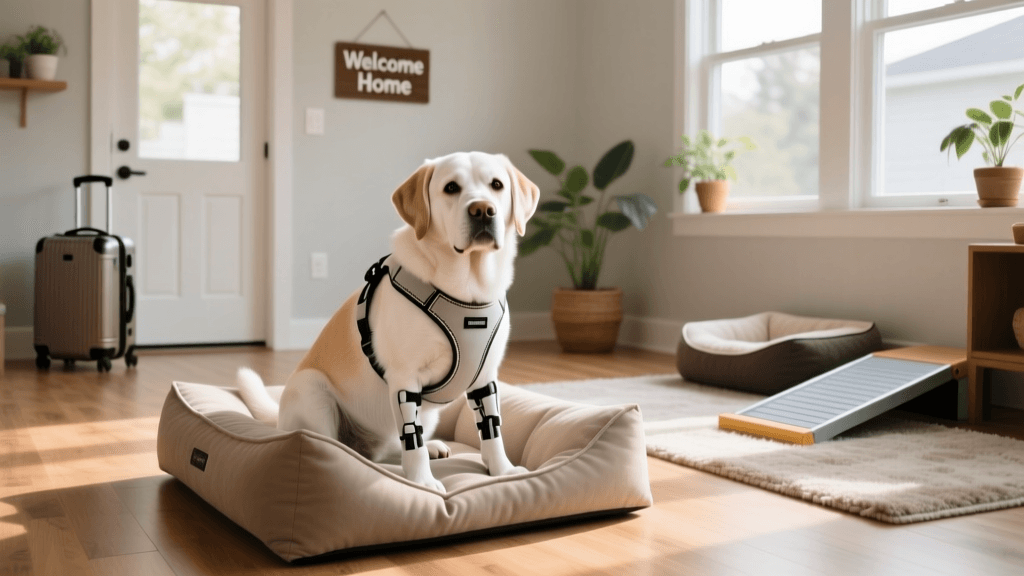
Moving With a Senior Dog in 2026: Joint Care and Stress Tips
Learn how to safely relocate your senior dog in 2026. Discover expert tips for joint support, anxiety relief, and adapting your new home environment.
The Challenge of Relocating an Aging Canine
Moving is universally ranked as one of life’s most stressful events, and for our canine companions, a sudden change in territory can be deeply unsettling. When your dog has entered their senior years—typically age seven and older, depending on the breed and size—a relocation presents a unique intersection of physical vulnerability and cognitive strain. In 2026, veterinary behaviorists emphasize that moving an aging dog requires far more than simply transporting their bed and bowls; it demands a strategic, proactive approach to joint preservation, environmental mapping, and anxiety mitigation.
According to the ASPCA, senior dogs frequently experience decreased sensory awareness, reduced joint mobility, and early signs of cognitive decline. These age-related changes make sudden environmental shifts a primary catalyst for confusion, fear, and physical discomfort. By understanding the physiological hurdles your older dog faces, you can transform a chaotic moving day into a smooth, supportive life transition.
The Physiology of Relocation Stress in Aging Dogs
When a dog experiences stress, their body releases cortisol. In young, healthy dogs, this is a temporary response. However, in senior dogs, elevated cortisol levels can exacerbate underlying inflammatory conditions, particularly osteoarthritis. A dog that was managing their joint pain well in a familiar environment may suddenly exhibit severe stiffness or reluctance to move when placed in a new home with different floor plans, staircases, and acoustics.
Furthermore, older dogs rely heavily on 'scent mapping' and spatial memory to navigate their surroundings. A dog suffering from early-stage Canine Cognitive Dysfunction (CCD)—the canine equivalent of dementia—may become profoundly disoriented in a new house, leading to pacing, vocalization at night, and house-soiling accidents. Recognizing these signs not as 'bad behavior,' but as stress-induced cognitive overload, is the first step in providing compassionate care during your move.
Pre-Move Preparation: Scent and Routine Anchoring
The weeks leading up to your move are critical for setting the stage for your senior dog's comfort. While you are busy packing boxes and sorting through belongings, your dog is watching their familiar world disappear. To counteract this, you must anchor their routine and preserve their olfactory environment.
- Do Not Wash Their Bedding: It is tempting to wash your dog’s bed, blankets, and favorite plush toys before moving into a new, clean house. Resist this urge. The natural oils and scents on their bedding provide a massive psychological anchor. Pack these items in a clearly marked 'Open First' bin and place them in your dog's designated safe room the moment you arrive at the new home.
- Maintain the Feeding and Walking Schedule: As your moving day approaches, keep your dog's feeding, potty, and walking schedules as rigid as possible. Predictability lowers baseline anxiety.
- Desensitize to Travel Gear: If your senior dog will be traveling in a crate or requires a harness for car lifts, reintroduce these items weeks in advance. Pair them with high-value treats like lick mats smeared with frozen bone broth to create positive associations.
Environmental Modifications: Flooring and Layout
The physical layout of your new home can either support or hinder your senior dog's mobility. Slippery surfaces are the enemy of aging joints. In 2026, many homeowners are opting for pet-friendly rigid core luxury vinyl plank (LVP) flooring due to its waterproof nature. However, even high-quality LVP can be dangerously slick for a dog with weakened hindquarters or hip dysplasia.
Before bringing your dog into the new space, lay down interlocking foam mats or low-pile, non-slip area rugs in high-traffic zones, particularly along the path from their sleeping area to the backyard for potty breaks. Ensure that all rugs have heavy-duty, non-slip rug pads underneath to prevent them from sliding out from under your dog's paws, which could result in a catastrophic muscle tear or ligament injury.
Mobility Aids: Ramps, Harnesses, and Orthopedic Beds
Environmental modification is a cornerstone of managing canine joint disease. As noted by experts at the Cornell University College of Veterinary Medicine, providing ramps, orthopedic bedding, and physical support can drastically improve the quality of life for dogs with osteoarthritis. You should never force a senior dog to jump into a vehicle, onto a couch, or up a steep flight of stairs in a new environment.
2026 Mobility Support Gear Comparison
| Product Category | Recommended 2026 Model | Best Use Case | Approx. Price |
|---|---|---|---|
| Telescoping Ramp | PetSafe Happy Ride Extra Long | SUV loading and high bed access | $130 |
| Elevated Orthopedic Bed | Kuranda Chewproof PVC Frame | Joint relief and pressure distribution | $160 |
| Support Harness | Ruffwear Web Master Harness | Stair assistance and balance support | $95 |
| Non-Slip Floor Mats | Gorilla Grip Interlocking Foam | Creating safe walking pathways | $45 |
When introducing a ramp, do not simply place it and expect your dog to use it. Spend a week prior to the move training your dog to walk up and down the ramp on flat ground using high-value treats. For dogs that are hesitant, a support harness with a padded handle, like the Ruffwear Web Master, allows you to gently guide and stabilize their hindquarters as they navigate the incline.
Managing Anxiety: Pheromones, Wearables, and Safe Spaces
To manage the acute anxiety of moving day and the subsequent adjustment period, leverage modern canine calming technologies. The Adaptil Optimum Diffuser, which releases a complex profile of dog-appeasing pheromones, should be plugged into the wall of your new home's 'safe room' at least 24 hours before your dog arrives. This synthetic pheromone mimics the nursing pheromones of a mother dog, signaling to your senior dog that the environment is secure.
'When relocating a senior dog, create a decompression zone that is small, quiet, and fully stocked with their familiar scents. Do not give them free roam of the entire new house on day one; the spatial overload will trigger severe anxiety and pacing.' - Veterinary Behaviorist Guidelines, 2026
Additionally, consider utilizing a 2026 smart pet collar that tracks resting heart rate and sleep quality. Monitoring these biometrics can give you objective data on your dog's stress levels, allowing you to adjust their routine, increase mental enrichment, or consult your veterinarian about short-term anti-anxiety medications if their resting heart rate remains elevated for weeks post-move. Always follow the AVMA's guidelines on moving with pets to ensure travel day is as seamless as possible.
The Senior 3-3-3 Decompression Protocol
The '3-3-3 Rule' is a popular framework for rescue dog adoption, but it is equally vital for senior dogs transitioning to a new home. Older dogs require a modified, slower-paced version of this protocol to accommodate their physical and cognitive limitations.
The First 3 Days: Decompression and Rest
During the first 72 hours, your dog may sleep excessively, refuse to eat, or hide. This is normal. Keep them confined to their safe room or a small, gated area. Take them out on a leash for brief, low-stimulation potty breaks. Avoid inviting friends or family over to see the new house during this time. Let their nervous system down-regulate.
The First 3 Weeks: Routine Building and Mapping
By week two or three, your senior dog will begin to learn the layout of the new house. This is the time to establish new walking routes and feeding schedules. Keep walks short and focused on sniffing rather than physical exertion. 'Sniffaris' provide immense mental stimulation and help them build a new scent map of the neighborhood without overtaxing their aging joints. If they have accidents in the house, do not punish them; simply clean the area with an enzymatic cleaner and increase the frequency of their potty breaks.
The First 3 Months: Full Settling and Reassessment
By the three-month mark, your dog should feel secure in their new territory. Their true personality will begin to shine through again. This is the ideal time to schedule a comprehensive veterinary wellness exam. Have your vet assess their joint health, review their pain management protocol, and discuss whether their current diet and supplements (such as EPA/DHA fish oils or glucosamine chews) need adjusting based on their new activity levels in the new home.
Conclusion
Relocating with a senior dog in 2026 requires empathy, preparation, and the right environmental tools. By prioritizing joint support, anchoring their routines, and allowing ample time for cognitive decompression, you can ensure that your dog's new home becomes a place of comfort, safety, and joy for their golden years.
anouk-beaumont
All our authors care for dogs every day — read more of their work on the authors page.