Top Smart Treat Cameras for Dog Separation Anxiety 2026
Discover the best smart treat cameras for dog separation anxiety in 2026. Compare Furbo, Petcube, and Wyze with expert desensitization protocols.
Navigating Canine Separation Anxiety in 2026
As we settle into the hybrid work routines of 2026, canine separation anxiety remains one of the most prevalent and distressing behavioral challenges for dog owners. While the initial post-pandemic spike in adoptions has stabilized, the fluctuating schedules of modern life mean that many dogs still struggle with sudden periods of isolation. According to the ASPCA, separation anxiety is triggered when a dog becomes overly attached to their guardian and experiences severe distress upon their departure. Symptoms range from destructive chewing and inappropriate elimination to excessive vocalization, pacing, and even self-harm.
Managing alone time requires more than just leaving the television on; it demands a structured, science-backed approach to behavioral modification. In recent years, the integration of smart home technology into pet care has revolutionized how we tackle this issue. Interactive smart treat cameras have emerged as a vital tool in the modern dog owner's arsenal, allowing for remote monitoring, two-way audio communication, and most importantly, the ability to dispense high-value rewards to interrupt anxiety loops and reinforce calm behavior.
The Role of Interactive Tech in Behavioral Modification
Before investing in hardware, it is crucial to understand how a treat camera actually helps a dog with separation anxiety. The primary mechanism at play is counter-conditioning and desensitization. When a dog with separation anxiety is left alone, their brain enters a state of panic. By using a smart camera to toss a high-value treat (like freeze-dried liver or low-calorie training bites) right as the dog begins to exhibit early signs of stress—such as pacing or whining—you can interrupt the panic cycle and redirect their focus.
Furthermore, these devices allow owners to practice 'departure desensitization.' You can leave the house, walk to the end of the driveway, and use the camera to reward your dog for remaining settled on their mat, gradually increasing the distance and time you are away. The Humane Society of the United States emphasizes that gradual desensitization, paired with positive reinforcement, is the gold standard for treating mild to moderate separation anxiety.
2026 Smart Treat Camera Comparison Chart
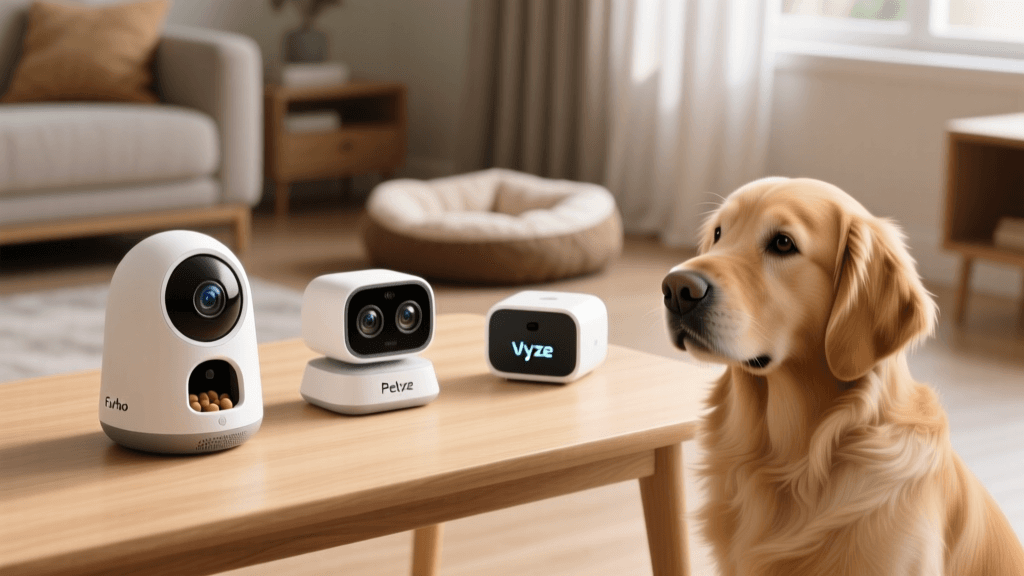
When selecting a device for behavioral training, you need reliable treat-tossing mechanics, clear two-way audio, and accurate AI motion/barking alerts. Below is a comparison of the top three models dominating the market in 2026.
| Feature | Furbo Dog Camera (360) | Petcube Bites 2 Lite | Wyze Cam Pan v3 |
|---|---|---|---|
| 2026 Retail Price | $219.99 | $149.99 | $59.98 |
| Treat Capacity | Up to 100 treats | Up to 80 treats | N/A (Requires 3D printed mod) |
| Field of View | 360° Rotating | 165° Wide Angle | 360° Pan / 93° Tilt |
| AI Barking Alerts | |||
| Best For | Severe anxiety & pacing dogs | Budget-conscious training | Tech-savvy DIY owners |
Deep Dive: The Top Models for Alone Time Training
1. Furbo Dog Camera (360 Edition)
The Furbo remains the premium choice for dedicated separation anxiety management. The 360-degree rotating base is a game-changer for dogs who pace in circles when left alone, as the camera physically tracks the dog, keeping them in frame so you can monitor their body language. The treat-tossing mechanism is highly reliable, capable of launching treats up to six feet away, which encourages the dog to move away from the front door (a common anxiety hotspot) and engage in a positive foraging behavior. The AI 'Dog Nanny' subscription provides real-time alerts for vomiting, destructive chewing, and specific anxiety-induced vocalizations.
2. Petcube Bites 2 Lite
For owners who need a dedicated treat dispenser without the premium price tag, the Petcube Bites 2 Lite is an excellent 2026 contender. It features a wide-angle lens and a built-in treat dispenser that works well with kibble and small, hard training treats. While it lacks the physical rotation of the Furbo, its 165-degree field of view is usually sufficient if placed strategically in the center of the dog's primary confinement area. The two-way audio is crisp, allowing you to use a calm, soothing voice to reassure your dog before dispensing a reward.
3. Wyze Cam Pan v3 (The DIY Alternative)
While the Wyze Cam Pan v3 does not come with a built-in treat dispenser, its incredibly low price point and superior 360-degree pan-and-tilt capabilities make it a favorite among tech-savvy dog trainers. Many owners pair the Wyze camera with a standalone smart treat dispenser or use it purely for visual monitoring and two-way audio desensitization. Its 'Sound Detection' feature can be calibrated to alert your phone the moment your dog begins to whine or howl, allowing you to intervene via the microphone before the anxiety escalates into destructive behavior.
The 4-Week Tech-Assisted Desensitization Protocol
Owning the camera is only step one. To effectively treat separation anxiety, you must pair the technology with a structured behavioral protocol. Below is a 4-week plan designed to build your dog's confidence in being alone.
Week 1: Establishing the Positive Association (Home)
- Goal: Teach the dog that the camera's sound and flashing light predict high-value rewards.
- Action: While you are home, manually trigger the treat toss via the app 5-10 times a day.
- Treat Recommendation: Use Zuke's Mini Naturals or small pieces of boiled chicken. Keep the caloric intake under 10% of their daily diet.
Week 2: Spatial Desensitization (Out of Sight)
- Goal: Reduce reliance on your physical presence in the same room.
- Action: Go to a different room or step out to the backyard. Use the camera to monitor your dog. If they are lying calmly on their designated mat, use the two-way audio to say 'Good settle,' and immediately toss a treat.
- Correction: If the dog follows you to the door, do not toss a treat. Wait until they return to their mat and settle.
Week 3: Micro-Departures (The Threshold Test)
- Goal: Normalize the act of leaving the house without triggering panic.
- Action: Perform your standard departure routine (put on shoes, grab keys). Walk out the front door, close it, and stand silently on the porch. Watch the camera feed.
- Intervention: Before the dog shows signs of stress (usually within 30-60 seconds for anxious dogs), toss a treat through the camera, then immediately re-enter the house. Keep re-entries incredibly boring.
Week 4: Extending the Timeline
- Goal: Build duration and independence.
- Action: Leave the house and take a 5-minute walk around the block. Use the AI barking alerts to monitor your dog's state. If they remain quiet, dispense a treat at the 2-minute mark and the 4-minute mark. Gradually extend these absences to 15, then 30 minutes over the course of the week.
Complementary Holistic and Veterinary Approaches
While smart cameras and behavioral protocols are highly effective for mild to moderate cases, severe separation anxiety often requires a multi-modal approach. If your dog is injuring themselves, refusing high-value treats when left alone, or exhibiting extreme panic, technology alone will not suffice. In these cases, the dog's brain is in a state of 'fight or flight' and is incapable of learning or processing rewards.
Consulting a board-certified veterinary behaviorist is critical. They may prescribe short-term anti-anxiety medications, such as fluoxetine or trazodone, to lower the dog's baseline arousal level enough for the camera-assisted desensitization protocol to work. Additionally, holistic supplements can provide gentle support. The FDA advises caution and veterinary consultation when using CBD products, but clinically studied supplements containing L-theanine, L-tryptophan, and milk whey protein (like Solliquin or Zylkene) have proven efficacy in promoting relaxation without sedation.
Final Thoughts on Managing Alone Time
Separation anxiety is a complex emotional disorder, not a result of poor obedience. By leveraging the advanced smart treat cameras available in 2026, owners can bridge the gap between physical absence and emotional support. Whether you choose the premium tracking of the Furbo 360, the reliable dispensing of the Petcube, or the budget-friendly monitoring of the Wyze Cam, the key to success lies in consistency, patience, and a commitment to positive reinforcement. Remember, the goal is not just to distract your dog while you are away, but to fundamentally change how they feel about being alone.
marcus-aldridge
All our authors care for dogs every day — read more of their work on the authors page.