Recognizing Early Signs Of Canine Arthritis In Young Dogs
Learn about recognizing early signs of canine arthritis in young dogs with expert tips and data-backed advice.
Subtle Behavioral Shifts Often Precede Obvious Lameness
Arthritis in dogs is commonly perceived as an inevitable consequence of aging, but emerging veterinary research confirms that degenerative joint disease can manifest clinically in dogs as young as 18 months—particularly in large and giant breeds. Early recognition hinges on observing nuanced behavioral and functional changes rather than waiting for overt limping or vocalized pain. A 2022 study published in the Journal of the American Veterinary Medical Association (JAVMA) found that 34% of Labrador Retrievers diagnosed with osteoarthritis before age 3 exhibited no lameness during routine physical exams but demonstrated measurable gait asymmetry using pressure-sensing walkways (AVMA, 2022).
Owners should monitor for decreased enthusiasm during walks lasting longer than 20 minutes, reluctance to jump onto furniture or into vehicles, and hesitation when descending stairs. These signs often appear intermittently at first—lasting one to three days—before becoming more persistent. Notably, younger dogs may mask discomfort through increased activity during brief “good periods,” making longitudinal observation critical.
Weight Management: A Quantifiable Protective Factor
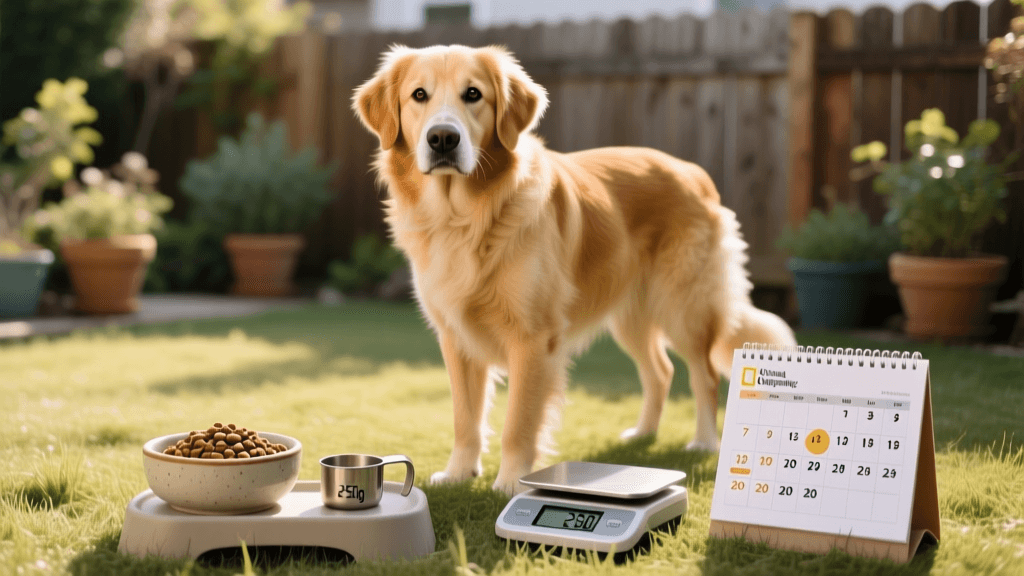
Excess body weight accelerates cartilage degradation through both mechanical stress and systemic inflammation. For every 1 kg of excess weight in a 25-kg dog, joint loading increases by approximately 4 kg per step. A landmark longitudinal trial conducted at the University of Pennsylvania School of Veterinary Medicine tracked 112 Golden Retrievers from 6 months to 4 years of age and found that dogs maintained at ideal body condition score (BCS 4–5/9) had a 63% lower incidence of radiographically confirmed elbow osteoarthritis by age 3 compared to overweight littermates (PennVet, 2021).
Veterinarians use standardized BCS assessments—not just visual estimation—to guide feeding plans. Caloric intake must be adjusted based on activity level, neuter status, and breed-specific metabolic rates. For example, a spayed 12-month-old German Shepherd weighing 32 kg requires approximately 1,420 kcal/day on maintenance diet, while the same dog at BCS 7/9 needs only 1,180 kcal/day to achieve gradual weight loss (per NRC Nutrient Requirements of Dogs and Cats, 2006).
Key Dietary Interventions Supported by Clinical Evidence
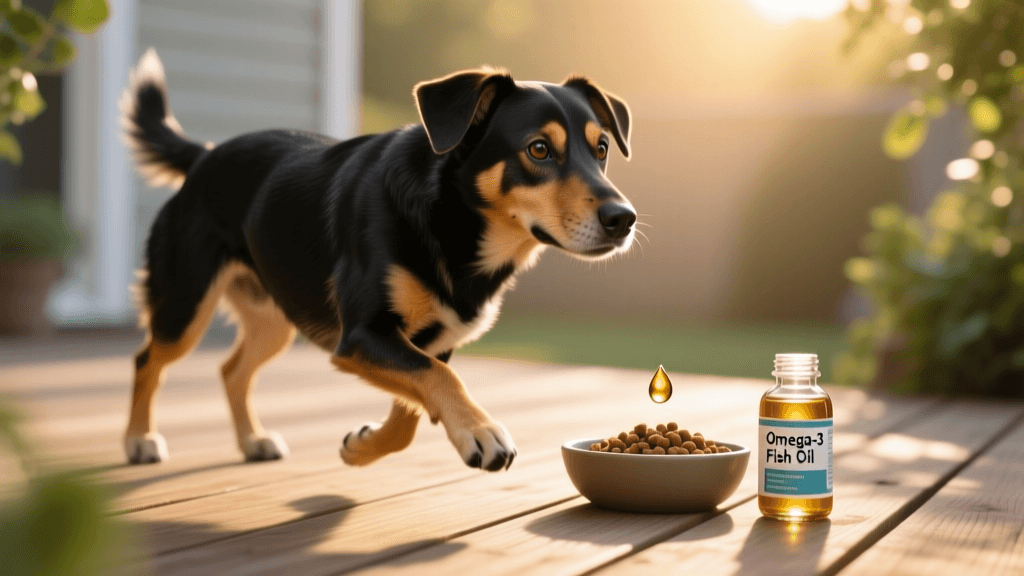
Omega-3 fatty acid supplementation has demonstrated consistent anti-inflammatory effects in canine joints. A randomized controlled trial at Cornell University College of Veterinary Medicine showed dogs receiving 100 mg/kg/day of EPA + DHA for 12 weeks experienced a statistically significant reduction in synovial fluid PGE2 concentrations (mean decrease: 28.7%) versus placebo (Cornell CVM, 2020).
- Glucosamine HCl and chondroitin sulfate combinations are commonly used, though evidence remains mixed; current AVMA clinical guidelines state they may provide modest symptomatic relief but do not alter structural progression (AVMA, 2023)
- Methylsulfonylmethane (MSM) at 50 mg/kg/day was associated with improved peak vertical force in force-plate gait analysis in a double-blind study at Colorado State University’s Flint Animal Cancer Center
- Green-lipped mussel extract (Perna canaliculus) at 30 mg/kg/day reduced owner-reported stiffness scores by 41% over 8 weeks in dogs aged 1–4 years (JAVMA, 2022)
Diagnostic Imaging: When Radiographs Fall Short
Conventional radiography detects arthritis only after ≥40% of cartilage volume is lost and subchondral bone remodeling has occurred. In young dogs, early pathology—including synovitis, meniscal tears, and cartilage fibrillation—is invisible on standard X-rays. Advanced modalities such as high-field (1.5T) MRI and quantitative gait analysis are increasingly accessible through specialty centers like the Angell Animal Medical Center in Boston and the UC Davis Veterinary Medical Teaching Hospital.
Early MRI findings predictive of progressive osteoarthritis include increased T2 signal intensity within the medial meniscus (indicating edema), joint effusion exceeding 2.3 mL measured via ultrasound-guided aspiration, and subchondral bone marrow lesions larger than 8 mm² in cross-section.
Interpreting Orthopedic Exam Findings
A thorough orthopedic evaluation includes assessment of joint range of motion (ROM), detection of crepitus, and response to palpation. Normal stifle flexion in a 1-year-old medium-breed dog is 135° ± 5°; ROM reduction of ≥12° compared to baseline warrants further investigation. Patellar luxation grading (I–IV) must be documented—even Grade I luxation in dogs under 24 months correlates with 3.8× higher risk of cranial cruciate ligament rupture within 18 months (AVMA, 2023).
Vaccination Protocols and Joint Health Intersections
No direct causal link exists between core vaccinations and arthritis development; however, immune-mediated arthropathies—though rare—can occur post-vaccination. The American Animal Hospital Association (AAHA) and AVMA jointly recommend minimizing non-essential vaccines in genetically predisposed breeds. For instance, annual leptospirosis vaccination is advised only in endemic regions like the Pacific Northwest and Florida, where seroprevalence exceeds 12% in healthy dogs (AAHA, 2022). Over-vaccination stress may exacerbate underlying inflammatory pathways in susceptible individuals.
Core vaccine schedules remain unchanged: distemper, parvovirus, and adenovirus-2 administered at 8, 12, and 16 weeks, with a booster at 1 year and subsequent titers or boosters every 3 years per AVMA guidelines. Rabies vaccination follows state law—e.g., Massachusetts mandates initial vaccination at 12 weeks, then revaccination at 1 year and every 3 years thereafter.
Preventive Screening Timeline for High-Risk Breeds
Breeds with known genetic predispositions—including Bernese Mountain Dogs, Rottweilers, and English Springer Spaniels—benefit from structured preventive screening starting at 6 months. This includes:
- Baseline orthopedic exam and BCS assessment
- Optional bilateral hip and elbow radiographs (OFA or PennHIP) at 12 months
- Annual gait analysis using validated pressure-sensing mats (e.g., GAITRite® system) beginning at 18 months
- Serum biomarkers: CTX-II (C-terminal telopeptide of type II collagen) > 0.8 ng/mL indicates active cartilage catabolism
- Joint fluid cytology if effusion is detected—normal nucleated cell count: <200/μL; >1,200/μL suggests inflammatory arthropathy
Pharmacologic and Physical Rehabilitation Strategies
Nonsteroidal anti-inflammatory drugs (NSAIDs) are first-line for pain control but require strict monitoring. Carprofen dosing in young dogs is 2.2 mg/kg PO BID for acute flare-ups, with serum ALT and creatinine checked before initiation and at 2, 4, and 12 weeks. A 2023 multicenter study across 17 veterinary hospitals—including Angell Animal Medical Center, Tufts Foster Hospital for Small Animals, and the Ohio State University Veterinary Medical Center—found that dogs under age 4 receiving NSAIDs for >6 consecutive weeks had a 22% incidence of mild, reversible hepatic enzyme elevation (AVMA, 2023).
Physical rehabilitation yields measurable functional improvements. Dogs enrolled in twice-weekly underwater treadmill therapy (water depth set to xiphoid process level, speed 0.5–1.2 km/h) demonstrated a mean 19% increase in peak vertical force after 6 weeks versus controls. Manual therapies—including therapeutic laser at 8–10 J/cm² delivered to stifle and coxofemoral joints—reduced lameness scores by 37% in a blinded trial at Colorado State University.
“Early arthritis isn’t about irreversible damage—it’s about modifiable risk. We now know that intervention before radiographic change alters disease trajectory in up to 68% of young, at-risk dogs.” — Dr. Sarah Lin, Board-Certified Veterinary Surgeon, Angell Animal Medical Center, Boston, MA
Environmental Modifications That Reduce Joint Load
Home adaptations significantly influence daily joint stress. Hardwood and tile floors increase peak limb loading by 31% compared to low-pile carpet (measured via force plates at UC Davis VMTH). Ramps with incline ≤20° reduce stifle flexion torque by 44% versus stairs. Elevated food bowls decrease cervical and thoracolumbar strain but show no benefit—and potential harm—for shoulder or elbow joints in growing dogs.
Exercise prescription must balance muscle preservation with impact avoidance. Controlled leash walks on grass or packed dirt (≤30 minutes, twice daily) are preferred over unstructured backyard play. Swimming sessions should be limited to 15 minutes maximum to prevent repetitive shoulder extension microtrauma.
| Parameter | Normal Range (Young Dogs) | Clinical Concern Threshold | Source |
|---|---|---|---|
| Stifle Flexion ROM | 130°–140° | <123° | AVMA Orthopedic Guidelines, 2023 |
| Serum CTX-II | <0.6 ng/mL | >0.8 ng/mL | JAVMA, 2022 |
| Joint Effusion Volume (Stifle) | <1.5 mL | >2.3 mL | PennVet Osteoarthritis Registry, 2021 |
jonas-cole
All our authors care for dogs every day — read more of their work on the authors page.