Dog Weight Loss: Precision Portion Control Strategies
Discover actionable dog weight loss strategies. Learn precision portion control, caloric calculations, and feeding schedules to help your pup thrive.
The Hidden Epidemic of Canine Obesity
Canine obesity is no longer just a cosmetic concern; it is a pervasive medical condition that drastically reduces a dog's lifespan and quality of life. According to veterinary surveys, over 50% of pet dogs in the United States are classified as overweight or obese. Excess adipose tissue is not merely inactive storage; it is an active endocrine organ that secretes inflammatory cytokines, contributing to osteoarthritis, insulin resistance, and cardiovascular strain. While the solution conceptually boils down to 'calories in versus calories out,' the practical application requires a meticulous, data-driven approach to nutrition and feeding strategies. Guesswork is the enemy of weight management. To successfully guide your dog toward a healthy body condition, you must transition from casual feeding habits to precision portion control.
The Science of Canine Caloric Needs
Before altering your dog's diet, you must establish their exact caloric baseline. Feeding guidelines printed on the back of kibble bags are notoriously broad and often designed for intact, highly active adult dogs, leading to chronic overfeeding for the average sedentary, spayed, or neutered house pet. To find your dog's true requirement, veterinarians rely on the Resting Energy Requirement (RER) and the Daily Energy Requirement (DER).
The RER represents the calories needed for basic bodily functions at rest. The formula is: RER = 70 x (Body Weight in kg)^0.75. Once you have the RER, you multiply it by a specific factor to determine the DER. For a safe, sustainable weight loss program, the multiplier is typically 0.8 to 1.0 of the RER based on the dog's target ideal weight, not their current overweight status.
For example, if your dog currently weighs 40 lbs (18.1 kg) but their ideal weight is 30 lbs (13.6 kg), you calculate the RER for the ideal weight of 13.6 kg. The RER would be approximately 495 kcal. Multiplying this by a weight loss factor of 0.8 yields a daily target of roughly 396 kcal. The American Kennel Club (AKC) emphasizes that calculating calories based on ideal weight prevents the metabolic stagnation that occurs when you simply reduce the food intake of an already obese animal.
Ditching the Measuring Cup: The Case for Gram Scales
One of the most critical errors pet owners make is relying on standard measuring cups to portion kibble. Studies have shown that using a measuring cup can result in a variance of up to 20% to 30% in actual food volume, depending on how the owner scoops, shakes, or packs the kibble. Over the course of a month, an extra 10% of daily calories can easily halt weight loss or even cause weight gain.
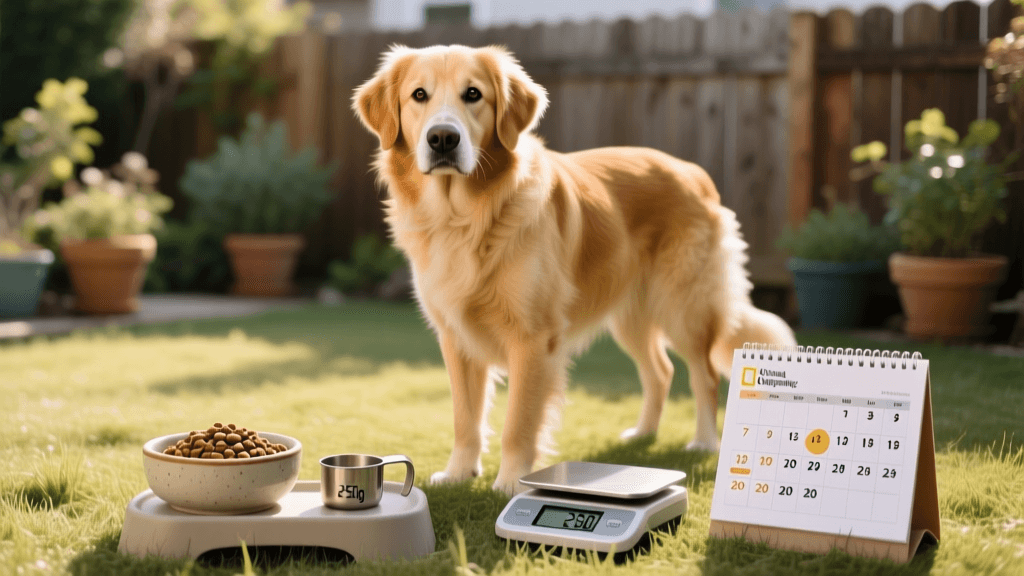
Actionable Advice: Invest in a digital kitchen gram scale. Models like the Ozeri ZK14-S Pronto Digital Multifunction Kitchen Scale cost approximately $15 and offer precision down to the single gram. To use it, place your dog's empty stainless steel bowl on the scale, press the 'tare' or 'zero' button, and pour the kibble until you hit the exact gram weight prescribed by your caloric calculations. This eliminates human error, ensures consistency, and allows you to seamlessly adjust portions by 5-gram increments if your dog's weight loss plateaus.
Implementing the 10% Treat Rule
A major pitfall in canine weight management is the failure to account for treats, training rewards, and table scraps. Veterinary nutritionists universally recommend the '10% Rule': treats and extras should never constitute more than 10% of a dog's total daily caloric intake. The remaining 90% must come from a complete and balanced diet to prevent severe micronutrient deficiencies.
If your dog's daily caloric allowance for weight loss is 400 kcal, their treat budget is strictly capped at 40 kcal per day. The following table illustrates how quickly common treats can obliterate this budget:
| Treat Item | Approximate Calories | Impact on a 40 kcal Treat Budget |
|---|---|---|
| 1 Medium Baby Carrot | 4 kcal | 10% of budget (Excellent choice) |
| 1 Standard Biscuit (e.g., Milk-Bone) | 30 - 40 kcal | 75% - 100% of budget (Use sparingly) |
| 1 Dental Chew (e.g., Greenies) | 70 - 90 kcal | 175% - 225% of budget (Avoid during weight loss) |
| 1 Slice of Cheddar Cheese | 113 kcal | 282% of budget (Highly detrimental) |
| 1 Tablespoon Peanut Butter | 95 kcal | 237% of budget (Highly detrimental) |
Strategy: Substitute high-calorie commercial treats with low-calorie, high-fiber alternatives like green beans, cucumber slices, or apple cores (seeds removed). For training sessions requiring repetitive rewards, use single pieces of kibble deducted directly from your dog's daily weighed portion.
Strategic Feeding Schedules and Enrichment
Free-feeding (leaving a bowl of food out all day) is entirely incompatible with weight management. You cannot monitor intake, and it ignores a dog's natural foraging psychology. Transition to a structured meal-feeding schedule, dividing the daily weighed portion into two or three distinct meals spaced 8 to 12 hours apart. This stabilizes blood sugar levels and prevents the ravenous begging that occurs when a dog eats only once a day.
Furthermore, a dog's meal should take longer than 45 seconds to consume. Rapid eating leads to poor satiety signaling and increases the risk of gastric dilatation-volvulus (bloat) in large breeds. Utilize enrichment feeders to mimic natural foraging behaviors and extend meal times. Products like the Outward Hound Fun Feeder Slo-Bowl (approx. $12) or snuffle mats force the dog to use their nose and tongue to extract kibble from ridges and fabric folds. This mental stimulation burns additional calories and triggers the release of dopamine, leaving the dog feeling psychologically satisfied despite the reduced caloric intake.
Transitioning to a Weight Management Diet
If your veterinarian recommends a therapeutic weight management diet, these formulas are specifically engineered to be high in protein and fiber while restricting fat and calories. The fiber increases gastric distension, sending fullness signals to the brain without adding caloric load. However, sudden dietary shifts can cause gastrointestinal upset, including diarrhea and vomiting.
Execute a strict 7-day transition protocol:
Days 1-2: 75% current diet, 25% new weight management diet.
Days 3-4: 50% current diet, 50% new diet.
Days 5-6: 25% current diet, 75% new diet.
Day 7: 100% new diet.
Always weigh the new food using your gram scale, as therapeutic diets often have different caloric densities and kibble sizes compared to standard maintenance formulas.
Tracking Progress: The Body Condition Score (BCS)
The scale is only one metric of success; muscle weighs more than fat. Therefore, relying solely on body weight can be misleading, especially if your dog is undergoing physical therapy or increased exercise. The gold standard for tracking canine weight loss is the Body Condition Score (BCS), a visual and tactile assessment system. The WSAVA Global Nutrition Toolkit provides standardized 1-9 and 1-5 BCS charts that are invaluable for home monitoring.
A dog at an ideal weight (Score 4 or 5 on a 9-point scale) should have an easily palpable ribcage with a thin layer of fat covering, much like the back of your hand. When viewing the dog from above, there should be a distinct hourglass waist, and from the side, a clear abdominal tuck. The Association for Pet Obesity Prevention (APOP) offers excellent interactive visual guides to help owners accurately score their pets at home.
Weigh your dog every 14 days and perform a tactile BCS check weekly. A safe rate of weight loss is 1% to 2% of total body weight per week. If your dog loses weight too rapidly, increase the daily gram allowance by 10%. If weight loss stalls for more than three weeks, reduce the daily portion by 10% and reassess. By combining mathematical precision, gram-scale accuracy, and structured enrichment, you can safely navigate your dog's weight loss journey, ultimately adding years of vibrant, pain-free mobility to their life.
marcus-aldridge
All our authors care for dogs every day — read more of their work on the authors page.