Affordable Dog Dental Care: Prevent Costly Vet Bills
Discover budget-friendly dog dental care routines to prevent periodontal disease. Learn affordable brushing tips, safe chews, and cost-saving strategies.
The Hidden Financial Toll of Canine Periodontal Disease
When we think of budget-friendly dog care, we often focus on food, toys, and grooming. However, one of the most significant threats to both your dog's health and your wallet is hiding right inside their mouth. According to the American Kennel Club, up to 80% of dogs show signs of periodontal disease by the time they are three years old. What starts as mild plaque buildup can rapidly progress to gingivitis, tooth root abscesses, and systemic infections that affect the heart, liver, and kidneys.
The financial reality of neglecting your dog's oral hygiene is staggering. A routine veterinary dental cleaning under general anesthesia typically ranges from $500 to $1,200. If the disease has advanced to the point where surgical extractions are necessary, those costs can easily skyrocket to $3,000 or more. For budget-conscious pet owners, these emergency and specialty veterinary bills can be financially devastating. Fortunately, establishing a proactive, low-cost at-home dental care routine is one of the most effective ways to protect your dog's wellbeing while keeping thousands of dollars in your bank account.
Cost Comparison: Prevention vs. Professional Treatment
To understand the true value of at-home dental care, it helps to compare the annual costs of preventive measures against the potential costs of veterinary intervention. The table below outlines the estimated expenses associated with canine dental health.
| Preventive Measure / Treatment | Estimated Cost | Frequency / Duration |
|---|---|---|
| Enzymatic Toothpaste & Dual-Head Brush | $12 - $18 | Lasts 2-3 months |
| VOHC-Approved Dental Chews (Bulk) | $25 - $40 | Per month |
| Canine Water Additive | $10 - $15 | Per month |
| Routine Vet Dental Exam | $50 - $100 | Annually (often in wellness exam) |
| Professional Cleaning (Anesthesia) | $500 - $1,200+ | Every 1-3 years (if needed) |
| Surgical Tooth Extractions | $1,000 - $3,000+ | Per incident (advanced disease) |
As the data illustrates, an investment of roughly $15 to $30 a month in at-home prevention can save you from four-figure veterinary bills down the road.
Building a Budget-Friendly Daily Dental Routine
1. The Right Tools (Without the Premium Markup)
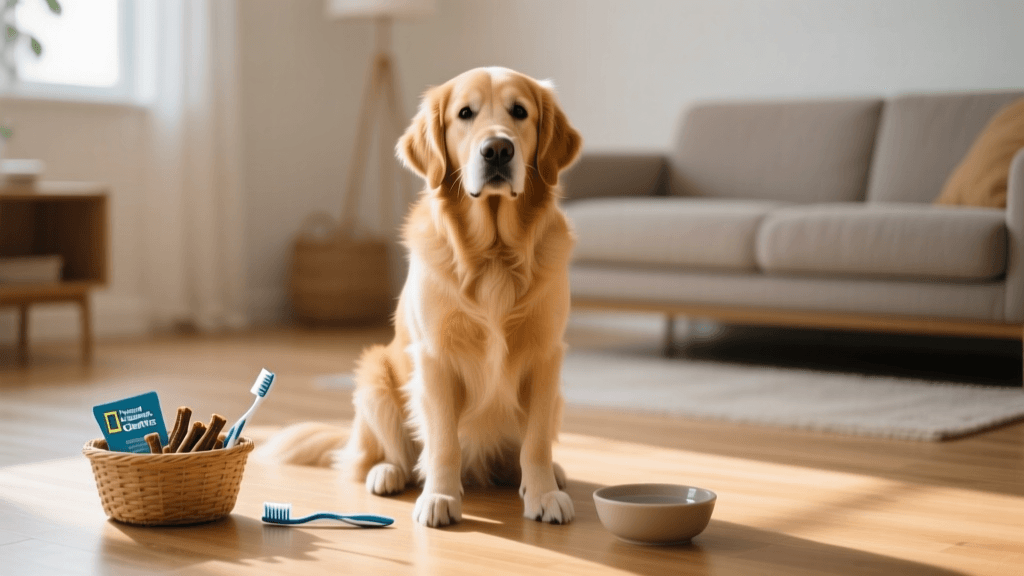
You do not need to purchase expensive, battery-operated canine toothbrushes or fancy dental kits to effectively clean your dog's teeth. The gold standard for at-home care is mechanical friction. A simple dual-head dog toothbrush (designed to clean the front and back of the tooth simultaneously) or a soft-bristled human infant toothbrush costs less than $5.
However, you must invest in a high-quality enzymatic dog toothpaste. Brands like Virbac C.E.T. or Sentry Petrodex contain enzymes that continue to break down plaque even after brushing stops, and they are formulated in palatable flavors like poultry or beef. These typically cost between $8 and $12 per tube. Never use human toothpaste. Human toothpastes often contain fluoride and xylitol, both of which are highly toxic to dogs and can cause fatal hypoglycemia or liver failure.
2. The 14-Day Brushing Acclimation Protocol
Many owners abandon brushing because their dog fights the process. The secret to stress-free, budget-friendly brushing is a slow acclimation period. Follow this 14-day protocol to turn dental care into a positive bonding experience:
- Days 1-3 (Taste Familiarization): Place a pea-sized amount of enzymatic toothpaste on your finger and let your dog lick it off like a treat. Do not attempt to open their mouth. Praise them heavily.
- Days 4-7 (Gum Introduction): Apply the toothpaste to your finger, gently lift your dog's lip, and rub the paste along the outer gum line of the upper canine teeth for just 5 seconds. Reward with a small treat.
- Days 8-11 (Tool Introduction): Put toothpaste on the soft-bristled brush. Let them lick it off the bristles. Then, gently brush just the outer surfaces of the front teeth using small, circular motions.
- Days 12-14 (Full Routine): Gradually work your way to the back molars, where plaque accumulates the most. Aim for 30 to 60 seconds of brushing daily. Focus heavily on the outer surfaces, as the dog's tongue naturally keeps the inner surfaces relatively clean.
Evaluating Affordable Dental Chews and Treats
If your dog absolutely will not tolerate a toothbrush, dental chews are the next best budget-friendly defense. However, not all chews are created equal. Many expensive 'dental bones' on the market are essentially just expensive candy that does little to reduce tartar.
To ensure you are not wasting money, only purchase chews that carry the Veterinary Oral Health Council (VOHC) seal of acceptance. The VOHC is an independent organization that rigorously tests pet products to verify their claims of plaque and tartar reduction.
When comparing costs, look at the price-per-ounce rather than the price-per-bag. For example, natural bully sticks are excellent for mechanical scraping but can cost $3 to $5 per stick, making them an expensive daily habit. Alternatively, buying bulk boxes of VOHC-approved chews like Whimzees or Pedigree Dentastix can bring the cost down to $0.50 to $1.00 per day. Always supervise your dog with any chew to prevent choking hazards or gastrointestinal blockages, and adjust their daily food intake to account for the extra calories.
The Truth About Water Additives and Kibble
A common myth in the dog-owning community is that feeding dry kibble naturally cleans a dog's teeth. According to veterinary dentists, this is largely false. Most dogs do not chew kibble thoroughly; they crush it with their back molars or swallow it whole, meaning the abrasive action never reaches the critical gum line where disease starts. Unless you are feeding a specifically formulated, VOHC-approved dental diet, standard dry food will not prevent tartar buildup.
Water additives offer a passive, budget-friendly layer of protection. Products containing zinc gluconate or chlorhexidine can be added to your dog's daily water bowl for about $0.30 a day. While they do not replace the mechanical friction of brushing, they help alter the pH of the mouth and reduce the bacterial load that causes bad breath and plaque formation. They are an excellent supplementary tool for busy owners.
Red Flags: When to Stop DIY and See a Vet
While budget-friendly home care is phenomenal for prevention, it cannot cure existing disease. Once tartar (calcified plaque) has hardened onto the teeth, no amount of brushing or chewing will remove it; it requires professional ultrasonic scaling. The American Veterinary Medical Association (AVMA) strongly recommends regular veterinary evaluations to catch issues early.
Do not wait for your annual wellness exam if you notice any of the following red flags, as delaying treatment will only increase the ultimate veterinary bill:
- Persistent, foul-smelling halitosis (bad breath)
- Red, swollen, or bleeding gums (gingivitis)
- Dropping food while eating or chewing exclusively on one side of the mouth
- Pawing at the face or rubbing the mouth against furniture
- Visible brown or yellow calculus buildup along the gum line
By dedicating just two minutes a day and a few dollars a month to your dog's dental hygiene, you can dramatically extend their lifespan, improve their daily comfort, and shield your finances from the crippling costs of advanced veterinary dentistry. Consistency is the ultimate budget hack in pet healthcare.
robin-maitland
All our authors care for dogs every day — read more of their work on the authors page.