Decoding Canine Calming Signals: 2026 Multi-Dog Intro Guide
Learn to decode canine calming signals for stress-free multi-dog introductions in 2026. Expert tips on body language, tech tools, and safe protocols.
The Evolution of Canine Communication Science in 2026
As we navigate 2026, the trend of multi-dog households continues to rise, with recent pet demographic data indicating that over 40% of dog-owning homes now share their space with two or more canines. While adding a new furry family member is an exciting milestone, the introduction phase remains a critical period fraught with potential miscommunication. Dogs do not speak English; they communicate through a complex, nuanced system of body language. Specifically, they rely on "calming signals"—a concept pioneered by Norwegian dog trainer Turid Rugaas and continually validated by modern veterinary behaviorists. Understanding these signals in 2026 is the absolute key to preventing household friction, avoiding behavioral fallout, and ensuring lifelong harmony between your pets.
What Are Canine Calming Signals?
Calming signals are subtle, often fleeting physical gestures that dogs use to de-escalate tension, show peaceful intentions, and self-soothe in stressful environments. In the past, some outdated training methodologies misinterpreted these signals as stubbornness, guilt, or submission. Today, the 2026 veterinary behaviorist consensus is clear: these signals are active communication tools designed to prevent conflict before it begins. According to the American Kennel Club's guidelines on canine body language, recognizing these micro-expressions allows owners to intervene before a dog's stress escalates into reactivity or aggression.
"Calming signals are not merely signs of fear; they are the canine equivalent of a peaceful handshake, designed to maintain social cohesion and prevent conflict before it begins."
Top 5 Calming Signals to Watch During Dog Introductions
When introducing a resident dog to a new canine companion, the environment is inherently charged. Here are the five most critical calming signals to monitor during their initial interactions:
1. Lip Licking and Yawning
While lip licking after a treat is normal, rapid, repetitive tongue flicks or sudden yawning when no food or sleep is involved are classic stress indicators. If your resident dog yawns repeatedly while the new dog is sniffing them, they are communicating discomfort and asking for space.
2. Head Turning and Averting Gaze
Direct, unblinking eye contact is considered confrontational in dog culture. A dog who actively turns their head away or averts their eyes when approached by a new dog is using a powerful calming signal. They are politely declaring that they are not a threat and do not wish to engage in conflict.
3. Ground Sniffing
Sudden, intense sniffing of the ground when another dog approaches is often a displacement behavior. It serves a dual purpose: it allows the dog to avoid direct eye contact while simultaneously gathering olfactory information. If both dogs engage in parallel ground sniffing, it is an excellent sign of mutual de-escalation.
4. Curved Approach Paths
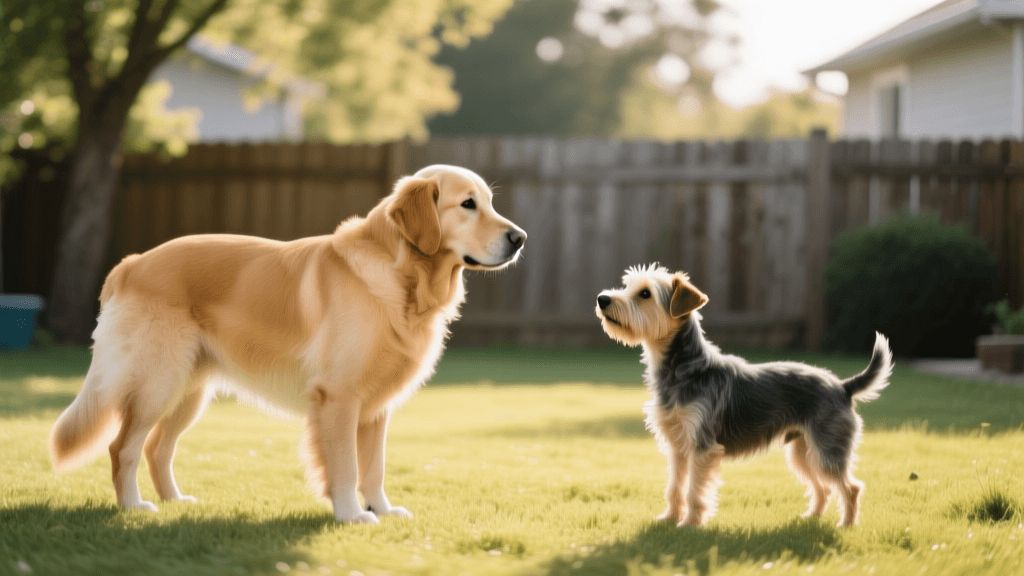
Walking in a straight line directly toward another dog is inherently confrontational. Dogs with good social skills will naturally approach one another in a wide arc or curve. If you notice a dog stiffening and walking in a rigid, straight line, it is a warning sign. Conversely, a curved approach is a vital calming signal indicating peaceful intentions.
5. Slow Movements and Freezing
Fast, erratic movements can trigger a prey drive or defensive reaction. A dog who deliberately slows down their pace or momentarily freezes when a new dog enters the room is attempting to lower the energy of the interaction. Punishing a dog for "ignoring" you when they are actually freezing to de-escalate a situation can severely damage their trust.
The 2026 Protocol for Stress-Free Multi-Dog Introductions
Applying our modern understanding of calming signals requires a structured approach. The Humane Society's resource on introducing new dogs emphasizes that rushing the process is the primary cause of multi-dog household failure. Follow this updated 2026 protocol:
- Step 1: Scent Swapping Before Sight. Before the dogs ever meet, swap their bedding and use a clean cloth to rub down each dog, placing the scent cloth in the other dog's safe space. This allows them to process the new olfactory data without the pressure of a physical encounter.
- Step 2: The Parallel Walk. The first physical meeting should occur on neutral territory. Have two handlers walk the dogs parallel to each other, maintaining a wide berth (at least 15 feet). Watch for calming signals. As the dogs exhibit relaxed body language (loose wags, ground sniffing), gradually decrease the distance.
- Step 3: Decompression Periods. After a successful 10-minute walk, separate the dogs into different rooms in the house. The influx of new sensory data requires neurological processing. Allow them to decompress with a long-lasting chew or a lick mat before attempting a brief, supervised indoor sniff session.
Distinguishing Calming Signals from Aggression Warnings
One of the most common mistakes new multi-dog owners make is confusing stress-based calming signals with offensive aggression warnings. Misreading these cues can lead to disastrous interventions. Use the table below to accurately decode your dogs' intentions.
| Behavioral Category | Calming Signal (Stress/De-escalation) | Aggression Warning (Offense/Defense) |
|---|---|---|
| Eye Contact | Averting gaze, blinking slowly, whale eye (showing whites) | Hard stare, unblinking focus, pupils dilated |
| Mouth and Lips | Lip licking, yawning, relaxed open mouth (panting) | Lip curling, snarling, snapping, commissure pulled back |
| Body Posture | Curved body, turning sideways, lowering head, crouching | Stiff, leaning forward, hackles raised, weight on front paws |
| Tail Movement | Low, slow wag, or tucked tightly against belly | High, stiff, rapid vibrating wag (flagging) |
| Vocalization | Whining, soft sighing, huffing | Deep, guttural growling, barking with lunging |
Leveraging 2026 Smart Home Tech for Behavioral Monitoring
Technology in 2026 offers unprecedented support for monitoring canine communication when you cannot be in the same room. Modern AI-driven pet cameras, such as the latest Furbo and Eufy smart pet models, now feature behavioral tracking algorithms that can alert owners to stress-pacing, excessive panting, or specific vocalizations associated with anxiety. Setting up these cameras in the dogs' separate decompression zones allows you to monitor their baseline stress levels post-introduction.
Furthermore, the newest generation of smart collars includes Heart Rate Variability (HRV) tracking. A sudden drop in HRV is a physiological indicator of acute stress. By reviewing the HRV data after the dogs share a common space, you can objectively measure how taxing the interaction was, allowing you to adjust the duration of their supervised play sessions accordingly.
When to Call a Certified Professional
Despite your best efforts, some introductions require professional intervention. If you observe escalating resource guarding, severe freezing behaviors, or if any calming signals are completely ignored by one of the dogs, it is time to seek expert help. Do not wait for a bite to occur. The International Association of Animal Behavior Consultants (IAABC) provides directories of certified professionals who specialize in multi-dog household dynamics and force-free behavior modification.
Conclusion
Decoding canine calming signals is not just an academic exercise; it is a fundamental requirement for responsible dog ownership in 2026. By respecting your dogs' need to communicate their boundaries and stress levels, you empower them to navigate the complexities of a multi-dog household safely. Patience, careful observation, and a commitment to modern, science-based introduction protocols will pave the way for a peaceful, thriving pack.
aaron-whyte
All our authors care for dogs every day — read more of their work on the authors page.