Greyhound vs. Whippet: Best Sighthound for Apartment Living
Deciding between a Greyhound and a Whippet for apartment living? Compare costs, exercise needs, and daily routines to find your perfect sighthound.
The Sighthound Paradox: High Speed, Low Energy
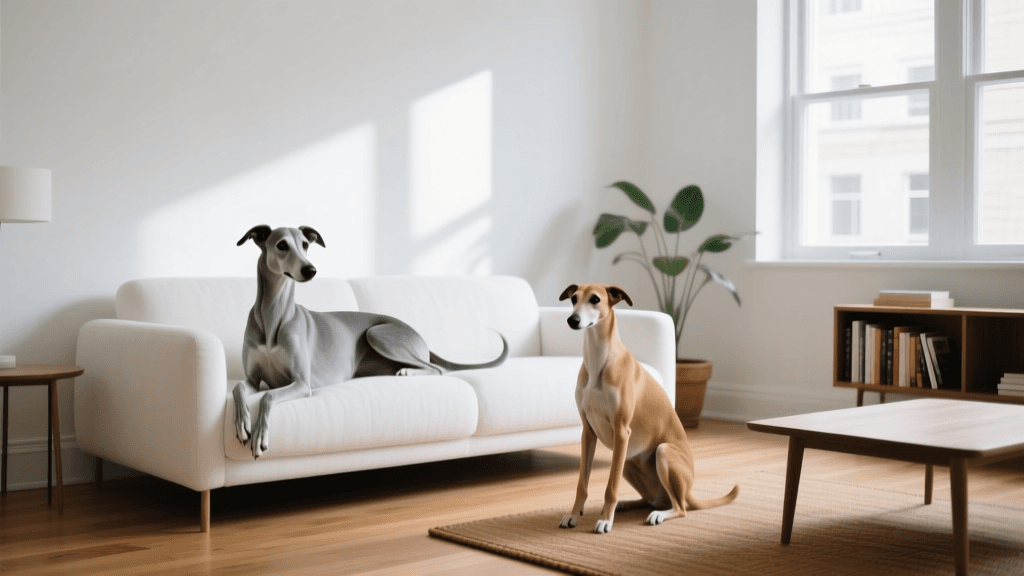
When most people think of apartment-friendly dogs, they imagine small lap dogs or low-energy senior pets. However, one of the best-kept secrets in urban dog ownership is the sighthound. Both the Greyhound and the Whippet are famously dubbed '45-mph couch potatoes.' Despite their racing heritage, these breeds spend up to 18 hours a day sleeping, making them surprisingly excellent candidates for apartment living. But if you are torn between the larger Greyhound and the medium-sized Whippet, how do you choose? According to the American Kennel Club (AKC), both breeds share a gentle, affectionate temperament, but their physical dimensions, climate needs, and daily routines differ in ways that can significantly impact your lifestyle. This comprehensive guide breaks down the practical realities of sharing an apartment with a Greyhound versus a Whippet, covering space requirements, exercise routines, essential gear, and annual costs.
Physical Dimensions and Apartment Space
The most immediate difference between these two breeds is their physical footprint. Greyhounds are large dogs, typically standing 27 to 30 inches tall at the shoulder and weighing between 60 and 70 pounds. Whippets, often described as the 'middle child' of sighthounds, stand 18 to 22 inches tall and weigh a manageable 25 to 40 pounds.
Crate and Bedding Considerations
In an apartment, floor space is at a premium. A Greyhound requires a massive crate for safe confinement when you are away. You will need an extra-large crate, such as the Midwest Ultima Pro Double Door Crate (48 x 30 x 33 inches), which takes up roughly 10 square feet of floor space. Furthermore, because sighthounds have very little body fat and prominent joints, they require thick, orthopedic bedding to prevent pressure sores on hard apartment floors. A large FurHaven Orthopedic Memory Foam Dog Bed (44 x 34 inches) is a necessity for a Greyhound. Conversely, a Whippet fits comfortably in a 36-inch crate (like the Frisco Double Door Crate) and requires a medium-sized bed (30 x 20 inches), leaving you with significantly more usable square footage in a studio or one-bedroom apartment.
Daily Exercise and Energy Expenditure
Neither breed requires hours of continuous hiking or jogging. In fact, long-distance running can be detrimental to their joints and muscle structure. Instead, sighthounds operate on a sprint-and-snooze cycle. The American Sighthound Field Association (ASFA) notes that these dogs are built for short, explosive bursts of anaerobic speed followed by long periods of recovery.
The Ideal Apartment Routine
- Morning (7:00 AM): A 15-minute leash walk around the block for bathroom breaks and mental sniffing.
- Afternoon/Early Evening (5:30 PM): A 20 to 30-minute visit to a fully fenced, off-leash dog park. This is where they will execute their 'zoomies,' sprinting at top speed for a few minutes before settling down to watch other dogs.
- Night (8:00 PM): A 10-minute final potty walk, followed by 12 to 14 hours of uninterrupted sleep on the couch.
Actionable Advice: Because apartment dwellers often lack private fenced yards, access to a secure dog park or a private rented yard (via apps like Sniffspot) is non-negotiable for both breeds. However, the Whippet's smaller size makes them slightly easier to manage and recall in smaller, enclosed urban dog runs compared to the long-striding Greyhound.
Potty Training and Bathroom Routines
Sighthounds are notoriously sensitive to weather and can be stubborn about going to the bathroom in the rain or cold—a significant hurdle for apartment dwellers who must navigate elevators, lobbies, and busy streets. Greyhounds, especially retired racers, may have never experienced stairs or slippery apartment lobby floors, requiring patience and positive reinforcement training. Whippets are equally sensitive but are physically easier to carry down three flights of stairs in an emergency blizzard. To manage this, invest in a high-quality enzymatic cleaner like Nature's Miracle Advanced Stain and Odor Eliminator for inevitable indoor accidents, and consider training your dog to use indoor potty bells hung on your apartment door handle to signal when they need to go out.
Climate Control and Essential Gear
Both breeds have incredibly thin coats and lack the insulating undercoat found in breeds like Huskies or Retrievers. This makes them highly susceptible to both hypothermia in the winter and heatstroke in the summer. If you live in a city with harsh winters, a wardrobe of dog coats is mandatory, not optional.
Winter and Summer Essentials
For freezing apartment balcony potty breaks or winter walks, the Hurtta Extreme Warmer Dog Coat is an industry favorite, providing full-body insulation and a reflective lining that traps body heat. For the Whippet, the Kurgo Loft Dog Coat offers a sleek, waterproof profile that accommodates their deep chest. In the summer, their thin skin is prone to sunburn. Applying a pet-safe sunscreen like Warren London Dog Sunscreen to their sparsely haired bellies and noses is crucial if you spend time on sunny apartment rooftops or at the beach.
Financial Breakdown: Greyhound vs. Whippet
Owning a dog in a city comes with unique expenses, from pet rent to specialized gear. Because the Greyhound is significantly larger, the lifetime cost of food, medication, and equipment is noticeably higher. Below is a comparative breakdown of estimated annual costs for apartment dwellers.
| Expense Category | Greyhound (Est. Annual) | Whippet (Est. Annual) | Notes & Product Examples |
|---|---|---|---|
| Premium Kibble | $720 - $960 | $420 - $600 | Greyhounds eat 3-4 cups/day; Whippets eat 1.5-2 cups/day (e.g., Purina Pro Plan Sport). |
| Flea/Tick/Heartworm | $250 - $350 | $150 - $200 | Dosages are weight-based (e.g., NexGard or Heartgard Plus). |
| Crates & Bedding | $150 - $250 | $80 - $150 | XL Orthopedic beds vs. Medium beds; 48-inch vs 36-inch crates. |
| Winter Apparel | $100 - $180 | $80 - $120 | Custom-fit coats required for deep-chested sighthounds. |
| Specialized Collars | $25 - $40 | $20 - $35 | Martingale collars are mandatory (e.g., Country Brook Design) to prevent slipping. |
| Total Estimated | $1,245 - $1,780 | $750 - $1,105 | Excludes baseline vet care, pet rent, and emergency funds. |
Multi-Pet Households and Prey Drive
Apartment living often means encountering neighborhood cats, squirrels, and small dogs in shared hallways and elevators. Both Greyhounds and Whippets possess a high prey drive, a genetic trait honed over centuries of coursing game. The AKC Whippet Breed Standard explicitly notes their strong instinct to chase moving objects. If you are adopting a retired racing Greyhound, many rescue organizations perform 'cat testing' before placement to ensure the dog can safely coexist with small furry pets. Whippets, being smaller, may pose slightly less physical risk to a household cat, but their chase instinct is equally potent. For shared apartment spaces, you must use a secure Ruffwear Front Range Harness paired with a martingale collar to ensure your dog cannot slip out of their gear if they spot a squirrel in the courtyard.
Final Verdict: Which Sighthound Fits Your Apartment?
Choosing between a Greyhound and a Whippet ultimately comes down to your physical space, budget, and lifestyle preferences. The Greyhound is the perfect choice if you have a spacious one-bedroom or two-bedroom apartment, a larger budget for food and gear, and prefer a large, imposing, yet incredibly gentle giant who will act as a living, breathing weighted blanket on your sofa. They are generally more stoic and deeply relaxed indoors.
The Whippet is the superior choice for studio apartments, owners who travel frequently (as they are much easier to transport in cars and fit under airline seats in soft carriers), and those seeking a slightly more playful, 'terrier-like' spark of energy indoors. Whippets are more likely to engage in gentle games of tug or fetch down a long apartment hallway, whereas the Greyhound will simply watch you throw the toy with mild amusement before returning to sleep. Regardless of your choice, providing a warm bed, a secure fenced space for sprinting, and a high-quality martingale collar will ensure your sighthound thrives in an urban environment.
anouk-beaumont
All our authors care for dogs every day — read more of their work on the authors page.