Best Gear for Dog Recall Training: GPS Collars vs Long Lines
Discover the best gear for dog recall training. Compare GPS smart collars and Biothane long lines to find the right equipment for your pup's safety.
The Critical Role of Gear in Recall Training
Teaching a reliable recall is arguably the most important safety skill your dog will ever learn. According to the ASPCA, a solid recall not only provides your dog with the enriching freedom of off-leash exploration but also prevents potentially fatal encounters with wildlife, traffic, or aggressive dogs. However, bridging the gap between a dog who responds to the 'come' cue in your living room and one who responds in a highly distracting environment requires more than just treats and patience. It requires the right equipment.
When it comes to recall training, modern dog owners generally fall into two camps: those who rely on traditional, physical restraints like long lines, and those who invest in modern technology like GPS smart collars. Both have distinct advantages, specific use cases, and varying costs. In this comprehensive gear guide, we will break down the best equipment for recall training, compare their effectiveness, and provide a structured routine to proof your dog's recall using a combination of both methods.
Traditional Gear: The Biothane Long Line
A long line is essentially a very long leash, typically ranging from 15 to 50 feet in length. It allows your dog to feel off-leash while giving you a physical failsafe to prevent them from rehearsing the behavior of ignoring your recall cue. While nylon and cotton long lines exist, professional trainers almost universally recommend Biothane.
Why Biothane?
Biothane is a brand name for coated webbing—specifically, a polyester or nylon core coated with a thermoplastic polyurethane (TPU). This material is entirely waterproof, mud-proof, and incredibly durable. Unlike cotton or nylon, Biothane will not absorb lake water, develop a foul odor, or tangle into impossible knots when dragged through brush. It is also easy to sanitize, making it ideal for multi-dog households or professional training environments.
Sizing and Hardware Specifications
- Width: For small dogs (under 20 lbs), a 3/8-inch or 1/2-inch width is sufficient. Medium dogs (20-60 lbs) do best with a 5/8-inch width, while large or powerful breeds (over 60 lbs) require a 3/4-inch or 1-inch width to prevent the line from wrapping tightly and causing line burns on your hands.
- Length: A 15-foot line is ideal for initial training in suburban yards. A 30-foot line is the sweet spot for park training, while a 50-foot line is reserved for wide-open fields and beach environments.
- Hardware: Always opt for solid brass or stainless steel trigger snaps. Avoid cheap zinc alloy clasps, which can snap under the sudden force of a lunging dog.
- Attachment Point: Never attach a long line to a flat collar or a prong collar. The sudden stop of a 60-pound dog hitting the end of a 30-foot line can cause severe tracheal damage. Always attach the long line to a well-fitted, Y-front harness.
Top Recommendations and Costs
Premium custom makers like High Tail Trails or Muttology offer handcrafted Biothane lines with personalized hardware, typically costing between $45 and $85. For budget-conscious owners, brands like Mighty Paw or Chewy's Frisco offer reliable, mass-produced Biothane or waterproof-coated lines for $15 to $30.
Modern Tech: GPS Smart Collars
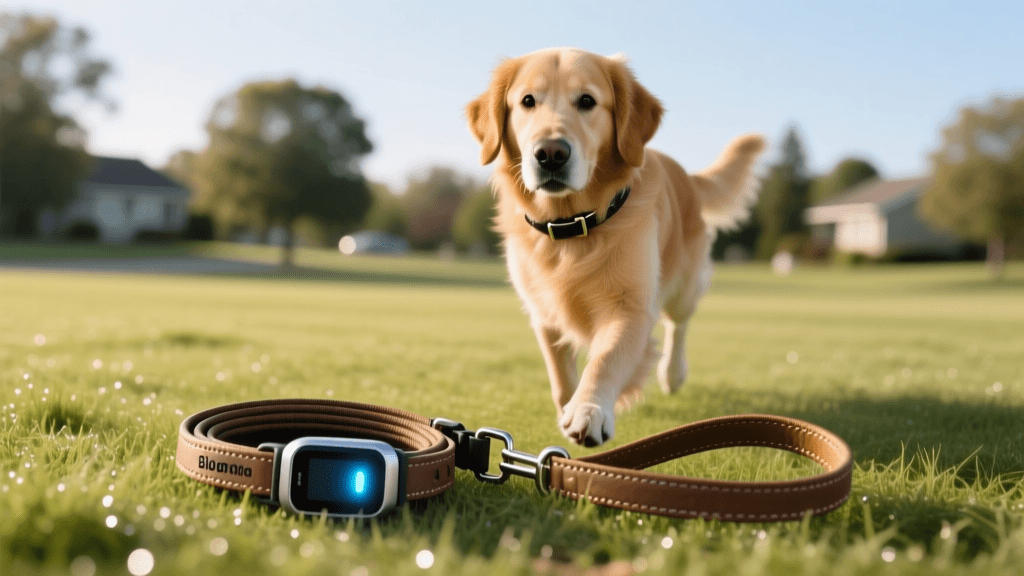
While a long line provides physical control, GPS smart collars provide data, tracking, and peace of mind. It is crucial to understand that a GPS collar is not a training tool in the sense that it communicates a cue to the dog. Instead, it is a management and safety tool used during the final 'proofing' stages of recall training, once the dog is allowed off-leash in legally permitted, safe areas.
How GPS Collars Aid Training
According to the American Kennel Club, proofing a behavior means ensuring the dog can perform it under any level of distraction. GPS collars allow trainers to safely test recall in large, unenclosed areas. If a dog blows past a recall cue and gets spooked, the GPS tracker allows the owner to locate the dog immediately, preventing a lost dog scenario. Furthermore, many GPS collars track 'activity minutes,' allowing owners to ensure their dog is getting sufficient physical exercise, which directly correlates to better focus during training sessions.
Top Recommendations and Subscription Costs
- Fi Series 3 Smart Collar: Priced around $129 for the hardware, Fi uses LTE-M networks for superior battery life (up to 3 months on a single charge) and features a 'Lost Dog Mode' that pings location every second. Subscriptions cost roughly $8 to $12 per month.
- Whistle GO Secure: Priced around $130, Whistle offers excellent health and fitness tracking alongside GPS location. It relies on standard cellular networks and requires a subscription of about $10 to $15 per month. The battery life is shorter, typically lasting 1 to 3 weeks depending on usage.
Equipment Comparison Chart
| Feature | Biothane Long Line | GPS Smart Collar |
|---|---|---|
| Primary Purpose | Physical restraint & active training | Safety tracking & off-leash management |
| Upfront Cost | $15 - $85 | $120 - $150 |
| Ongoing Cost | None | $8 - $15 / month |
| Battery Life | N/A | 1 week to 3 months |
| Best Environment | Suburbs, parks, woods | Open fields, hiking trails, rural areas |
| Safety Factor | Prevents dog from running away | Locates dog if they escape |
A Warning on Electronic Shock Collars
When researching tech gear for recall, you will inevitably encounter electronic collars (e-collars or shock collars) that deliver a static shock to enforce a recall. The American Veterinary Society of Animal Behavior (AVSAB) strongly advises against the use of aversive training methods, including shock collars. Studies consistently show that positive punishment can increase fear, anxiety, and aggression, and can severely damage the bond between dog and owner. A dog may learn to come to you to avoid a shock, but they are not learning a joyful, reliable recall. Stick to Biothane long lines, high-value treats, and positive reinforcement to build a recall your dog actually wants to perform.
Step-by-Step Recall Training Routine Using Gear
To build a bulletproof recall, combine the physical safety of the long line with the data and peace of mind of a GPS collar. Here is a structured, 8-week training protocol.
Phase 1: Foundation (Weeks 1-3)
Gear: 15-foot Biothane long line, Y-front harness, treat pouch (e.g., Ruffwear Treat Trader) filled with high-value rewards like boiled chicken or freeze-dried liver.
- Attach the long line to the harness. Let your dog wander to the end of the line in a low-distraction environment like your backyard.
- Say your recall cue ('Come!' or 'Here!') in a bright, encouraging tone.
- If the dog does not respond immediately, gently reel them in using the long line. Do not repeat the cue.
- When they reach you, reward heavily with 3 to 5 small treats, given one at a time to keep them engaged at your feet.
- Practice this 10 times per session, twice a day.
Phase 2: Adding Distance and Distraction (Weeks 4-6)
Gear: 30-foot Biothane long line, high-value treats, and a favorite toy.
- Move to a slightly more distracting environment, such as a quiet public park during off-peak hours.
- Allow your dog to sniff and explore on the 30-foot line.
- Call your dog when they are mildly distracted (e.g., sniffing a bush). Reward with a game of tug or fetch if they prefer toys over food.
- If they ignore the cue, step backward to create movement, which naturally triggers a dog's chase instinct, and gently guide them in with the line.
- Never use the long line to jerk or punish the dog. It is strictly a safety net to prevent them from learning that ignoring you results in the freedom to keep sniffing.
Phase 3: Proofing and Tech Integration (Weeks 7-8)
Gear: GPS Smart Collar (Fi or Whistle) securely fitted alongside the harness and long line.
- Ensure the GPS collar is fully charged and the cellular signal is active.
- Take your dog to a large, legally permitted off-leash area or a massive open field.
- Keep the 50-foot long line attached for the first few sessions in this new, highly distracting environment.
- Practice your recall. If the dog responds reliably 9 out of 10 times, you can begin to drop the long line, allowing it to drag, or remove it entirely while keeping the GPS collar active.
- Use the GPS app on your smartphone to monitor your dog's distance. If they wander beyond 100 feet and ignore a recall, use the app to track their exact location, retrieve them, and calmly re-attach the long line. This teaches the dog that the boundary of their freedom is directly tied to their responsiveness to your cues.
Final Thoughts on Training Gear
Investing in the right gear is just as important as investing your time in training. A high-quality Biothane long line provides the physical boundary necessary to build the habit of returning to you, while a GPS smart collar offers the technological safety net required for real-world, off-leash freedom. By understanding the specific purposes, costs, and limitations of both traditional and modern equipment, you can create a customized training toolkit that ensures your dog remains safe, happy, and responsive for a lifetime.
priya-sutaria
All our authors care for dogs every day — read more of their work on the authors page.