Fear-Reactive Puppy Training: 2026 Engage-Disengage Guide
Learn the 2026 engage-disengage protocol for fear-reactive puppies. Combine Sniffspot private rentals and Lickimat soothers to build confidence safely.
Navigating the First Year: Puppy Fear Periods and Early Reactivity
Raising a puppy in 2026 comes with unique challenges, especially for owners navigating the early signs of fear reactivity and anxiety. The first year of a dog's life is a critical window for neurological development, socialization, and milestone achievement. While many new owners focus heavily on basic obedience and potty training, managing early fear responses is arguably the most vital component of long-term behavioral health. When a puppy exhibits fear-based reactivity—such as lunging, barking, freezing, or attempting to flee from novel stimuli—it is rarely a sign of 'bad behavior.' Instead, it is a neurological response driven by the amygdala, signaling that the puppy feels overwhelmed and unsafe.
Early intervention during the puppy's first year is paramount. According to the American Veterinary Society of Animal Behavior (AVSAB), the primary and most important time for puppy socialization is the first three months of life. However, this window overlaps with a puppy's natural vulnerability to disease and their first recognized 'fear period.' Balancing safe socialization with emotional regulation requires a strategic, modern approach. In this comprehensive guide, we will explore how to utilize the Engage-Disengage protocol, private Sniffspot environments, and dopamine-boosting Lickimat enrichment to transform a fearful puppy into a confident, resilient adult dog.
Identifying the Two Critical Puppy Fear Periods
To effectively manage a reactive puppy, you must first understand the developmental milestones of the canine first year. Puppies universally experience two distinct fear periods during their first 14 months. Recognizing these phases allows you to adjust your training expectations and avoid accidentally reinforcing lifelong phobias.
The First Fear Period (8 to 11 Weeks)
This period coincides with the time a puppy is typically transitioning to their new home. From an evolutionary standpoint, this is when a young canid would naturally learn to avoid predators and dangerous terrain. In a domestic setting, this translates to a sudden, intense fear of novel objects, loud noises, or unfamiliar people. A puppy who was previously bold at the breeder's facility may suddenly cower behind your legs or refuse to walk on different floor textures. During this phase, forcing a puppy to 'face their fears' can cause psychological flooding, leading to permanent trauma. Instead, the goal is gentle exposure paired with high-value rewards.
The Second Fear Period (6 to 14 Months)
Often catching owners by surprise, the second fear period occurs during adolescence. This phase aligns with significant hormonal shifts and neurological pruning. A puppy who has been confidently navigating the world may suddenly develop intense reactivity toward specific triggers, such as men in hats, other dogs on-leash, or garbage cans blowing in the wind. The American Kennel Club (AKC) notes that adolescent fear periods require immense patience, as the dog's brain is essentially rewiring its threat-assessment pathways. Consistency, distance management, and positive reinforcement are your best tools during this volatile developmental milestone.
The Engage-Disengage Protocol: A 2026 Standard for Reactivity
Developed by canine behavior expert Leslie McDevitt, the Engage-Disengage game remains the gold standard for treating fear reactivity. As of 2026, veterinary behaviorists continue to recommend this protocol because it fundamentally changes the dog's emotional response to a trigger through classical and operant conditioning. The game teaches the puppy that noticing a scary thing is simply a cue to look back at their handler for a reward.
Step 1: Finding the Sub-Threshold Distance
Before you begin, you must identify your puppy's 'threshold.' This is the distance at which your puppy notices the trigger (e.g., a stranger, a skateboard, another dog) but remains capable of taking treats and responding to basic cues. If your puppy is barking, lunging, or refusing high-value food, you are over threshold, and learning cannot occur. In 2026, trainers heavily emphasize starting at massive distances—sometimes up to 100 feet away from the trigger—to ensure the puppy's nervous system remains regulated.
Step 2: The Engage Phase (Classical Conditioning)
Stand with your puppy at the sub-threshold distance. The moment your puppy looks at the trigger (Engage), immediately say 'Yes!' or click your marker, and deliver a high-value treat. The puppy does not need to look back at you initially. The goal is simply to build a positive association: 'Seeing the scary thing predicts the arrival of roasted chicken.'
Step 3: The Disengage Phase (Operant Conditioning)
Once your puppy reliably anticipates a treat after looking at the trigger, you can raise the criteria. Now, when your puppy looks at the trigger, wait a half-second. If they voluntarily turn their head away from the trigger to look at you (Disengage), mark and reward generously. This voluntary disengagement proves that the puppy is learning to self-soothe and choose you over their fear response.
Environment Management: Public Parks vs. Sniffspot Rentals
A common mistake owners make with reactive puppies is attempting the Engage-Disengage game in highly unpredictable environments, such as crowded public dog parks or busy city sidewalks. Uncontrolled variables—like off-leash dogs rushing your puppy or sudden loud noises—can instantly push a fearful puppy over threshold, undoing weeks of careful desensitization.
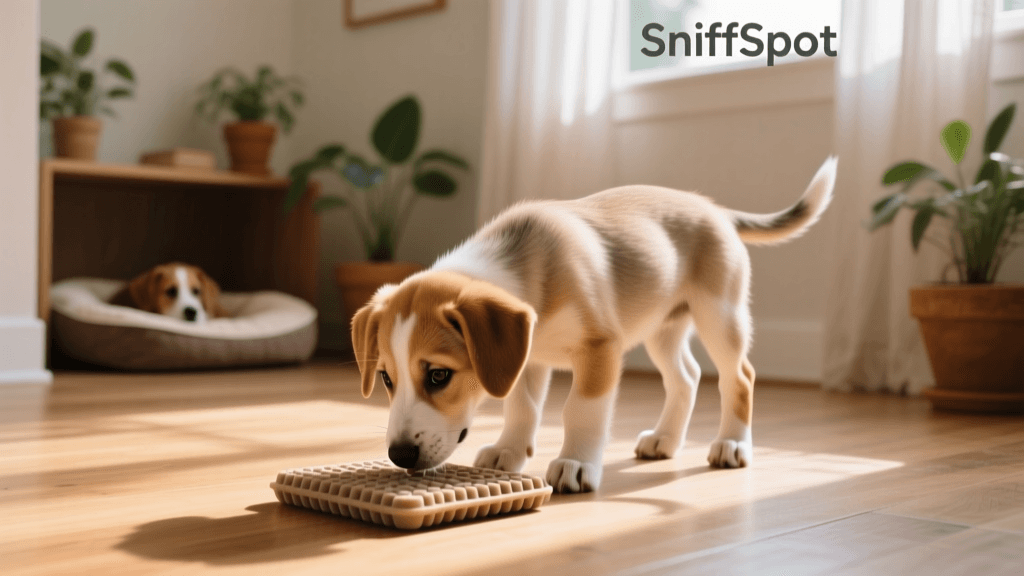
This is why private, controlled environments have become a cornerstone of modern puppy care. Platforms like Sniffspot allow owners to rent private, fully fenced yards and pastures by the hour. As of 2026, the average cost for a private Sniffspot rental ranges from $12 to $22 per hour, a small investment compared to the cost of behavioral rehabilitation later in life. Below is a comparison of why private spaces are critical for early reactivity management.
| Feature | Public Parks & Sidewalks | Sniffspot Private Rentals |
|---|---|---|
| Trigger Predictability | Low (Off-leash dogs, unpredictable crowds) | High (Controlled access, no surprise triggers) |
| Threshold Management | Difficult (Cannot easily increase distance) | Easy (Large acreage allows 100ft+ distance) |
| Disease Risk (Parvo/Distemper) | High (Unknown vaccination status of visitors) | Low (Host-mandated vaccination & cleaning protocols) |
| Stress Level for Puppy | High (Sensory overload, potential flooding) | Low (Quiet, decompression-focused environment) |
| Owner Anxiety | High (Worrying about dog fights or escapes) | Low (Secure fencing, private booking) |
By booking a private Sniffspot location once or twice a week, you provide your puppy with a safe 'sandbox' to practice the Engage-Disengage game, explore novel scents, and build confidence without the threat of an unpredictable encounter.
Dopamine and the Lickimat Soother: Harnessing Neurology
When managing an anxious puppy, food is not just a reward; it is a neurological tool. The physical act of licking releases endorphins and dopamine in the canine brain, naturally lowering the heart rate and reducing cortisol levels. In 2026, the Lickimat Soother Pro is widely recommended by fear-free certified trainers as an essential tool for reactive puppy management.
Using a Lickimat during a desensitization session helps keep the puppy under threshold. If a puppy is calmly licking a high-value spread while observing a distant trigger, their parasympathetic nervous system is engaged, making them far less likely to react with fear or aggression.
2026 High-Value Lickimat Recipes for Anxious Puppies
- The Calming Base: Plain, unsweetened Greek yogurt mixed with a dash of chamomile tea (cooled) and pureed blueberries. Freeze for 30 minutes before the session to increase the duration of licking.
- The Scent-Heavy Forager: Mashed sardines (in spring water) mixed with a spoonful of pure pumpkin puree and a sprinkle of dried liver dust. The strong olfactory input encourages deep sniffing and licking, grounding the puppy in the present moment.
- The Congestion Buster: Low-sodium bone broth mixed with a small amount of xylitol-free peanut butter and frozen overnight. This is ideal for hot summer days when heat can exacerbate a puppy's irritability and reactivity.
Creating a Structured 8-Week Desensitization Schedule
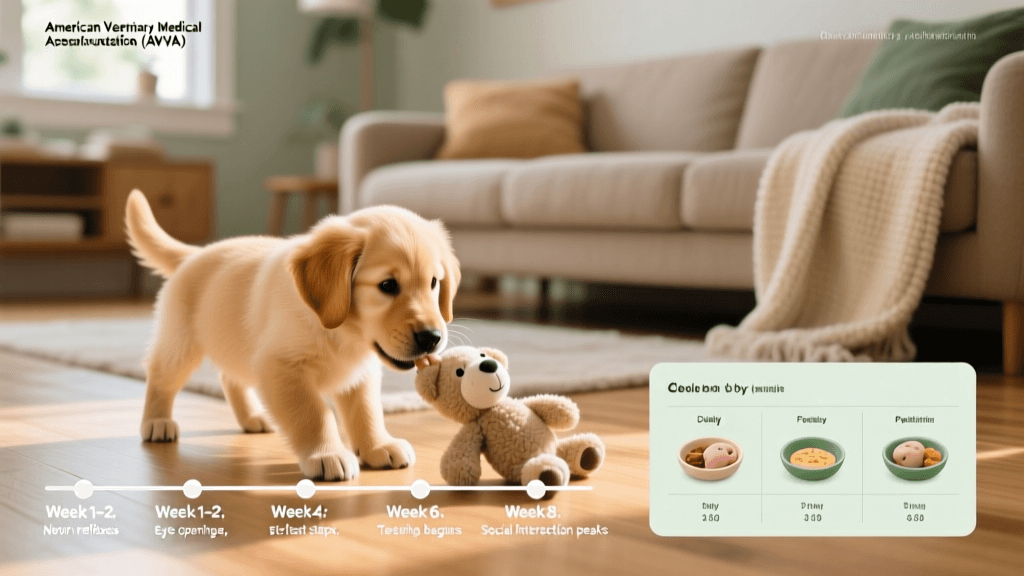
Consistency is the bedrock of puppy care. Below is a structured, progressive schedule designed to help a fear-reactive puppy build resilience over two months. Remember, every puppy progresses at their own pace; if your puppy shows signs of regression, simply return to the previous week's criteria.
Weeks 1-2: Baseline and Decompression
- Book one private Sniffspot rental per week for unstructured sniffing and decompression.
- Introduce the Lickimat Soother in the home environment to build a positive association.
- Identify the puppy's top three triggers and establish their current sub-threshold distances.
Weeks 3-4: Engage-Disengage at Maximum Distance
- Practice the Engage phase (look at trigger = get treat) at a massive distance (e.g., across a large park or empty parking lot).
- Keep sessions short: 5 to 10 minutes maximum to prevent cognitive fatigue.
- Use frozen Lickimats in the car before and after sessions to regulate the nervous system.
Weeks 5-6: Introducing the Disengage Phase
- Begin waiting for the voluntary head turn (Disengage) before marking and rewarding.
- Gradually decrease the distance to the trigger by 5 to 10 feet per session, provided the puppy remains under threshold.
- Incorporate 'find it' scatter feeding in the grass to encourage natural foraging behaviors when a trigger appears.
Weeks 7-8: Mild Environmental Integration
- Move practice to slightly more populated areas, but maintain a safety buffer (e.g., sitting on a park bench 50 feet from a walking path).
- Begin introducing mild, controlled novel stimuli (e.g., a friend walking by at a distance wearing a hat or sunglasses).
- Celebrate small victories; a puppy who can watch a stranger walk by and then look up at you for a treat has achieved a massive neurological milestone.
Final Thoughts on Early Intervention
Managing a fear-reactive puppy during their first year requires patience, empathy, and a commitment to modern, science-based training methods. By respecting your puppy's developmental fear periods, utilizing private spaces like Sniffspot to control their environment, and leveraging the neurobiological benefits of the Lickimat and the Engage-Disengage protocol, you are setting the foundation for a confident, well-adjusted adult dog. Remember, reactivity in a puppy is not a life sentence; it is simply a request for guidance, safety, and time.
anouk-beaumont
All our authors care for dogs every day — read more of their work on the authors page.