From Reactive to Relaxed: A Leash Training Transformation
Discover how a reactive dog transformed into a calm walker. Learn the exact before-and-after leash training methods, tools, and timelines used.

The Reality of Leash Reactivity: The 'Before'
Leash reactivity is one of the most frustrating and emotionally draining behavioral issues a dog owner can face. The 'before' picture of a reactive dog often looks like this: a tangled leash, a choking dog, a stressed owner with burned hands, and an embarrassing display of lunging and barking at passing dogs or strangers. For many, walks become a chore to be avoided rather than a bonding experience.
Take the case of Buster, a two-year-old rescue Shepherd mix. Before his transformation, Buster would escalate into a frenzy if another dog came within 50 feet. His body would go stiff, his hackles would raise, and he would lunge with such force that his owner risked shoulder injury. This 'before' state is not born out of malice or a desire to 'dominate' the walk; it is rooted in fear, frustration, and a lack of coping mechanisms.
Understanding the Threshold: Why Dogs React
To achieve a true 'after' transformation, we must first understand the concept of the 'threshold.' A threshold is the invisible line where a dog transitions from noticing a trigger to reacting to it. Below the threshold, a dog can think, learn, and take treats. Above the threshold, the dog's sympathetic nervous system takes over, and learning is biologically impossible.
Recognizing early stress signals is vital for keeping your dog below this threshold. According to the Centers for Disease Control and Prevention (CDC), understanding canine body language and early stress signals—such as lip licking, yawning, whale eye, or a stiffened gait—is critical for preventing negative encounters and managing reactive behaviors before they escalate into a full-blown lunge.
The Transformation Toolkit: Gear and Costs
You cannot train a reactive dog effectively if you are physically fighting them. The right gear provides safety and communication without causing pain. Here is the exact toolkit used for Buster's 12-week transformation:
- 2 Hounds Design Freedom No-Pull Harness ($28): This dual-clip harness allows you to attach the leash to both the front chest ring and the back ring simultaneously. The front clip gently redirects the dog's momentum toward you if they lunge, while the back clip provides secure steering.
- 15-Foot Biothane Long Line ($35): Biothane is waterproof, durable, and doesn't tangle or burn your hands like nylon. A long line allows you to give your dog space to decompress and make choices without the tension of a standard 6-foot leash.
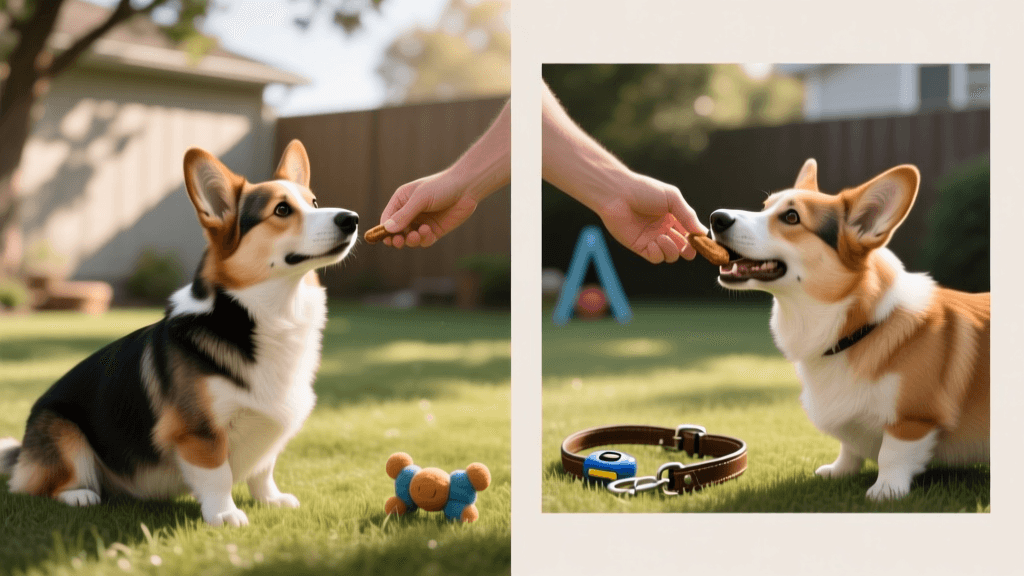
- Zuke's Mini Naturals Training Treats ($8 per 16oz bag): High-value, low-calorie, and soft enough to be eaten quickly. When a dog is near their threshold, they need rapid-fire rewards.
- Sturdy Treat Pouch ($15): Worn on the hip with a magnetic closure for split-second access to rewards.
The Protocol: The Engage-Disengage Game
The core of Buster's transformation relied on a counter-conditioning protocol known as the 'Engage-Disengage' game (also called 'Look At That'). The goal is to change the dog's emotional response from 'Trigger = Danger/Excitement' to 'Trigger = I get chicken from my human.'
Step 1 (Engage): The dog notices the trigger (e.g., a dog across the street) while still under their threshold. The handler immediately marks the behavior with a clicker or a verbal 'Yes!'
Step 2 (Disengage): The dog turns their head back toward the handler to get the treat. The handler feeds the treat.
Step 3 (Repetition): This is repeated until the dog begins to voluntarily look at the trigger and immediately look back at the handler without needing the verbal mark. This proves the emotional association has shifted.
Data Table: The 12-Week Before & After Timeline
Transformations do not happen overnight. Below is the structured progression of Buster's reactivity training over a 12-week period, demonstrating how distance and reactions evolved.
| Phase / Week | Distance to Trigger | Dog's Reaction (Before) | Handler Action | Dog's Reaction (After Phase) |
|---|---|---|---|---|
| Weeks 1-2 (Baseline) | 50+ feet | Stiffening, staring, low growling. | Emergency U-Turns, creating distance, tossing treats on the ground to encourage sniffing. | Able to disengage with verbal marker at 50 feet. |
| Weeks 3-5 (Counter-Conditioning) | 35-45 feet | Whining, pulling slightly on the harness. | Engage-Disengage game. High-value treats delivered the moment the dog looks at the trigger. | Voluntarily offering eye contact after seeing a trigger at 40 feet. |
| Weeks 6-8 (Closing the Gap) | 20-30 feet | Barking if caught off guard; otherwise, focused on handler. | Advocating for space. Asking strangers to ignore the dog. Playing the 'Find It' sniffing game. | Passing calm dogs at 25 feet with a loose leash and soft body language. |
| Weeks 9-12 (Real World Application) | 10-15 feet | Mild excitement (tail wagging) but no lunging or vocalizing. | Rewarding calm checks-ins. Allowing brief, structured decompression sniffing near triggers. | Walking past neutral dogs on narrow sidewalks with zero reactivity. |
The 'After': Life on the Other Side of Reactivity
The 'after' picture of leash reactivity training is not necessarily a dog who wants to play with every dog they see. Rather, it is a dog who possesses the emotional regulation to exist in the same space as their triggers without panicking. By week 12, Buster could walk down a busy suburban street, pass a dog at a distance of 10 feet, and simply look up at his owner for a treat. The walks transitioned from a source of anxiety to a daily 'sniffari'—a mentally enriching experience where Buster was allowed to process his environment safely.
The Humane Society of the United States emphasizes that walks should be a mentally enriching experience, not just a physical chore. Allowing your newly relaxed dog to engage in structured sniffing on a long line lowers their heart rate and reinforces the calm behavior you have worked so hard to build.
Actionable Steps to Start Your Own Transformation
If you are currently in the 'before' stage with your own reactive dog, here is your immediate action plan to begin the transformation:
- Ditch the Retractable Leash: Retractable leashes maintain constant tension, which can trigger an opposition reflex and make your dog feel trapped. Switch to a standard 6-foot leash or a 15-foot long line.
- Find Your Dog's Threshold Distance: Spend a week simply observing. At what exact distance does your dog notice a trigger but still accept a treat? That is your starting line. Do not cross it.
- Advocate for Your Dog: Do not allow strangers or other dog owners to approach your dog 'to socialize.' It is your job to protect your dog's space while they undergo behavioral conditioning.
- Focus on Positive Reinforcement: Punishment-based tools like prong or shock collars may suppress the outward signs of reactivity (the bark), but they do not change the underlying fear. As noted by the ASPCA, fear-based reactivity requires counter-conditioning and positive reinforcement to build long-term confidence and trust between you and your dog.
- Consider Decompression Walks: Dedicate two days a week to driving your dog to a quiet, open field or wooded area where triggers are scarce. Let them wear their harness and long line, and just let them sniff. This lowers their overall baseline cortisol levels.
Leash reactivity is a journey of patience, consistency, and empathy. By managing the environment, utilizing the right gear, and changing your dog's emotional response through counter-conditioning, you can guide your dog from a state of chaotic reactivity to one of relaxed confidence. The 'after' picture is entirely within your reach.
priya-sutaria
All our authors care for dogs every day — read more of their work on the authors page.