Raw Diets and Dog Anxiety: The Gut-Brain Link in 2026
Discover how raw and fresh diets impact canine anxiety and behavior in 2026 through the gut-brain axis, with actionable feeding and psychology tips.
The Hidden Link Between Your Dog’s Bowl and Their Brain
When we think about our dogs' behavior, we often look to their environment, their training history, or their breed instincts. We rarely look inside their food bowl. Yet, as we navigate the pet nutrition and behavioral science landscape in 2026, veterinary behaviorists and canine nutritionists are increasingly pointing to a profound, often overlooked connection: the gut-brain axis. The food your dog consumes does not merely fuel their muscles and coat; it fundamentally dictates their neurological health, their stress responses, and their daily behavioral baseline.
For decades, the convenience of highly processed kibble dominated the market. However, the modern shift toward raw, fresh, and alternative diets has provided a unique opportunity to observe behavioral changes in real-time. Owners transitioning their dogs to species-appropriate, biologically fresh diets frequently report not just physical improvements—like shinier coats and better digestion—but profound psychological shifts. Dogs that were once hyperactive, reactive, or chronically anxious often display a newfound sense of calm and mental clarity. To truly understand your dog, you must understand how their diet communicates with their brain.
Decoding the Canine Gut-Brain Axis
The gut-brain axis is a bidirectional communication network that links the enteric nervous system (the gut) with the central nervous system (the brain). This connection is primarily facilitated by the vagus nerve, a massive information superhighway that runs from the brainstem down to the abdomen. But the real magic happens at the microscopic level, within the canine microbiome.
The gastrointestinal tract houses trillions of bacteria that play a critical role in synthesizing neurotransmitters. Astonishingly, roughly 90% of the body's serotonin—the primary neurotransmitter responsible for regulating mood, anxiety, and happiness—is produced in the gut, not the brain. When a dog consumes a diet high in synthetic additives, fillers, and simple carbohydrates (common in many ultra-processed kibbles), it can lead to gut dysbiosis. This imbalance triggers systemic inflammation, which can cross the blood-brain barrier and manifest as behavioral issues such as leash reactivity, noise phobias, and generalized anxiety.
According to the nutritional guidelines and systemic health frameworks highlighted by the WSAVA Nutrition Toolkit, a balanced, highly digestible nutritional profile is essential for maintaining overall systemic health, which inherently supports optimal neurological and behavioral function. Fresh and raw diets, rich in natural prebiotics, probiotics, and unadulterated amino acids, provide the exact building blocks the canine microbiome needs to produce calming neurotransmitters efficiently.
Behavioral Shifts: Highly Processed Kibble vs. Fresh and Raw Diets
To understand the psychological impact of diet, we must look at how different food types affect a dog's blood sugar and energy levels. Kibble is inherently high in glycemic carbohydrates. When a dog eats a carbohydrate-heavy meal, their blood sugar spikes, resulting in a burst of frantic energy, followed by a sharp crash that can lead to irritability and lethargy. Raw and fresh diets, conversely, are low-glycemic and protein-dense, providing a slow, steady release of energy.
Below is a comparative look at how these dietary differences manifest in everyday canine behavior, based on observational data from canine behavioral consultants in 2026:
| Behavioral Marker | Highly Processed Kibble | Raw & Fresh Diets |
|---|---|---|
| Energy Levels | Spikes and crashes; hyperactive bursts | Sustained, calm energy throughout the day |
| Impulse Control | Lower threshold; easily frustrated | Higher threshold; improved focus and patience |
| Mealtime Arousal | Frantic gulping; high stress | Engaged chewing; endorphin release |
| Post-Meal Demeanor | Restlessness; frequent begging | Relaxed; natural resting and digesting |
| Reactivity to Stimuli | Higher startle response; quick to bark | Increased resilience; slower to react |
The Psychology of Chewing: Raw Meaty Bones and Endorphins
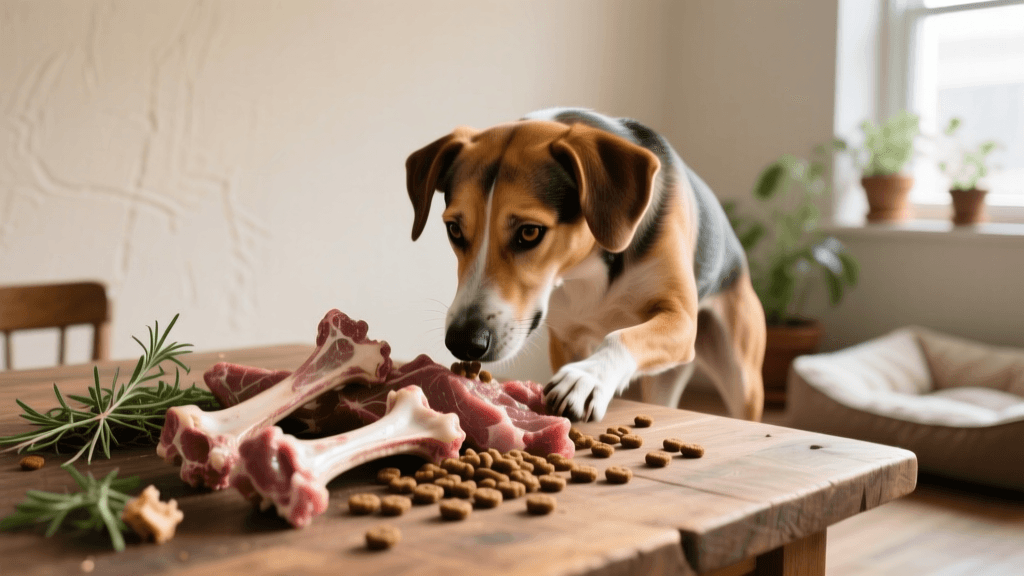
One of the most significant psychological benefits of a raw diet is the inclusion of Raw Meaty Bones (RMBs). In the wild, canines spend a vast amount of their day chewing, tearing, and gnawing. This is not just a mechanical process for dental health; it is a deep-seated psychological need. The act of sustained chewing triggers the release of endorphins and dopamine in the canine brain, acting as a natural anti-anxiety mechanism.
When you feed a dog a bowl of kibble, the meal is often inhaled in under thirty seconds. There is no psychological satisfaction, no mental stimulation, and no endorphin release. The dog is left physically full but psychologically unfulfilled, which can lead to destructive behaviors, excessive licking, or obsessive pacing as they seek an outlet for their unmet chewing drive.
Observing your dog's body language while they chew a raw meaty bone is a masterclass in canine relaxation. Look for the following calming signals:
- Soft Eyes: The muscles around the eyes relax, and the gaze becomes unfocused or heavy-lidded.
- Relaxed Ears: Ears are held in a neutral, resting position rather than pinned back or pricked forward in high alert.
- Lateral Recumbency: The dog will often lie on their side, exposing their vulnerable belly, indicating a profound sense of environmental safety and neurological calm.
- Rhythmic Breathing: Deep, slow breaths replace the shallow, rapid panting associated with high arousal or stress.
Managing Food Arousal and Resource Guarding in 2026
While raw and fresh diets offer immense psychological benefits, they also introduce a behavioral challenge: high-value food arousal. Because raw meat, organs, and bones are biologically intoxicating to dogs, they can trigger resource guarding behaviors in susceptible individuals. Understanding your dog's body language during these high-value mealtimes is critical for maintaining a safe, trusting relationship.
Resource guarding is rooted in anxiety, not dominance. If your dog stiffens over their raw bowl, shows "whale eye" (the whites of their eyes are visible as they look away from the food but keep their head pointed down), or freezes when you walk by, their nervous system is in a state of sympathetic overdrive (fight or flight).
Never punish a dog for resource guarding. Punishment only validates their anxiety, teaching them that humans approaching their high-value food are indeed a threat. Instead, use behavioral modification techniques like "trading up" and classical conditioning to change their emotional response.
In 2026, modern behavioral modification relies heavily on management tools that reduce mealtime friction. For dogs with high food arousal, feeding raw meals inside a frozen Kong or utilizing heavy-duty lick mats can extend the feeding time, lower the arousal threshold, and promote the calming effects of licking without triggering the intense prey-drive associated with a raw meaty bone.
Actionable Steps to Transition for Mental Clarity
If you are considering leveraging the gut-brain axis to improve your dog's anxiety, focus, or reactivity, a strategic approach is required. The experts at the Tufts Cummings School of Veterinary Medicine Clinical Nutrition Service consistently emphasize the necessity of veterinary oversight and balanced formulations when transitioning to alternative diets to prevent nutritional deficiencies that could inadvertently cause neurological irritability.
Follow these actionable steps to ensure a smooth behavioral and physical transition:
1. Establish a Behavioral Baseline
Before changing your dog's diet, spend one week logging their behavior. Note their reactivity to the doorbell, their ability to settle on a mat, and their general anxiety levels. This baseline will allow you to objectively measure the psychological impact of the new diet over the next 60 days.
2. Leverage Modern Microbiome Testing
As of 2026, at-home canine microbiome testing kits, such as those offered by AnimalBiome, allow owners to sequence their dog's gut bacteria before and after a diet transition. If your dog suffers from chronic anxiety, testing can reveal specific bacterial deficiencies (like a lack of Lactobacillus) that you can target with specific prebiotic fibers or targeted probiotic supplements alongside their fresh food.
3. Execute a Slow, 14-Day Transition
A rapid switch to raw or fresh food can cause gastrointestinal upset, which in turn causes physical stress and behavioral irritability. Transition slowly over 14 days, replacing 10% of the old food with the new fresh food every two days. Monitor their stool quality and their mood closely.
4. Incorporate Functional Brain Foods
When formulating or selecting a fresh diet, look for ingredients that specifically support the canine nervous system. Wild-caught sardines (rich in Omega-3 DHA/EPA), blueberries (packed with neuroprotective antioxidants), and turkey (high in L-tryptophan) are excellent additions that actively combat neuro-inflammation and support a calm, focused demeanor.
Conclusion: Feeding the Mind, Not Just the Body
Understanding your dog requires a holistic perspective. Canine behavior is not isolated to training commands and environmental triggers; it is deeply rooted in their biology, and biology is built from the nutrients they consume. By embracing the science of the gut-brain axis and transitioning to raw, fresh, or thoughtfully prepared alternative diets, you are doing more than improving your dog's physical health. You are actively reshaping their neurological landscape, reducing anxiety, and unlocking the calm, focused, and happy companion they were always meant to be. In 2026, the most powerful behavioral tool you own might just be the food you place in their bowl.
beth-carrasco
All our authors care for dogs every day — read more of their work on the authors page.