Raw Diet Rewards for Recall Training: 2026 Expert Guide
Master recall training in high-distraction environments using raw and fresh diet rewards. Discover 2026 protocols, safety tips, and top raw treats.
The Evolution of Canine Recall Training in 2026
In the modern landscape of canine behavioral conditioning, the year 2026 has brought a massive shift toward species-appropriate nutrition and biologically relevant training tools. For professional dog trainers and dedicated owners alike, achieving a bulletproof recall in high-distraction environments remains the ultimate test of the human-canine bond. While commercial, highly processed training treats have their place in basic obedience, they frequently fail when a dog is faced with the intense prey drive triggered by wildlife, unfamiliar dogs, or chaotic urban environments.
This is where the integration of raw, fresh, and alternative diets into your training protocol becomes a game-changer. By leveraging the intense olfactory profiles and evolutionary appeal of raw meats and fresh organs, handlers can bypass a dog's environmental distractions and tap directly into their primal food motivation. This comprehensive guide explores how to safely and effectively utilize raw and fresh diet rewards to forge an unbreakable recall, even in the most challenging scenarios.
The Biological Advantage: Why Raw Rewards Outperform Kibble
To understand why fresh and raw foods are superior for high-stakes recall training, we must look at canine biology. A dog's olfactory system possesses up to 300 million scent receptors, compared to our mere 6 million. When a dog catches the scent of a deer or a rabbit, the dopamine release in their brain creates a hyper-focused state that standard, dehydrated kibble simply cannot compete with.
Raw and fresh foods contain volatile organic compounds (VOCs) and moisture that create a powerful "scent cone" in the air. When you present a piece of fresh raw green tripe or freeze-dried raw venison lung, the aroma cuts through the environmental noise of a busy park. According to the American Kennel Club's training resources, utilizing "high-value" rewards is critical for proofing behaviors like recall against severe distractions. In 2026, veterinary behaviorists increasingly recognize that "high-value" is not just about taste, but about the biological and olfactory resonance the food has with the dog's ancestral diet.
Top 3 Raw & Fresh Rewards for Recall Training
Not all raw foods are created equal when it comes to field training. You need rewards that are highly motivating, easy to handle, and safe to carry. Here are the top three raw and fresh rewards dominating the training space this year.
1. Fresh Raw Green Tripe
Green tripe (the unbleached stomach lining of ruminants) is widely considered the "holy grail" of high-value dog treats. Its pungent, earthy odor is incredibly offensive to human noses but absolutely intoxicating to dogs. The high moisture content and strong scent profile make it the ultimate "jackpot" reward for a dog who has successfully recalled away from a squirrel or another dog. Pro Tip: Because it is messy, pre-portion green tripe into small, pea-sized pieces and store them in a sealed, scent-proof silicone container until the exact moment of the recall.
2. Freeze-Dried Raw Beef Liver or Venison Lung
For handlers who want the biological benefits of raw meat without the mess and temperature requirements of fresh raw food, freeze-dried raw organs are the perfect compromise. The freeze-drying process locks in the volatile scent compounds and nutrients while removing the moisture, making it lightweight and shelf-stable for long hikes. Beef liver is rich in B-vitamins and iron, providing a nutrient-dense reward that supports energy levels during intensive training sessions.
3. Fresh Wild-Caught Sardines
Fresh or lightly thawed sardines are an incredible alternative diet reward, particularly for dogs with poultry or beef sensitivities. The high levels of Omega-3 fatty acids (EPA and DHA) in sardines are proven to support cognitive function and reduce neuro-inflammation, which is highly beneficial for reactive dogs undergoing behavioral modification. The strong fish oil scent carries exceptionally well in outdoor, windy environments.
Raw Reward Comparison Chart
| Reward Type | Scent Intensity (1-10) | Handling & Prep | Caloric Density | Best Training Environment |
|---|---|---|---|---|
| Fresh Raw Green Tripe | 10 | Messy; requires sealing & cooling | Medium | High-distraction parks, wildlife areas |
| Freeze-Dried Raw Liver | 7 | Clean; shelf-stable, easy to portion | High | Urban walks, medium-distraction zones |
| Fresh Sardines | 9 | Moderate; requires cooling, oily | Medium-High | Windy outdoor spaces, beach training |
The 2026 Progressive Recall Protocol Using Fresh Diets
Integrating raw rewards into your training requires a structured approach. You cannot simply offer raw tripe in the living room and expect it to translate to the dog park. Follow this progressive protocol to build a reliable recall.
Phase 1: Scent Association and Baseline Conditioning (Weeks 1-2)
Begin in a low-distraction indoor environment. The goal is to create a powerful classical association between your recall cue (e.g., "Come" or a specific whistle) and the presentation of the raw reward. Use freeze-dried raw liver for this phase to keep the indoor environment clean. Say your cue, mark the behavior with a "Yes!" the moment your dog turns toward you, and deliver the reward directly to their mouth. Repeat this 50 times a day in short bursts. The dog must learn that the recall cue predicts the arrival of a biologically significant food source.
Phase 2: The "Jackpot" Recall (Weeks 3-5)
Move to a controlled outdoor environment, such as a fenced yard or a quiet tennis court, utilizing a 15-to-30-foot biothane long line. Introduce mild distractions, such as a family member walking nearby or a favorite toy tossed to the side. When the dog engages with the distraction, issue your recall cue. If they disengage and return to you, deliver a "jackpot" of fresh raw green tripe. A jackpot consists of 5 to 10 tiny pieces fed rapidly in succession, accompanied by enthusiastic verbal praise. This variable reinforcement schedule drastically increases the dog's motivation to return to you over the distraction.
Phase 3: High-Stakes Distraction Proofing (Weeks 6+)
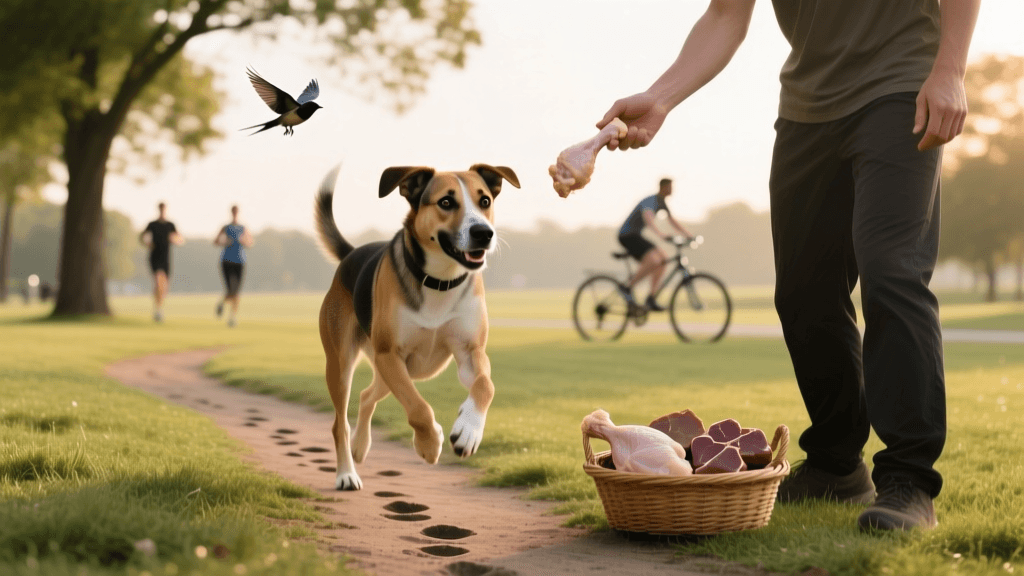
This phase is conducted in open environments with unpredictable variables like wildlife, off-leash dogs, or heavy foot traffic. Keep your dog on a long line for safety. When a high-value distraction appears, wait for your dog to notice it, then issue your recall cue. The use of fresh sardines or raw tripe in this phase is critical; the intense aroma must override the environmental scent cone. If the dog recalls successfully, reward heavily. If the dog fails to recall, do not repeat the cue. Gently reel them in using the long line, reset the scenario, and increase your distance from the distraction before trying again.
Field Logistics: Carrying Fresh and Raw Treats Safely
One of the primary concerns handlers have regarding raw and fresh diets in the field is hygiene and food safety. The FDA guidelines on raw pet food diets emphasize the importance of safe handling to prevent the spread of pathogens like Salmonella or Listeria to humans. In 2026, the market offers excellent solutions for field training.
- Scent-Proof Silicone Pouches: Use medical-grade, sealable silicone bags (such as those made by Stasher) to store fresh tripe or sardines. These prevent the scent from leaking into your treat pouch and prematurely distracting your dog.
- Insulated Training Vests: Modern training vests now feature built-in, removable insulated coolers specifically designed to keep raw meats at a safe temperature (below 40°F) during multi-hour field sessions.
- Sanitization: Always carry a bottle of pet-safe, alcohol-free hand sanitizer and dedicated washcloths. Wash your hands immediately after handling raw rewards before touching your dog's face, your own face, or your training equipment.
Balancing Nutrition: The 10% Rule in a Raw Diet
When utilizing high-calorie raw organs and fresh meats for training, it is vital to adjust your dog's base meals to prevent obesity. Veterinary nutritionists and the WSAVA global nutrition guidelines universally recommend that treats and training rewards should not exceed 10% of a dog's total daily caloric intake.
If your dog is on a complete and balanced raw diet, you can easily integrate training rewards by "reserving" a portion of their daily raw meal allowance specifically for training. For example, if your dog's daily raw ration includes beef liver and muscle meat, weigh out the liver portion in the morning, dehydrate or freeze-dry it at home, and use it as your training treats for the day. For fresh rewards like sardines, simply reduce the fish or fat content in their evening dinner bowl to account for the calories consumed during the afternoon's recall training session. This ensures your dog maintains optimal body condition while reaping the behavioral benefits of species-appropriate rewards.
Conclusion
Mastering the recall in a world full of distractions requires more than just repetition; it requires a reward that speaks to your dog's deepest biological instincts. By thoughtfully integrating raw, fresh, and alternative diet rewards into your training protocol, you elevate your status from a mere handler to the provider of ultimate biological value. With proper safety protocols, caloric balancing, and a progressive training framework, 2026 is the year you can finally achieve the reliable, joyful recall you and your dog deserve.
marcus-aldridge
All our authors care for dogs every day — read more of their work on the authors page.