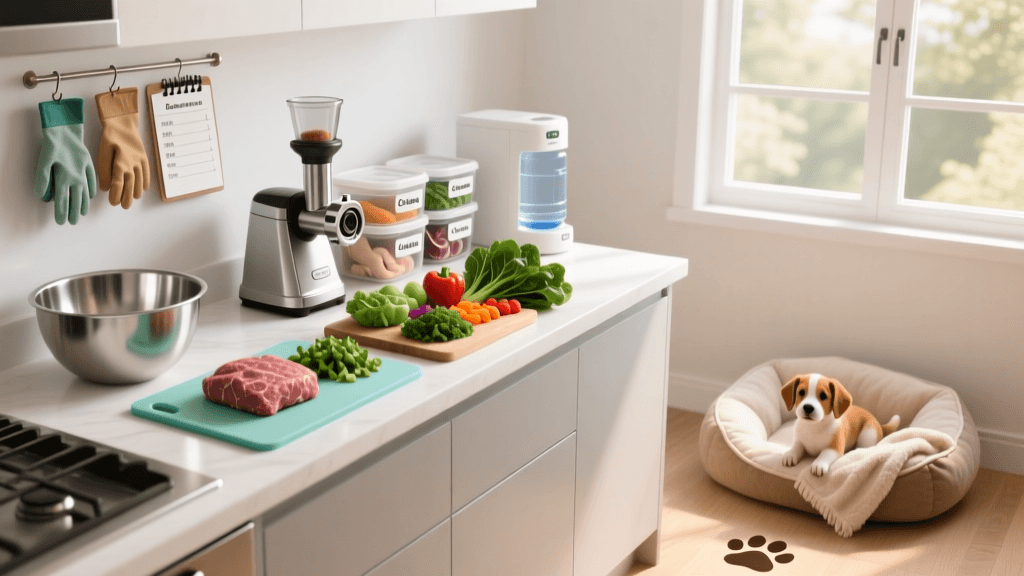
2026 Guide To Fresh Food Prep For Your New Puppy's Arrival
Learn how to set up a safe, efficient raw and fresh food prep station for your new puppy in 2026, including equipment, sourcing, and transition tips.
Welcome to the Fresh Food Revolution of 2026
Bringing a new puppy home is one of the most exciting milestones in life, but it also comes with a myriad of decisions—chief among them being nutrition. As we navigate the dog care landscape in 2026, the shift away from highly processed kibble toward raw, fresh, and gently cooked alternative diets has moved from a niche trend to a mainstream standard. New dog owners are increasingly recognizing the profound impacts that whole-food nutrition can have on a puppy's developing immune system, joint health, and cognitive function.
However, committing to a fresh food diet requires more than just tossing a few vegetables and meat cuts into a bowl. It demands precision, proper equipment, and a strict adherence to safety protocols. If you are preparing your home for a new puppy and plan to feed a raw or fresh diet, setting up a dedicated prep station before their paws ever touch your floors is critical. This comprehensive guide will walk you through the exact equipment, sourcing strategies, nutritional formulations, and transition schedules you need to ensure your new companion thrives from day one.
Essential Equipment for Your Home Prep Station
To safely and efficiently prepare raw meals for a growing puppy, you need to treat your kitchen space with the same respect as a commercial food facility. Investing in the right tools in 2026 will save you hours of labor and ensure the physical consistency of the food is appropriate for your puppy's developing teeth and digestive tract.
1. The Meat Grinder: Your Workhorse
Puppies, especially those between the ages of eight weeks and six months, require their food to be ground to a specific consistency to prevent choking and ensure proper digestion of bone matter. You will need a heavy-duty, commercial-grade grinder. The Weston Pro Series #22 Meat Grinder remains a top-tier choice for home raw feeders in 2026. It easily handles soft poultry bones, beef chunks, and fibrous vegetables without overheating. Always use a 4.5mm or 6mm grinding plate for puppies to ensure the bone fragments are pulverized into a safe, digestible paste.
2. Gram-Accurate Digital Scales
Formulating a puppy's diet is a science. Because puppies grow rapidly, their requirements for calcium, phosphorus, and trace minerals change almost weekly. A standard kitchen scale that measures in ounces or half-grams is insufficient. Invest in a precision digital scale, such as the Ozeri ZK14-S Pronto, which measures down to the exact gram. This precision is non-negotiable when adding vital supplements like vitamin E, kelp, or zinc.
3. Vacuum Sealer for Portion Control
Batch prepping is the secret to maintaining a fresh food diet without burning out. Once you have mixed your weekly or monthly batches of food, portion them into daily servings. A high-quality vacuum sealer, like the FoodSaver V4400, removes oxygen from the packaging, preventing freezer burn and preserving the delicate omega-3 fatty acids found in fish oils and raw meats. Vacuum-sealed, flattened patties also thaw much faster and more evenly in the refrigerator.
4. Color-Coded Cutting Boards and Knives
Cross-contamination is a primary concern when handling raw meat. Adopt a commercial kitchen standard by using color-coded cutting boards: red for raw muscle meats, yellow for raw poultry, and green for vegetables and fruits. Pair these with dedicated, high-carbon stainless steel knives that are washed in a high-heat dishwasher cycle immediately after use.
Sourcing Ingredients: Human-Grade vs. Feed-Grade
When sourcing ingredients for your puppy in 2026, understanding the distinction between 'human-grade' and 'feed-grade' is paramount. Human-grade meats are processed in facilities inspected by the USDA and are held to strict sanitation standards. Feed-grade meats, often labeled as 'pet food grade' or sourced from rendering plants, may contain higher bacterial loads and are not legally permitted for human consumption.
For a puppy's vulnerable immune system, prioritizing human-grade ingredients is highly recommended. Build relationships with local butchers who can provide you with off-cuts, organ meats (like liver, kidney, and spleen), and raw meaty bones (like duck necks or chicken feet). Additionally, many raw feeders utilize specialized raw food co-ops and online suppliers that flash-freeze human-grade meats specifically for pet consumption, ensuring that parasites are neutralized while enzymatic integrity is maintained.
Formulating a Balanced Puppy Diet
A common pitfall for new raw feeders is assuming that 'meat and bones' constitute a complete diet. According to the nutritional standards set forth by the World Small Animal Veterinary Association (WSAVA), a growing puppy requires a very specific calcium-to-phosphorus ratio, ideally between 1.1:1 and 1.5:1. Too much phosphorus and too little calcium can lead to severe orthopedic issues, including nutritional secondary hyperparathyroidism.
A standard balanced raw puppy model in 2026 generally follows this framework:
- 70-75% Muscle Meat: Beef, pork, lamb, poultry, and rabbit.
- 10% Edible Bone: Finely ground chicken necks, quail, or rabbit carcasses.
- 5% Liver: A crucial source of Vitamin A and copper.
- 5% Other Secreting Organs: Kidney, spleen, or brain.
- 5-10% Plant Matter & Supplements: Pureed leafy greens, berries, green-lipped mussel powder, and a balanced vitamin/mineral premix to cover iodine, manganese, and vitamin D gaps.
Pro Tip: Never feed cooked bones to your puppy. Cooking alters the crystalline structure of the bone, making it brittle and prone to splintering, which can cause fatal gastrointestinal perforations.
The 10-Day Fresh Food Transition Schedule
When you bring your puppy home, they will likely be eating whatever the breeder or shelter was feeding them—often a commercial kibble or a basic canned diet. Abruptly switching a puppy to a rich, raw, or fresh diet can cause severe gastrointestinal upset, including diarrhea and vomiting, which can quickly dehydrate a small dog.
Below is a structured 10-day transition protocol designed to allow your puppy's gut microbiome to adapt to the new enzymatic and bacterial profile of fresh food.
| Days | Old Diet (Kibble/Canned) | New Fresh/Raw Diet | Notes & Observations |
|---|---|---|---|
| Days 1-2 | 75% | 25% | Monitor stool consistency closely. Add a canine-specific probiotic. |
| Days 3-4 | 50% | 50% | If stool is soft, hold at this stage for an extra day before progressing. |
| Days 5-6 | 25% | 75% | Introduce new protein sources slowly during this phase. |
| Days 7-9 | 10% | 90% | Begin introducing finely ground raw meaty bones if not already included. |
| Day 10 | 0% | 100% | Full transition. Adjust total daily caloric intake based on puppy's weight gain. |
Strict Hygiene and Safe Handling Protocols
Handling raw meat requires strict adherence to hygiene protocols to protect both your family and your new puppy. The U.S. Food and Drug Administration (FDA) explicitly outlines the risks associated with raw pet food diets, noting that pathogens like Salmonella and Listeria monocytogenes can be present in uncooked meats and pose a risk to humans handling the food, as well as to the pets consuming it.
To mitigate these risks in your 2026 prep station, implement the following non-negotiable rules:
- Thawing: Never thaw raw meat on the kitchen counter at room temperature. Always thaw vacuum-sealed portions in the refrigerator on the bottom shelf, placed inside a dedicated glass or stainless-steel container to catch any condensation or leaks.
- Sanitization: After preparing meals, wash all surfaces, grinders, and bowls in hot, soapy water, followed by a sanitizing rinse using a diluted bleach solution (1 tablespoon of unscented bleach per gallon of water) or a food-safe hydrogen peroxide spray.
- Hand Hygiene: Wash your hands thoroughly with antibacterial soap for at least 20 seconds immediately after handling raw ingredients. Do not touch your face, phone, or kitchen cabinet handles while your hands are contaminated.
- Bowl Management: Pick up your puppy's food bowl after 15 minutes, regardless of whether they have finished eating. Do not leave raw food sitting out at room temperature, as bacterial multiplication accelerates rapidly in warm environments.
Budgeting for Fresh Meals in 2026
Finally, new owners must realistically assess the financial commitment of a fresh food diet. In 2026, the cost of high-quality, human-grade proteins has stabilized but remains a premium investment compared to bulk commercial kibble. For an average 20-pound growing puppy, expect to spend between $3.50 and $5.50 per day on raw ingredients, organ meats, and essential supplements. While this requires a higher upfront grocery budget, many owners find that the long-term savings on veterinary bills, dental cleanings, and allergy medications provide a substantial return on investment.
By taking the time to properly equip your kitchen, source ethical ingredients, and follow a meticulous transition schedule, you are laying the groundwork for a lifetime of vibrant health for your new puppy. Welcome to the rewarding world of fresh canine nutrition.
tom-renshaw
All our authors care for dogs every day — read more of their work on the authors page.