Raw & Fresh Diet Kitchen Prep Checklist for New Dogs 2026
Prepare your kitchen for a raw or fresh dog food diet before bringing your new puppy or rescue home. Get the 2026 prep checklist and freezer setup guide.
Bringing a new dog or puppy into your home is one of life’s most rewarding experiences. As we navigate the pet care landscape in 2026, an increasing number of new owners are turning away from highly processed kibble and embracing raw, fresh, and alternative diets. Whether you are adopting a rescue dog with a sensitive stomach or bringing home a purebred puppy, preparing your kitchen and freezer for a fresh food diet before your dog arrives is a critical step that many first-time owners overlook.
The 'Before They Arrive' Philosophy
The first two weeks with a new dog are characterized by high stress, environmental changes, and potential gastrointestinal upset. If you attempt to simultaneously transition a newly adopted dog to a raw or fresh diet while also setting up your kitchen to handle raw meats or bulk fresh food deliveries, you are setting yourself up for frustration. By establishing your raw feeding station, sourcing your initial month's supply, and mastering portion calculations before your dog crosses the threshold, you ensure a seamless, stress-free transition that prioritizes your dog's gut health and your peace of mind.
Essential Kitchen & Freezer Gear for 2026
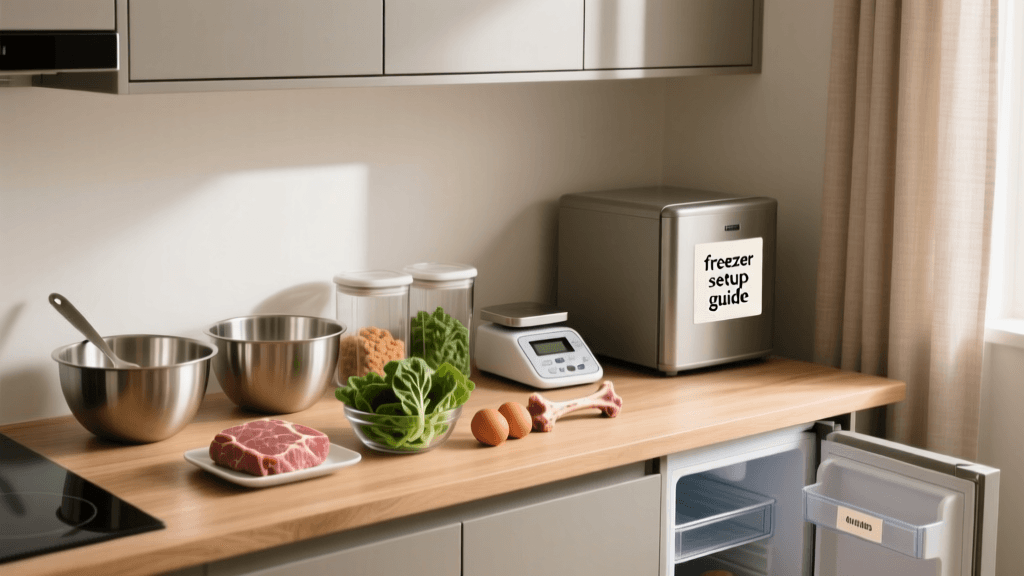
Feeding a raw or fresh diet requires a different level of kitchen organization than pouring dry kibble into a bowl. Here is the essential equipment checklist for the modern raw-feeding household:
1. Dedicated Prep Surfaces & Tools
- Color-Coded Cutting Boards: Purchase a set of commercial-grade, dishwasher-safe cutting boards. Use a specific color (e.g., red) exclusively for raw dog food prep to prevent cross-contamination with human food.
- Precision Digital Scales: Accuracy is paramount in raw feeding. The Ozeri ProMax Digital Kitchen Scale remains a top choice in 2026 for its ability to measure down to the single gram, ensuring your dog receives exact calcium-to-phosphorus ratios.
- Stainless Steel Prep Bowls: Avoid plastic bowls, which can harbor microscopic scratches where bacteria like Salmonella and Listeria thrive. Opt for heavy-bottomed stainless steel or ceramic bowls that can be sanitized in the dishwasher on a high-heat cycle.
2. Freezer Space & Storage Solutions
Depending on whether you are buying commercial pre-made raw patties or sourcing whole prey and muscle meats for a DIY diet, freezer space will be your most valuable asset. In 2026, energy-efficient chest freezers are the standard for raw feeders. The Midea 7.0 Cu. Ft. Chest Freezer is highly rated for its compact footprint and ultra-quiet compressor, making it ideal for apartments or garages. Pair this with heavy-duty, BPA-free silicone freezer trays or vacuum-seal bags to portion out weekly meals, minimizing the time raw meat spends in the 'danger zone' during thawing.
Sourcing & Budgeting: 2026 Market Overview
The fresh and raw dog food market has matured significantly, offering options for every budget and lifestyle. Below is a comparison of the primary diet types available to new dog owners this year.
| Diet Type | Estimated 2026 Cost (per lb) | Prep Time Required | Storage Requirements |
|---|---|---|---|
| Commercial Pre-Made Raw (e.g., We Feed Raw, Darwin's) | $5.50 - $8.00 | Minimal (Thaw & Serve) | Deep Freezer |
| Commercial Fresh Cooked (e.g., The Farmer's Dog, Nom Nom) | $6.00 - $9.50 | None (Refrigerate & Serve) | Refrigerator / Freezer |
| DIY Prey Model Raw (Sourced from local butchers/farms) | $2.50 - $4.50 | High (Grinding, weighing, supplementing) | Large Chest Freezer |
| DIY Gently Cooked (Home cooked with NRC balancers) | $3.00 - $5.00 | Medium (Cooking, cooling, mixing) | Refrigerator / Freezer |
For new owners working full-time, starting with a Commercial Pre-Made Raw or Commercial Fresh Cooked diet is highly recommended for the first six months. This allows you to bond with your new dog and establish a routine without the added burden of formulating nutritionally complete DIY meals. Once you are comfortable, you can gradually introduce DIY elements or raw meaty bones (RMBs) for dental health.
Hygiene, Safety, and Cross-Contamination
Handling raw meat safely is non-negotiable. While dogs have highly acidic stomachs designed to process raw meats and handle bacterial loads that would make humans ill, the humans preparing the food are vulnerable. According to the U.S. Food and Drug Administration (FDA), raw pet food diets carry a documented risk of zoonotic pathogens, including Salmonella and Listeria monocytogenes.
To mitigate these risks in 2026, implement the following household protocols:
- The 'Clean Zone' Rule: Designate a specific sink or use a dedicated silicone basin for washing your dog's raw food bowls. Never wash raw meat residue in the same basin used for human baby bottles or fresh produce.
- Enzymatic Cleaners: Keep a bottle of veterinary-grade enzymatic surface cleaner near your prep station to immediately wipe down counters after portioning meals.
- Safe Thawing: Never thaw raw dog food on the kitchen counter at room temperature. Always thaw portions in the refrigerator on a dedicated bottom shelf, or use a cold-water bath in a sealed, leak-proof container.
The 14-Day Gut Transition Protocol
When your new dog arrives, they will likely be eating whatever the breeder, shelter, or previous owner was feeding them. Abruptly switching to a rich, high-moisture raw or fresh diet will almost certainly result in severe diarrhea. The American Veterinary Medical Association (AVMA) advises careful consideration and gradual introduction when changing a pet's fundamental diet structure.
Follow this 14-day transition schedule to protect your new dog's microbiome:
- Days 1-3: 75% old food (kibble/previous diet) + 25% new fresh/raw food. Add a canine-specific probiotic to support gut flora.
- Days 4-7: 50% old food + 50% new fresh/raw food. Monitor stool consistency. If stool becomes soft, hold at this stage for an extra two days.
- Days 8-11: 25% old food + 75% new fresh/raw food. Introduce a small amount of plain, canned 100% pumpkin puree (not pie filling) for soluble fiber if digestion needs support.
- Days 12-14: 100% new fresh/raw diet. Observe your dog's energy levels, coat shine, and stool quality (raw-fed stools should be small, firm, and low-odor).
Calculating Portions and Caloric Needs
Unlike kibble, which provides a standardized 'cups per day' feeding chart on the bag, raw and fresh diets require a bit of basic math. To ensure your new puppy or adult dog maintains a lean, healthy body condition, calculate their Resting Energy Requirement (RER).
The RER Formula: 70 x (Body Weight in kg)^0.75 = RER (kcal/day).
Once you have the RER, multiply it by the appropriate life-stage factor. For a newly adopted adult dog at an ideal weight, multiply the RER by 1.6. For a growing puppy, that multiplier can range from 2.0 to 3.0 depending on their age and expected adult size. Using your digital scale, weigh the food to match the caloric density provided by your commercial raw manufacturer or your veterinary nutritionist's recipe.
Final Thoughts for New Owners
Choosing a raw, fresh, or alternative diet for your new dog is a profound commitment to their long-term health, vitality, and longevity. By treating your kitchen prep with the same importance as buying a crate, leash, and collar, you set the foundation for a lifetime of vibrant health. Take the time to source your 2026 equipment, secure your freezer space, and master the transition protocol before your new best friend comes home. Your future self—and your dog's digestive tract—will thank you.
jonas-cole
All our authors care for dogs every day — read more of their work on the authors page.