Raising Puppies For Healthy Senior Years: Early Care Guide
Learn how early puppy care habits like weight management and joint support prevent senior dog diseases. Set your pup up for a long, healthy life.
The Puppy-Senior Connection: Why Year One Matters
When most pet parents think about puppy care, they focus on immediate milestones: potty training, teething, and basic obedience. However, viewing your puppy through the lens of senior and aging dog care is one of the most profound and impactful shifts you can make. The first twelve months of a dog's life are not just about survival and socialization; they are about developmental programming. The habits, nutritional baselines, and environmental conditions you establish during your puppy's first year will directly dictate their susceptibility to age-related diseases such as osteoarthritis, canine cognitive dysfunction, metabolic syndrome, and periodontal disease.
By adopting a preventative gerontology approach to puppy rearing, you can actively delay the onset of aging ailments. This comprehensive guide bridges the gap between early puppy development and long-term senior health, providing actionable, data-driven strategies to ensure your pup enjoys a vibrant, pain-free golden life.
Orthopedic Foundation: Protecting Joints Before They Age
Osteoarthritis (OA) and degenerative joint diseases are among the most common and debilitating conditions affecting senior dogs. While genetics play a role, the foundation for joint health is laid during the rapid growth phases of puppyhood (typically between 2 and 8 months of age). During this window, a puppy's articular cartilage and growth plates are highly vulnerable to microtrauma and nutritional imbalances.
Navigating Large Breed Puppy Nutrition
For large and giant breed puppies, excessive caloric intake and improper calcium-to-phosphorus ratios can cause bones to grow faster than the supporting musculature and cartilage can adapt. According to the clinical nutrition team at the Tufts University Cummings Veterinary Medical Center, feeding a diet specifically formulated for large breed growth is non-negotiable. These diets restrict calcium and caloric density to ensure a slow, steady growth curve, significantly reducing the risk of developmental orthopedic diseases like hip dysplasia and osteochondrosis, which inevitably lead to severe senior arthritis.
Environmental Joint Protection
Microtrauma from slipping and sliding on hardwood or tile floors can cause repetitive stress injuries to a puppy's developing joint capsules. To protect their future mobility:
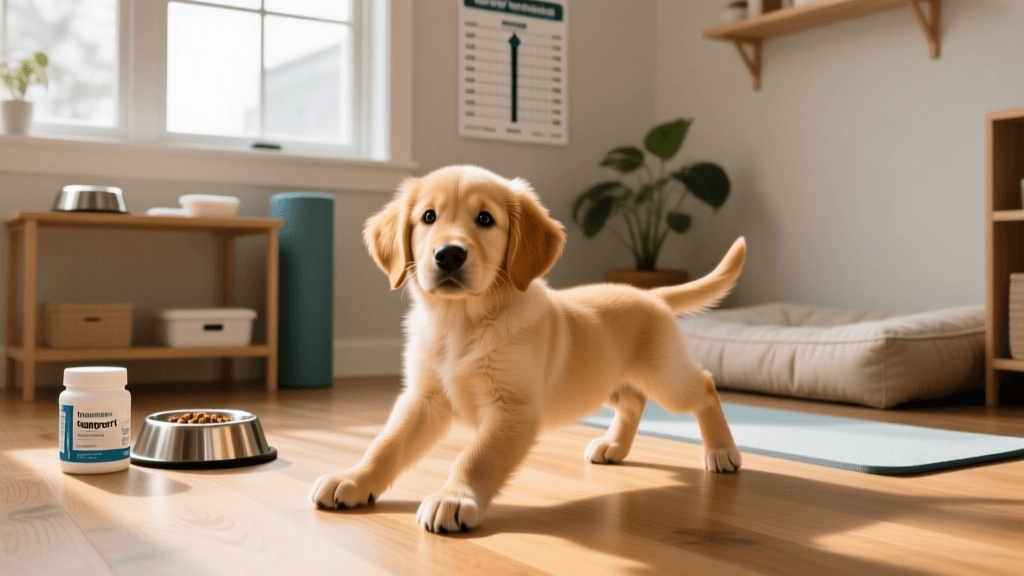
- Install non-slip rugs: Cover high-traffic areas and pathways to your puppy's food and water bowls with textured, non-slip runners.
- Restrict high-impact activities: Avoid activities like jumping on and off furniture, catching frisbees, or running alongside a bicycle until your veterinarian confirms the growth plates have closed (usually between 12 to 18 months).
- Provide orthopedic bedding: Invest in a high-density memory foam bed early on to support proper spinal alignment and relieve pressure on developing joints during their 18-hour daily sleep cycles.
Metabolic Programming: Weight Management from Day One
Obesity is the leading preventable cause of premature aging in dogs. It exacerbates joint degeneration, increases the risk of diabetes, and strains the cardiovascular system. However, the battle against senior obesity begins in the puppy bowl.
Adipocyte Hyperplasia vs. Hypertrophy
When adult dogs gain weight, their existing fat cells expand (hypertrophy). When puppies are overfed, their bodies actually create entirely new fat cells (hyperplasia). A puppy that is overfed will carry a higher baseline number of fat cells into their senior years, making weight management and loss in old age exponentially more difficult. Maintaining a lean Body Condition Score (BCS) of 4/9 or 5/9 during the first year is critical.
The World Small Animal Veterinary Association (WSAVA) emphasizes the importance of strict portion control and regular body condition monitoring. To achieve this:
- Ditch the measuring cup: Measuring cups can vary caloric output by up to 20%. Instead, use a digital kitchen gram scale to weigh your puppy's food precisely according to the manufacturer's feeding guidelines.
- Account for treats: Treats used for potty training and socialization should not exceed 10% of the puppy's total daily caloric intake. Substitute high-calorie commercial treats with low-calorie alternatives like frozen blueberries, boiled chicken breast, or pieces of their daily kibble allocation.
- Weigh weekly: Track your puppy's weight weekly and plot it on a breed-specific growth curve to ensure they are growing at an optimal, not maximal, rate.
Cognitive Reserve: Building the Aging Brain
Canine Cognitive Dysfunction (CCD) is the dog equivalent of Alzheimer's disease, affecting a significant percentage of dogs over the age of 11. While you cannot entirely prevent CCD, you can build 'cognitive reserve' during puppyhood. Neuroplasticity is at its peak during the first year. By challenging your puppy's brain, you encourage the formation of dense neural networks that can better withstand age-related neurological decline.
Enrichment Over Exhaustion
Physical exercise is important, but mental fatigue is equally crucial and far safer for developing joints. Incorporate the following cognitive exercises into your daily routine:
- Scent Work and Sniffaris: Allow your puppy to lead the way on walks and sniff extensively. Processing olfactory information requires immense brain power and builds neural pathways associated with memory and spatial awareness.
- Puzzle Feeders: Ditch the standard food bowl. Use interactive puzzle toys like the Outward Hound Dog Brick or Kong Wobbler to force your puppy to problem-solve for their meals.
- Proprioception Training: Introduce your puppy to varied, safe textures and unstable surfaces (like a folded towel or a specialized canine balance disc) to build body awareness and mind-muscle connections.
Dental Hygiene: Staving Off Senior Periodontal Disease
By the time a dog reaches three years of age, over 80% show signs of periodontal disease. In senior dogs, the chronic systemic inflammation caused by severe dental disease is directly linked to endocarditis (heart valve infections), liver disease, and kidney failure. The plaque that calcifies into destructive tartar in a 10-year-old dog often begins its lifecycle during the puppy teething phase.
As noted by the American Kennel Club (AKC), the transition from deciduous (baby) teeth to permanent adult teeth between 3 and 6 months of age is a critical window for oral care. Retained baby teeth can trap food and bacteria, leading to early-onset decay.
Establishing a Lifelong Dental Routine
Senior dogs often resist tooth brushing if it was not introduced early. Capitalize on your puppy's adaptability to build a stress-free routine:
- Start at 8 weeks: Begin by gently rubbing your puppy's gums with your finger wrapped in a piece of gauze.
- Introduce enzymatic toothpaste: Transition to a veterinary-approved enzymatic toothpaste (such as Virbac C.E.T. Poultry Flavor). The enzymes continue to break down plaque even if your brushing technique is imperfect.
- Upgrade to a dual-head brush: Once the puppy is comfortable, use a dual-head canine toothbrush to clean both the inside and outside of the teeth simultaneously, focusing on the upper carnassial teeth where tartar accumulates fastest.
Data Table: Early Puppy Interventions and Senior Health Outcomes
The following chart illustrates how specific actions taken during the puppy's first year directly correlate to the prevention or delay of common senior dog diseases.
| Puppy Stage (Months) | Actionable Habit | Senior Disease Prevented or Delayed |
|---|---|---|
| 2 - 4 Months | Gram-scale food measurement and BCS tracking | Obesity, Metabolic Syndrome, and Osteoarthritis |
| 3 - 6 Months | Non-slip rugs and restriction of high-impact jumping | Hip Dysplasia, CCL Tears, and Joint Degeneration |
| 4 - 8 Months | Daily enzymatic teeth brushing and gum massage | Periodontal Disease, Systemic Inflammation, and Kidney Disease |
| 6 - 12 Months | Scent work, puzzle feeders, and novel socialization | Canine Cognitive Dysfunction (CCD) and Anxiety Disorders |
| 2 - 18 Months | Delayed spay/neuter for large breeds (until growth plates close) | Osteosarcoma, Hemangiosarcoma, and Orthopedic Disorders |
Summary Checklist for the First 12 Months
Raising a puppy with their senior years in mind requires consistency, patience, and a proactive mindset. Keep this checklist handy as you navigate your puppy's first year:
- Month 1-3: Establish a precise, weighed feeding regimen. Puppy-proof floors with non-slip mats.
- Month 3-6: Begin daily dental handling and introduce enzymatic toothpaste. Start basic scent-work games.
- Month 6-9: Monitor the shedding of baby teeth to ensure no deciduous teeth are retained. Consult your vet about the optimal timing for spaying/neutering based on your dog's projected adult size.
- Month 9-12: Transition to advanced puzzle feeders. Schedule a comprehensive orthopedic and dental baseline exam with your veterinarian to document their healthy state before aging begins.
By treating your puppy as a future senior from the very first day, you are gifting them the greatest possible asset: a comfortable, cognitively sharp, and pain-free life well into their golden years. The effort you invest in their first year will echo through every year that follows.
tom-renshaw
All our authors care for dogs every day — read more of their work on the authors page.