Best Puppy Breeds for Remote Workers in 2026: Top 5
Discover the best puppy breeds for remote workers in 2026. Find quiet, adaptable dogs perfect for home offices, plus top WFH dog gear.
The Reality of Raising a Puppy in a 2026 Home Office
As we navigate the professional landscape of 2026, the home office is no longer just a temporary setup; it is a permanent fixture for millions of remote workers. Sharing this space with a new puppy is a dream for many, but it requires strategic planning. A highly vocal or high-energy herding breed can turn a peaceful workday into a chaotic nightmare of interrupted Zoom calls and chewed router cables. The key to success lies in selecting a breed that naturally aligns with a sedentary, indoor lifestyle while still providing the companionship that makes working from home so rewarding. In this comprehensive guide, we explore the top five puppy breeds perfectly suited for remote workers in 2026, alongside essential gear and scheduling strategies to keep both you and your new furry coworker happy and productive.
Top 5 Puppy Breeds for the Home Office
1. Cavalier King Charles Spaniel
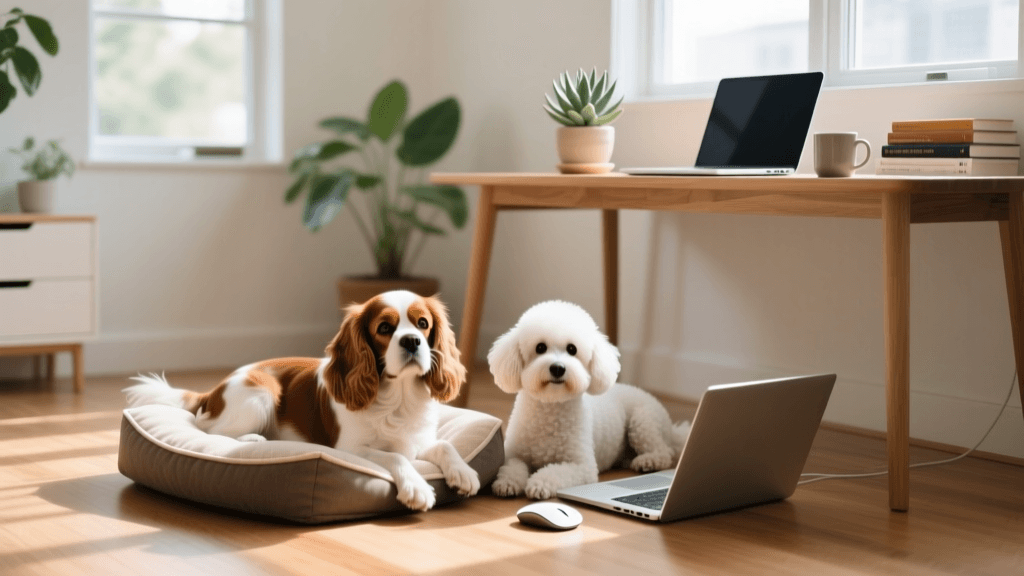
The Cavalier King Charles Spaniel remains a premier choice for remote professionals. According to the American Kennel Club, this breed is renowned for its gentle temperament and adaptability. Cavaliers are essentially 'velcro dogs' that are perfectly content to sleep on a dog bed beneath your standing desk while you tackle deep work. They rarely bark without a genuine reason, making them ideal for households where audio clarity on conference calls is paramount. While they require daily walks to maintain a healthy weight, their exercise needs are easily met with a 30-minute morning stroll and a quick evening play session, leaving your work hours largely uninterrupted.
2. Bichon Frise
The Bichon Frise is a stellar option for remote workers who suffer from pet dander allergies or live in compact urban apartments. Their hypoallergenic, hair-like coat sheds minimally, keeping your home office environment clean and your laptop keyboard free of fur. Bichons are cheerful and affectionate but possess an 'off switch' that many high-energy terriers lack. When provided with a morning puzzle toy and adequate mental stimulation, a Bichon will happily snooze through your afternoon strategy meetings. Their moderate energy levels mean they do not demand intense physical exertion, fitting seamlessly into a busy remote worker's schedule.
3. Havanese
Cuba's national dog, the Havanese, has surged in popularity among work-from-home professionals. Weighing in at just 7 to 13 pounds, they are the ultimate lap-sized companions. Havanese dogs are highly attuned to their owners' emotions, often providing comforting presence during high-stress workdays. They are remarkably quiet and adapt well to the ambient noises of a home office, such as the clacking of mechanical keyboards or the hum of a ring light. Because they are highly food-motivated, training them to settle on a designated 'place' mat during video calls is a straightforward process that yields excellent results.
4. Boston Terrier
Often dubbed the 'American Gentleman,' the Boston Terrier is a compact, low-maintenance breed that thrives in a home office setting. Their short coat requires minimal grooming—just a quick weekly brushing—which saves remote workers valuable time. Boston Terriers are playful and enjoy short bursts of activity, making them perfect companions for the Pomodoro productivity technique. After a 50-minute block of focused work, a quick 10-minute game of indoor fetch or tug-of-war will satisfy their exercise needs and help you clear your head before diving back into your inbox.
5. Shih Tzu
Bred specifically for companionship, the Shih Tzu is a quintessential home office dog. They have a low metabolic rate and are perfectly happy lounging for hours on end. While their long coat requires regular grooming, many remote workers opt for a shorter 'puppy cut' to minimize maintenance. Shih Tzus are generally quiet and unbothered by the comings and goings of delivery drivers, ensuring your afternoon focus remains unbroken. Their primary desire is simply to be in the same room as you, making them the ultimate silent partners in your home business.
Breed Comparison Chart for Remote Workers
| Breed | Energy Level | Barking Tendency | Grooming Needs | Best WFH Trait |
|---|---|---|---|---|
| Cavalier King Charles Spaniel | Low to Moderate | Low | Moderate | Extreme quietness and affection |
| Bichon Frise | Moderate | Low to Moderate | High | Hypoallergenic coat for clean desks |
| Havanese | Low to Moderate | Low | High | Compact size and emotional attunement |
| Boston Terrier | Moderate | Low | Low | Playful bursts perfect for screen breaks |
| Shih Tzu | Low | Low | High | Unmatched lounging and companionship |
Essential 2026 Home Office Gear for WFH Dog Parents
Equipping your home office with the right canine-centric technology is just as important as choosing the right breed. In 2026, pet tech has evolved to seamlessly integrate with smart home ecosystems. The Furbo 360 4K (2026 Edition) is an indispensable tool for remote workers who occasionally need to step away from their desks or transition to a hybrid office model. With its AI-driven bark alerts and auto-tossing treat dispenser, you can monitor and reward your puppy for calm behavior even when you are in another room taking a private call. Priced around $250, it offers peace of mind and integrates directly with modern smart home hubs.
For potty training, the Fresh Patch delivery service remains a game-changer for apartment-dwelling remote workers. Receiving a fresh patch of hydroponically grown grass on a bi-weekly basis (approximately $35 per delivery) allows you to train your puppy to use an indoor balcony or designated bathroom corner without rushing down multiple flights of stairs between meetings. Additionally, investing in a Snuggle Puppy with a simulated heartbeat is crucial for crate training during your most critical morning stand-up meetings, as it drastically reduces whining and separation distress.
Training Your Puppy for Zoom Calls and Focus
Training a puppy to respect your work hours requires consistency and an understanding of canine behavior. The ASPCA emphasizes the importance of preventing separation anxiety early on, even when you are home all day. If your puppy becomes overly dependent on your constant physical presence, they will struggle on the days you do need to leave for an in-person workshop. To combat this, utilize baby gates to create a designated 'puppy zone' within your office where they can see you but cannot physically interrupt you.
The 'Place' command is your most valuable asset. According to the Humane Society, positive reinforcement training yields the best long-term results. Teach your puppy to lie on a specific raised cot or mat by rewarding them with high-value treats like freeze-dried liver. Once they associate the mat with positive outcomes, you can cue 'Place' right before you join a video call. Furthermore, desensitize your puppy to your work environment. Record the sounds of your keyboard, your ring light clicking on, and your virtual meeting chimes, playing them back at low volumes while feeding your puppy to build positive associations with your work triggers.
Managing Potty Breaks Around Your Meeting Schedule
Structuring your day is vital for both your productivity and your puppy's development. Puppies have small bladders and require frequent breaks. Adopting a modified Pomodoro schedule—50 minutes of deep, uninterrupted work followed by a 10-minute puppy break—is highly effective in 2026. During the 50-minute block, your puppy should be engaged with a long-lasting enrichment activity, such as a frozen West Paw Toppl filled with Greek yogurt and peanut butter.
When the timer goes off, use the 10-minute break to take your puppy to their designated potty area, engage in a quick training session, or play a brief game of tug. This not only prevents indoor accidents but also serves as a mandatory screen-time break for you, reducing eye strain and mental fatigue. By aligning your puppy's needs with your natural work rhythms, you create a sustainable, harmonious environment where both your career and your new best friend can thrive.
beth-carrasco
All our authors care for dogs every day — read more of their work on the authors page.