Best Quiet Puppy Breeds for Remote Workers in 2026
Discover the best quiet puppy breeds for remote workers in 2026. Learn first-year care, potty training, and socialization tips for home office setups.
The Rise of the Home Office Dog in 2026
As fully remote and hybrid work models solidify in 2026, the dream of raising a puppy while working from home has become a reality for millions of professionals. However, the reality of puppy care often clashes with the demands of video calls, deep work blocks, and virtual collaboration. A high-energy, vocal herding breed might be a perfect companion for an active outdoor lifestyle, but they can be a nightmare when you are trying to lead a quarterly review on Zoom. For remote workers, selecting a low-barking, relatively independent, yet affectionate breed is the secret to a harmonious home office. Beyond breed selection, the first year of a puppy's life requires meticulous scheduling, intentional socialization, and strategic alone-time training to ensure your new companion grows into a well-adjusted adult dog who respects your workspace.
Top 3 Low-Barking Puppy Breeds for Remote Professionals
When evaluating breeds for a home office environment, we prioritize low vocalization tendencies, moderate energy levels, and an eagerness to lounge nearby while you type. Here are the top three breeds that excel in remote work environments.
1. Cavalier King Charles Spaniel
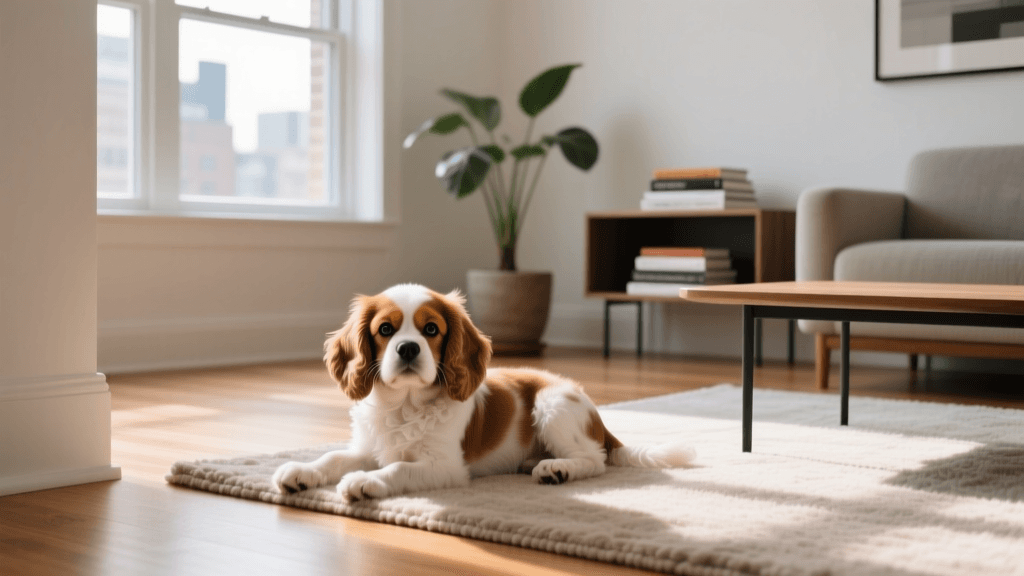
The Cavalier King Charles Spaniel is the quintessential lap dog. Known for their gentle temperament and profound desire to be near their humans, Cavaliers are perfectly content to sleep on a dog bed beneath your desk for hours. They are notably quiet dogs, rarely barking without a significant reason, making them ideal for households where background noise on microphone is a concern. During their first year, Cavaliers are highly food-motivated, which makes potty training and basic obedience relatively straightforward compared to more stubborn breeds.
2. Basset Hound
If your workday involves long stretches of deep, uninterrupted focus, the Basset Hound is an exceptional choice. Famous for their low-slung bodies and soulful eyes, Bassets are notoriously low-energy indoors. While they require a solid daily walk to maintain a healthy weight and satisfy their scent-tracking instincts, they spend the vast majority of their day sleeping. Bassets are not known for excessive barking, though they do possess a deep, resonant howl if left entirely neglected. Their stubborn nature means early, positive-reinforcement-based puppy training is essential during their first six months.
3. Greyhound
Often misunderstood as high-energy racing dogs, retired racing Greyhounds and well-bred pet Greyhounds are actually renowned 'couch potatoes.' They are incredibly quiet, clean, and sleep up to 18 hours a day. A Greyhound puppy will require structured playtime and secure, fenced outdoor exercise, but indoors, they are remarkably calm and unobtrusive. They are highly sensitive dogs, so a quiet, low-stress home office environment suits them perfectly. Early socialization is critical to ensure they remain confident and relaxed when household noises or delivery drivers interrupt your workday.
Breed Comparison Chart for Remote Workers
| Breed | Energy Level (Indoors) | Barking Tendency | Potty Training Speed | Est. 2026 First-Year Cost |
|---|---|---|---|---|
| Cavalier King Charles Spaniel | Low to Moderate | Very Low | Fast (2-3 months) | $2,800 - $3,500 |
| Basset Hound | Very Low | Low (Occasional Howl) | Slow (4-6 months) | $2,200 - $2,900 |
| Greyhound | Low (Couch Potato) | Very Low | Moderate (3-4 months) | $2,500 - $3,200 |
Note: First-year costs include initial veterinary care, vaccinations, high-quality puppy food, crates, smart pet cameras, and training classes based on 2026 national averages.
First-Year Puppy Care: Integrating with Your Workday
Raising a puppy while working from home requires blending developmental milestones with your professional calendar. Here is how to manage the core pillars of puppy care without sacrificing your productivity.
Potty Training Around Zoom Meetings
An 8-week-old puppy has a very small bladder and generally needs to eliminate every 1 to 2 hours, as well as immediately after waking up, eating, or playing. Remote workers can leverage the Pomodoro Technique to manage this. Work in focused 45-minute sprints, followed by a 15-minute puppy break. During this break, take your puppy to their designated outdoor potty spot, reward them with a high-value training treat, and engage in 5 minutes of active play before settling back in for the next sprint. By 4 to 5 months of age, most puppies can hold their bladder for 3 to 4 hours, allowing you to schedule longer morning and afternoon meeting blocks without interruption.
Preventing Separation Anxiety (Even When You Are Home)
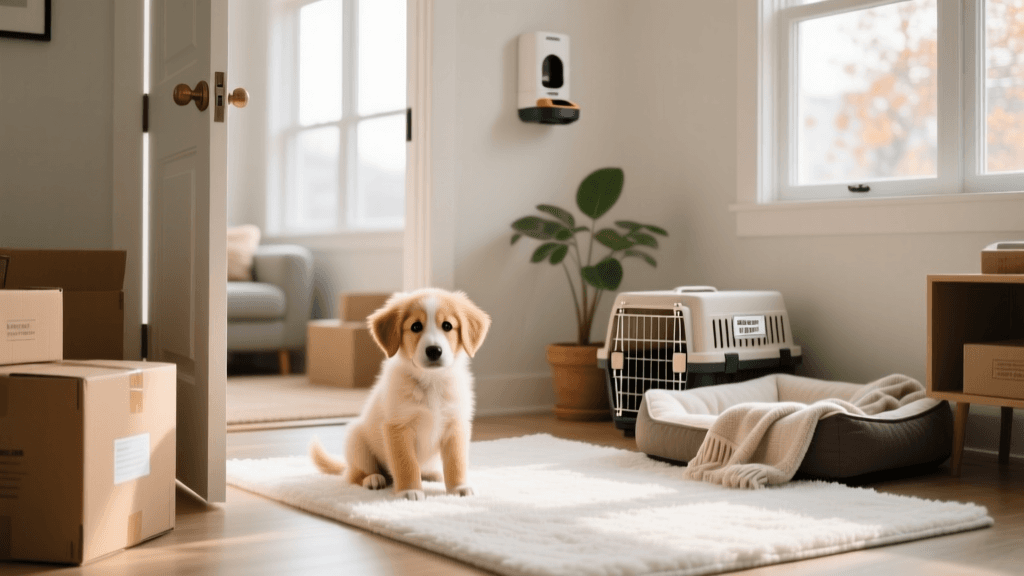
One of the most common mistakes remote workers make is allowing their puppy to be attached to them 24/7. When the puppy eventually needs to be left alone—whether you return to a hybrid office, visit a coffee shop, or simply need to run errands—the sudden absence of their human can trigger severe separation anxiety. The ASPCA emphasizes that teaching a dog to be comfortable alone is a vital part of early behavioral health. From week one, utilize a puppy playpen or a properly sized crate in a separate room for at least one to two hours a day while you are working. Provide them with a safe, long-lasting chew toy and use a smart pet camera to monitor their stress levels. This teaches the puppy that being alone is safe and temporary.
Managing Teething During Deep Work Blocks
Between 12 weeks and 6 months of age, puppies go through an intense teething phase. The discomfort of adult teeth pushing through their gums drives them to chew on furniture, shoes, and even your ankles. To survive this phase during critical work hours, preparation is key. Keep a rotation of frozen chew toys in your freezer. A classic rubber KONG stuffed with puppy-safe peanut butter and plain yogurt, then frozen overnight, can occupy a teething puppy for 45 minutes or more. This provides soothing relief for their gums and keeps them quietly anchored to their bed while you are on important calls.
Early Socialization for the Work-From-Home Puppy
The critical socialization window for puppies occurs between 8 and 16 weeks of age. During this time, puppies are most receptive to new experiences, sounds, people, and environments. For remote workers who do not leave the house daily, a puppy can easily become under-socialized, leading to fear-based reactivity later in life. The American Kennel Club (AKC) stresses that intentional, positive exposure to the outside world is non-negotiable during these early months.
To ensure your home-office puppy develops into a confident adult, you must build socialization into your weekly schedule:
- Enroll in Puppy Kindergarten: Commit to a 6-week in-person training class. This provides essential exposure to other vaccinated puppies and unfamiliar humans in a controlled setting.
- Schedule 'Commute' Simulations: Once your puppy has completed their initial vaccination series (usually around 16 weeks), take them on daily outings to outdoor cafes, busy parks, or pet-friendly hardware stores to habituate them to urban noise and crowds.
- Host Controlled Playdates: Invite friends, neighbors, and children over to your home office. Ask them to ignore the puppy initially, then reward the puppy with treats for calm, four-on-the-floor behavior.
- Desensitize to Household Noises: Play recordings of vacuum cleaners, doorbells, and sirens at a low volume while feeding your puppy, gradually increasing the volume over several weeks.
Creating a Puppy-Safe Home Office Environment
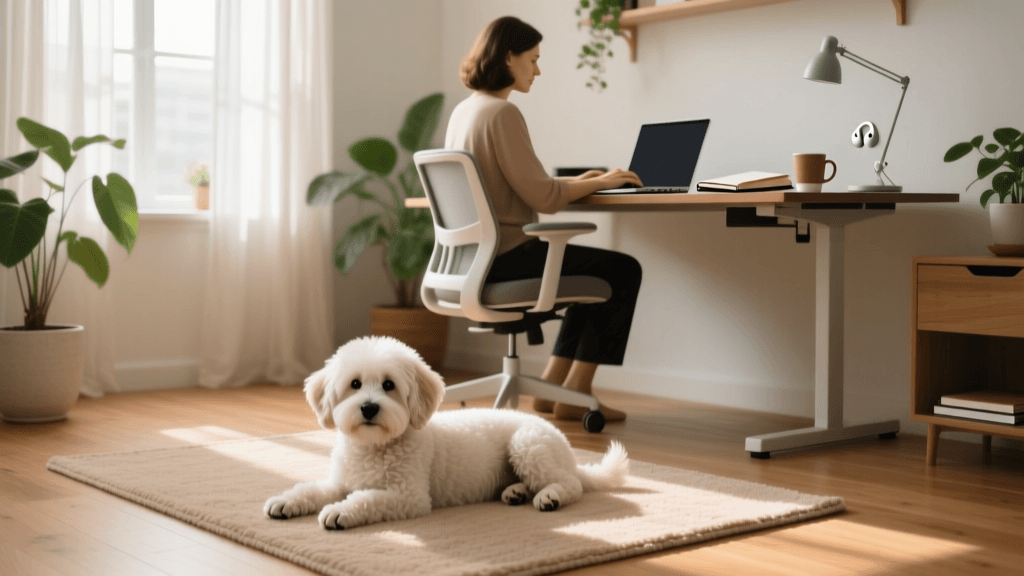
Your workspace must be puppy-proofed to prevent accidental injuries and destroyed equipment. In 2026, home offices are filled with expensive tech, and a teething puppy can cause thousands of dollars in damage in a matter of minutes. Use cable management sleeves and zip ties to secure all power cords and ethernet cables out of reach. Invest in a heavy-duty, chew-proof dog bed placed directly under or beside your desk so your puppy feels included in your 'pack' activities without being underfoot. Additionally, consider using a baby gate to block off the office doorway when you need to leave the room for a quick kitchen break, preventing the puppy from following you and developing shadowing behaviors.
Final Thoughts on Balancing Work and Puppy Rearing
Raising a puppy as a remote worker is a deeply rewarding experience that requires immense patience, structure, and foresight. By selecting a breed that naturally aligns with a quiet, indoor lifestyle—such as the Cavalier King Charles Spaniel, Basset Hound, or Greyhound—you set yourself up for success. However, the right breed is only half the equation. Diligent potty training tied to your work schedule, proactive crate training to foster independence, and intentional socialization outside the home are what will ultimately transform a chaotic puppy into the perfect, quiet co-worker. With the right routines in place, your furry companion will become the best part of your 2026 work-from-home experience.
aaron-whyte
All our authors care for dogs every day — read more of their work on the authors page.