Moving With A Puppy In 2026: The 30-Day Transition Guide
Relocating with a puppy? Discover our 2026 guide to moving with a puppy, covering a 30-day settling plan, potty resets, and stress-free space setup.
Moving is universally ranked as one of life's most stressful events, and when you add a developing puppy to the equation, the complexity multiplies. In 2026, with more people than ever adopting dogs during major life transitions—such as purchasing their first homes or relocating for hybrid work arrangements—understanding how to manage a puppy's environmental shift is critical. Puppies thrive on routine, and uprooting their established territory can lead to behavioral regression, potty training setbacks, and heightened anxiety.
According to the ASPCA, maintaining a consistent routine and providing a safe, designated space are the most effective ways to mitigate relocation stress in pets. This comprehensive 30-day transition guide will walk you through the exact steps to help your puppy settle into a new house or apartment seamlessly, ensuring your new chapter together starts on the right paw.
Pre-Move Preparation: Setting the Stage
The transition begins long before the moving truck arrives. Puppies are highly sensitive to the chaotic energy of packing, so managing their environment during this phase is crucial. Start by keeping your puppy's daily schedule—feeding times, walks, and naps—as rigid as possible despite the boxes piling up around you.
Scent Transfer and Familiar Items
Do not wash your puppy's favorite blankets or bedding right before the move. The familiar scents of your old home, their littermates (if they still have a blanket from the breeder), and your family will serve as an olfactory anchor in the new space. Pack a dedicated "First Night" bag that includes their regular food, treats, favorite chew toys, and an unwashed bed so you aren't digging through cardboard boxes when you arrive exhausted.
Updating Microchips and 2026 Smart Tags
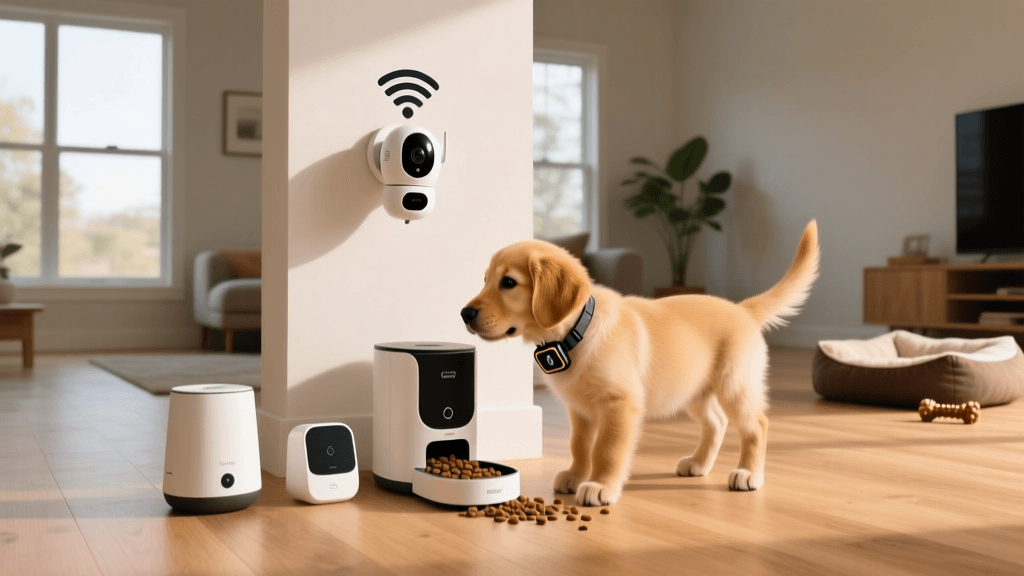
Before you even step foot in the new house, update your puppy's microchip registry with your new address and phone number. If you are using a modern GPS tracker, such as the latest 2026 Fi Series or Whistle Go collars, ensure the device is fully charged, the firmware is updated, and the geofence boundaries are set to your new property lines to prevent false escape alerts.
The First 72 Hours: Decompression Protocol
When you first arrive at your new home, the instinct is to let the puppy roam and explore. Resist this urge. Giving a young dog unrestricted access to a massive new territory can trigger sensory overload and anxiety. Instead, implement a strict decompression protocol.
The "Safe Room" Strategy
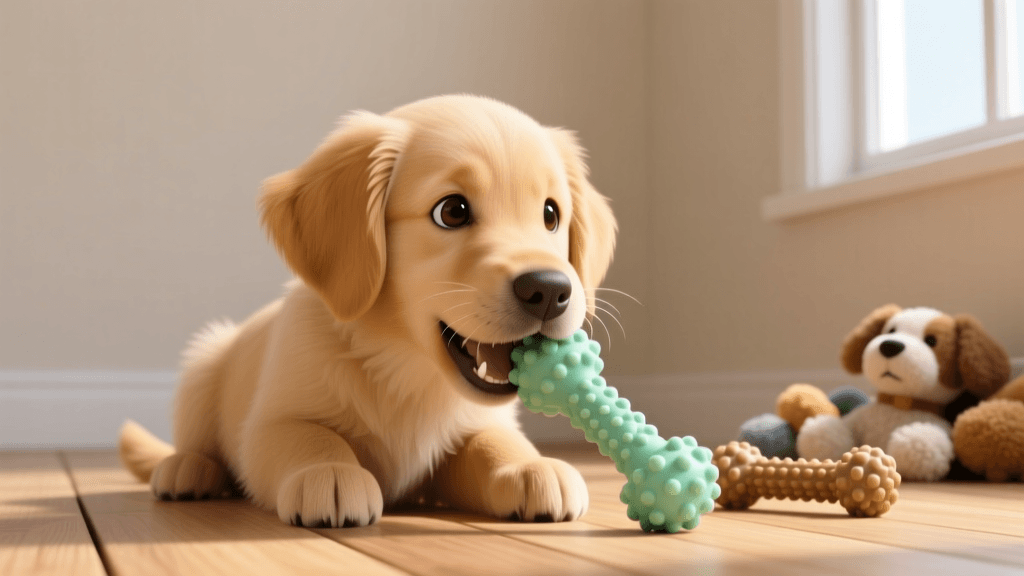
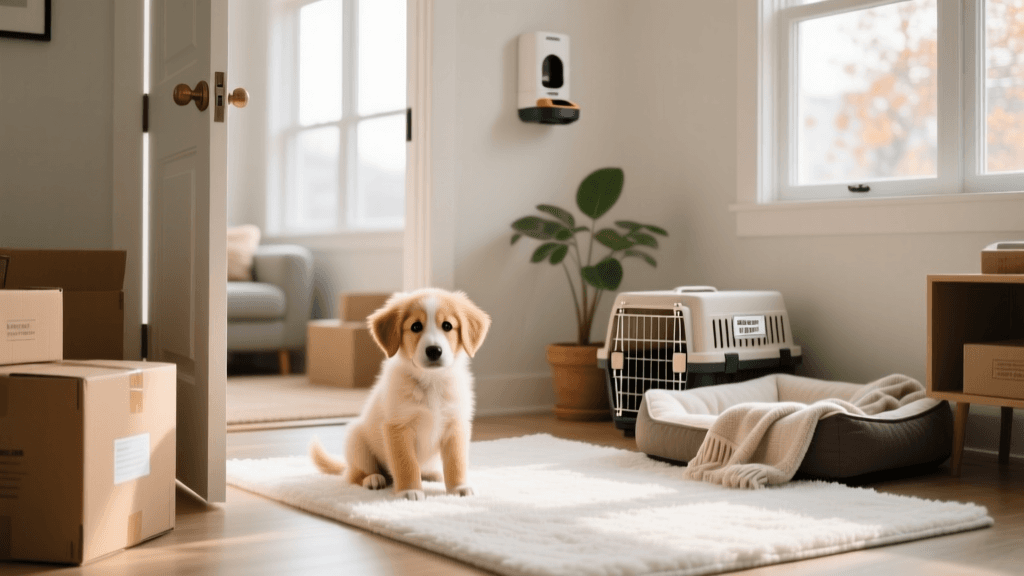
Designate one quiet room—such as a spare bedroom or a gated kitchen—as your puppy's "Safe Room" for the first three days. Set this room up before bringing the dog inside. Include their crate, water bowl, and familiar bedding. You can also plug in an Adaptil Optimum Calming Pheromone Diffuser 24 hours prior to arrival to saturate the room with soothing, dog-appeasing pheromones. Spend time in this room with your puppy, playing gently and offering high-value chews like bully sticks or yak cheese to build positive associations with the new space.
Navigating the Potty Training Reset
The most common complaint from pet parents during a move is sudden potty training regression. A puppy who was fully housebroken in your old apartment may suddenly start having accidents on the rug in your new house. The American Kennel Club (AKC) notes that environmental changes often require a temporary return to potty training basics, as the puppy does not yet understand the boundaries of the new territory.
Why Regression Happens and How to Fix It
In a new home, every surface is essentially a novel substrate. Furthermore, the stress of moving can loosen a puppy's bowel and bladder control. To combat this, treat your puppy as if they are eight weeks old again for the first two weeks. Take them outside on a leash every single hour, immediately after meals, and right after naps. Reward successful outdoor elimination with a high-value treat, such as Zuke's Mini Naturals, within two seconds of them finishing.
Accidents will happen. When they do, clean the area immediately with an enzymatic cleaner like Nature's Miracle Advanced Stain and Odor Eliminator. Standard household cleaners will not break down the uric acid crystals, and if your puppy can still smell their scent, they will return to mark the same spot in their new home.
30-Day Puppy Relocation Timeline
Use this structured timeline to gradually expand your puppy's freedom and integrate them into your new home's rhythm.
| Timeframe | Focus Area | Action Items |
|---|---|---|
| Days 1-3 | Decompression | Restrict to Safe Room. Maintain strict feeding and potty schedules. Limit visitors and loud noises. |
| Days 4-7 | Exploration | Allow supervised, leashed exploration of 1-2 adjacent rooms. Continue hourly potty breaks. |
| Days 8-14 | Routine Building | Introduce the new neighborhood walking route. Begin short, positive departures from the house. |
| Days 15-21 | Freedom Expansion | Grant off-leash access to more rooms while supervised. Monitor for stress-chewing or marking. |
| Days 22-30 | Independence | Practice longer alone-time sessions. Solidify the new potty perimeter and outdoor boundaries. |
Managing Separation Anxiety in a New Space
In 2026, with hybrid work models firmly established, many puppies are accustomed to having their owners home frequently. Moving to a new house often coincides with a return to the office or longer commutes, leaving the puppy alone in an unfamiliar environment. This can trigger separation anxiety, manifesting as destructive chewing, excessive barking, or escape attempts.
Gradual Desensitization and Tech Solutions
The Humane Society of the United States recommends gradual desensitization to departures to prevent anxiety from taking root. Start by performing "pre-departure cues" without actually leaving. Pick up your keys, put on your shoes, and then sit back down on the couch. This breaks the associative panic that occurs when a puppy hears the jingle of car keys.
When you do leave, start with micro-departures. Step out the front door, close it, and immediately return. Gradually increase this to one minute, five minutes, and then twenty minutes. To monitor your puppy's stress levels while you are away, utilize modern pet cameras. Devices like the Furbo 360 allow you to check in, speak to your puppy, and toss treats remotely, providing an excellent way to interrupt a barking session and reward quiet, settled behavior in their new home.
Enrichment for Alone Time
Never leave a puppy alone in a new house without a constructive activity. Frozen Kongs stuffed with puppy-safe peanut butter and plain yogurt, or lick mats smeared with wet food, can keep them occupied for 45 minutes or more. Licking is a naturally soothing behavior for dogs that releases endorphins, helping them self-regulate their anxiety in a strange new environment.
Conclusion
Relocating with a puppy requires patience, empathy, and a strategic plan. By managing their sensory input during the first 72 hours, resetting potty training expectations, and slowly expanding their boundaries over a 30-day period, you can transform a potentially traumatic move into an exciting adventure. Remember that behavioral hiccups are a normal part of the transition. Stay consistent with your rules, lean on positive reinforcement, and give your puppy the grace they need to realize that this new house is, indeed, their forever home.
anouk-beaumont
All our authors care for dogs every day — read more of their work on the authors page.