Best Dog Breeds for Remote Workers in 2026: WFH Guide
Discover the best dog breeds for remote workers in 2026. Learn which independent, quiet canine temperaments thrive in a home office environment.
The Psychology of the Ideal Work-From-Home Dog
As we settle into the permanent remote and hybrid work structures of 2026, the home office has evolved from a makeshift kitchen table setup into a dedicated, ergonomic sanctuary. For the millions of dog owners who transitioned to full-time remote work over the past few years, our canine companions have officially become our full-time coworkers. However, not every dog is psychologically or behaviorally equipped to handle the unique environment of a home office. Understanding your dog's breed instincts, baseline arousal levels, and vocalization triggers is critical to maintaining both your productivity and your pet's mental well-being.
When evaluating the best dog breeds for remote workers, we must look beyond size and coat type. The true metric of a successful 'WFH dog' lies in their behavioral psychology. Dogs bred for high-arousal tasks, continuous vigilance, or intense herding instincts often struggle in a confined home office where their genetic drives are frustrated. Conversely, breeds with a history of independent decision-making, low indoor arousal, and low territorial reactivity thrive in these environments. In this comprehensive guide, we explore the behavioral science behind the best canine coworkers, helping you choose or manage a breed that complements your 2026 remote work lifestyle.
Behavioral Traits to Prioritize for Home Office Harmony
Before diving into specific breeds, it is essential to understand the three core behavioral pillars that dictate how a dog will act while you are on back-to-back video calls or deep-work sessions.
1. Low Territorial Reactivity
In 2026, the volume of residential delivery traffic and neighborhood foot traffic is higher than ever. Dogs with high territorial instincts view every passing courier, mail carrier, or neighbor as an intrusion that must be announced. According to the ASPCA's guide on common dog behavior issues, territorial barking is one of the most difficult behaviors to extinguish because the dog is self-rewarding; they bark, the person walks away, and the dog believes their barking successfully protected the home. For remote workers, a dog with low territorial reactivity is non-negotiable for uninterrupted Zoom meetings.
2. 'Off-Switch' and Indoor Arousal
A dog's outdoor energy level does not always correlate with their indoor behavior. Some breeds require intense physical exertion outside but possess a genetic 'off-switch' that turns them into couch potatoes the moment they cross the threshold. Understanding this dichotomy is key to finding a dog that will sleep peacefully under your desk while you work.
3. Independence vs. Velcro Behavior
While 'Velcro dogs' (breeds that must be physically touching their owner at all times) are incredibly affectionate, they can suffer from subtle forms of separation anxiety or demand-attention behaviors that disrupt focus. Independent breeds, or those with moderate social needs, are perfectly content resting on a nearby bed without requiring constant physical reassurance.
Top Dog Breeds for Remote Workers: A Behavioral Breakdown
The Greyhound: The 45-MPH Couch Potato
It is a common misconception that Greyhounds require hours of intense daily running. In reality, Greyhounds are sprinters, not endurance athletes. Bred for short, explosive bursts of speed to catch prey, their physiology and psychology are designed for extreme energy conservation between hunts. Indoors, a Greyhound's baseline arousal is remarkably low. They are famously quiet, rarely barking at doorbells or passing cars, and they excel at 'mat training'—meaning they will happily sleep on an orthopedic bed in your office for 8 hours straight. Their independent yet gentle nature makes them the ultimate silent coworker.
The Basset Hound: The Scent-Driven Stoic
Basset Hounds process the world primarily through their olfactory senses rather than visual or auditory triggers. This means they are far less likely to react to a sudden movement outside a window or the sound of a notification ping. However, their scent-hound psychology requires specific morning management. A 45-minute 'sniffari' (a walk where the dog is allowed to stop and smell everything) provides immense mental fatigue. According to the Best Friends Animal Society's enrichment guide, olfactory enrichment tires a dog out just as effectively as physical exercise. Once their nose is satisfied, a Basset Hound will happily snore through your afternoon presentations.
The Shiba Inu: The Cat-Like Independent
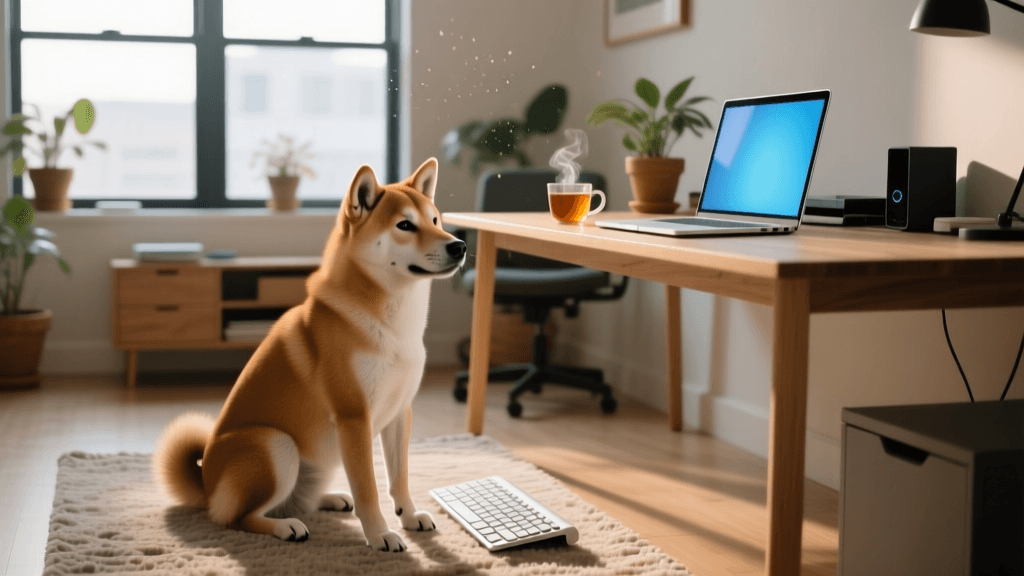
For remote workers who prefer a pet that respects personal space, the Shiba Inu offers a unique, almost feline temperament. Bred in Japan to hunt small game in dense brush, Shibas are independent thinkers who do not look to their owners for constant direction or reassurance. They are fastidiously clean, generally quiet, and highly self-entertaining. The psychological trade-off is that they can be aloof and stubborn; they are not the type of dog to eagerly fetch your slippers or offer constant emotional support during a stressful workday. They are, however, excellent at respecting the boundaries of a closed office door.
The Cavalier King Charles Spaniel: The Empathetic Moderator
If you require a dog that provides emotional regulation during high-stress remote workdays, the Cavalier King Charles Spaniel is a top contender. Unlike high-strung toy breeds that tremble at sudden noises, Cavaliers possess a remarkably stable, adaptable temperament. They are highly attuned to human emotional states and will often quietly rest their head on your foot when they sense a spike in your cortisol levels. They have a moderate energy level and a low propensity for nuisance barking, provided they are given adequate morning playtime. The American Kennel Club's training advice notes that breeds with low aggression and high biddability are significantly easier to train for quiet indoor behaviors.
Breeds to Reconsider for the Home Office Environment
Understanding why certain breeds fail in a WFH environment is just as important as knowing which ones succeed. The following breeds possess genetic instincts that directly clash with the realities of a home office:
- Herding Breeds (Border Collies, Australian Shepherds): Bred to control the movement of livestock, these dogs will attempt to 'herd' children running down the hall, delivery drivers approaching the porch, or even your hands moving across a keyboard. This results in nipping, pacing, and intense vocalization.
- Vocal Hounds (Beagles, Foxhounds): Bred to vocalize loudly when they catch a scent so the hunter can follow, their instinct to 'bay' at neighborhood smells or sounds is incredibly difficult to suppress in a suburban home office.
- Guardian Breeds (Anatolian Shepherds, Tibetan Mastiffs): Their deep-seated territorial instincts mean they will view every passing car and pedestrian as a threat, leading to deep, disruptive barking that will ruin any professional phone call.
2026 WFH Breed Compatibility Matrix
Use the following behavioral matrix to compare how different breeds align with the demands of a modern home office.
| Breed | Indoor Arousal | Vocalization Risk | Independence Level | Best WFH Trait |
|---|---|---|---|---|
| Greyhound | Very Low | Minimal | High | Sleeps through long meetings |
| Basset Hound | Low | Low/Moderate | Moderate | Unbothered by visual triggers |
| Shiba Inu | Moderate | Low | Very High | Self-entertaining, quiet |
| Cavalier KC | Moderate | Low | Low | Emotional support, adaptable |
| Border Collie | Very High | High | Low | Poor fit (herds movement) |
Optimizing Your 2026 Home Office for Canine Success
Even the most genetically suited breed requires environmental management to thrive in a home office. In 2026, integrating smart home technology and canine ergonomics is standard practice for remote workers.
Canine Ergonomics and Rest Zones
Dogs sleep an average of 12 to 14 hours a day. Providing a dedicated, ergonomic rest zone away from your immediate workspace prevents them from pacing or whining for attention. Invest in a high-quality orthopedic bed, such as the 2026 editions of the Big Barker or FurHaven therapeutic foam beds, which support joint health for older dogs who spend the day lying on hard floors. Place the bed in a corner where the dog can see you (satisfying their pack-bonding instinct) but is out of the way of your rolling chair.
Automated Enrichment and Monitoring
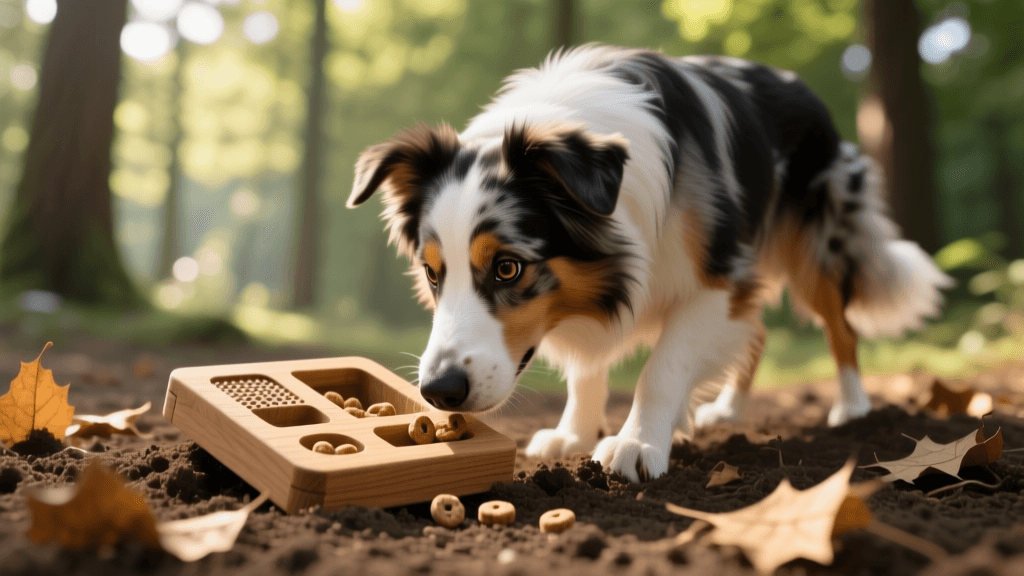
When you enter a 'deep work' block and cannot interact with your dog, automated enrichment is vital. Smart treat-dispensing cameras, like the latest Furbo 360 models, allow you to toss a treat and check in during a 5-minute break without leaving your desk. More importantly, providing passive enrichment toys—such as frozen Kongs filled with bone broth and peanut butter, or snuffle mats—keeps their minds occupied. Licking and chewing are scientifically proven to release endorphins in a dog's brain, promoting a calm, relaxed state that is ideal for a quiet office environment.
Conclusion
Choosing the right dog for a remote work lifestyle requires looking past aesthetics and deeply understanding canine psychology. By selecting breeds with low territorial reactivity, high indoor relaxation, and appropriate independence, you create a harmonious environment where both your career and your dog can thrive. As the remote work era continues to evolve in 2026, aligning your dog's genetic instincts with your daily routine remains the ultimate key to a successful, stress-free home office.
priya-sutaria
All our authors care for dogs every day — read more of their work on the authors page.