Top Dog Breeds for Remote Workers in 2026: Calm & Quiet
Discover the best dog breeds for remote workers in 2026. Learn which calm, quiet, and independent dogs thrive in home offices without disrupting calls.
The Psychology of the Home Office Dog in 2026
As the global workforce continues to embrace permanent remote and hybrid models in 2026, the dynamic between humans and their canine companions has fundamentally shifted. Your dog is no longer just a pet waiting for you to return from the office; they are your full-time coworker. However, not all dogs are psychologically equipped for the home office environment. Understanding your dog's breed instincts, arousal thresholds, and vocalization triggers is critical to maintaining productivity and ensuring your pet's mental well-being.
Many remote workers make the mistake of choosing a dog based purely on aesthetics or popularity, only to find themselves dealing with a pet that barks at every delivery driver, nudges for attention during deep-work sprints, or develops separation anxiety when the home office door is closed. According to ASPCA's resources on canine vocalization, a dog's tendency to bark is deeply rooted in their genetic lineage and original breeding purpose. To find the perfect remote work companion, we must look past the fluff and examine the behavioral psychology of specific breeds.
Key Behavioral Traits for Remote Work Companions
Before diving into specific breeds, it is essential to understand the three psychological pillars that make a dog suitable for a home office:
- Low Auditory Reactivity: Dogs bred for guarding or alerting will naturally vocalize at doorbells, sirens, and footsteps. Remote workers need breeds with higher auditory thresholds.
- Independent Affection (Non-Velcro): While companionship is desired, 'Velcro dogs' that shadow your every move often suffer from acute stress when you close a door for a private meeting. Independent breeds can self-soothe and rest in the same room without demanding constant physical contact.
- Low Indoor Arousal: High-prey-drive or herding breeds often exhibit 'indoor zoomies' or nip at moving ankles. Breeds with an 'off-switch' are vital for shared workspaces.
Top 5 Dog Breeds for Remote Workers
1. The Greyhound (The Sighthound Sleeper)
Often misunderstood as hyperactive due to their racing history, Greyhounds are actually the ultimate 'couch potatoes.' Psychologically, sighthounds are bred for short, intense bursts of sprinting followed by long periods of energy conservation. In a home office, this translates to a dog that will happily sleep on a rug beneath your desk for six hours straight. Furthermore, because their primary sense is vision rather than hearing, they are far less likely to bark at a ringing doorbell or a passing truck compared to terriers or hounds. Their quiet, low-arousal indoor presence makes them exceptional coworkers.
2. The Shiba Inu (The Basal Independent)
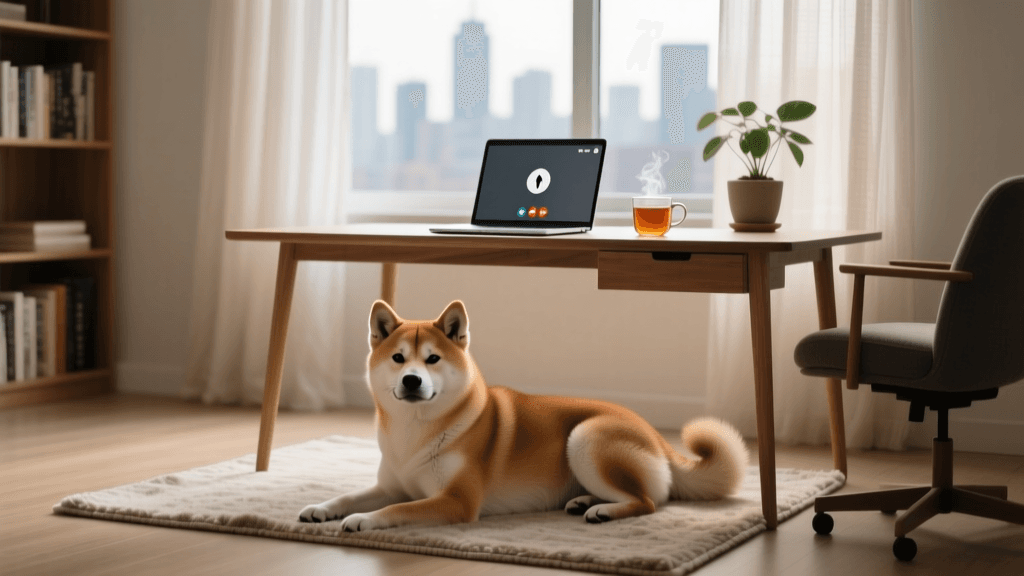
The Shiba Inu belongs to the 'basal' breed lineage, meaning their DNA is closer to ancient wolves than many modern breeds. This genetic makeup gifts them with a feline-like independence. A Shiba Inu will happily share your office space, occasionally offering a quiet, affectionate lean against your leg, but they will not panic if you close the door for a confidential Zoom call. According to ASPCA's literature on separation anxiety, dogs with high independence are significantly less prone to destructive stress behaviors when isolated. Their fastidious cleanliness and quiet nature are massive bonuses for remote workers.
3. The Cavalier King Charles Spaniel (The Empathetic Companion)
If you prefer a dog that stays close without being demanding, the Cavalier is a masterclass in selective breeding for human empathy. Originally bred as royal lap dogs, their psychological drive is simply to be near their human. They possess an incredibly low prey drive and a high capacity for emotional mirroring. If you are stressed during a deadline, a Cavalier will intuitively settle quietly at your feet rather than initiating play. They are the ultimate 'emotional support' coworkers, providing grounding energy during high-stress virtual meetings.
4. The Basset Hound (The Low-Arousal Scent Hound)
Basset Hounds are governed by their noses and their heavy bone structure. Their psychological baseline is one of stubborn calmness. While they can be vocal outdoors when on a scent trail, indoors they are notoriously lethargic and quiet. Their low physical arousal means they are highly unlikely to pace, whine, or interrupt your workflow. The primary behavioral consideration for a Basset Hound is their stubbornness; they require patient, reward-based training, but once they learn the 'settle' command, they will hold it for hours.
5. The Bichon Frise (The Adaptable Cheerful Companion)
For remote workers who want a cheerful, alert dog without the neuroticism of some smaller breeds, the Bichon Frise is an excellent choice. Bred purely for companionship, they are highly adaptable to their owner's schedule. They are also a low-shedding breed, which is a practical necessity for keeping home office equipment and keyboards free of dander and hair. Their psychological need for play can be easily met with a quick 15-minute indoor fetch session during your lunch break, after which they are content to nap.
Behavioral Red Flags: Breeds to Reconsider
While every dog is an individual, certain breed instincts clash heavily with remote work. Herding breeds like the Border Collie or Australian Shepherd are genetically hardwired to control movement. In a home office, this often manifests as barking at you when you stand up, or nipping at the wheels of your office chair. Similarly, vocal guarding breeds like the German Shepherd or Miniature Schnauzer will view every passing pedestrian or delivery driver as a territorial threat, turning your afternoon conference calls into a chaotic mess of barking. The American Kennel Club's training guides emphasize that trying to suppress a genetically hardwired barking instinct causes immense psychological stress for the dog.
2026 Home Office Suitability Comparison Chart
| Breed | Vocalization Level | Independence | Indoor Energy | Best Work Style |
|---|---|---|---|---|
| Greyhound | Very Low | High | Very Low | Deep Work / Long Sprints |
| Shiba Inu | Low | Very High | Moderate | Independent / Creative |
| Cavalier KCS | Low | Low | Low | Collaborative / Meetings |
| Basset Hound | Low-Moderate | Moderate | Very Low | Deep Work / Analytical |
| Bichon Frise | Moderate | Moderate | Moderate | Flexible / Hybrid |
Actionable Behavioral Management for Zoom Days
Even the calmest breeds require behavioral management to thrive in a home office. Here are specific, actionable strategies for 2026:
1. Implement the 'Place' Command
Train your dog to go to a specific raised cot or mat using the 'Place' command. This creates a psychological boundary. When you are on a call, the mat becomes their designated 'workstation.' Reward them with high-value treats for staying on the mat, gradually increasing the duration from 5 minutes to 45 minutes.
2. Utilize Modern Enrichment Technology
If you have a 2-hour meeting, do not rely on a simple bowl of kibble. Use the Outward Hound Nina Ottosson Dog Brick Puzzle (approx. $15-$20) to force your dog to use their brain to extract treats. Mental fatigue tires a dog out much faster than physical exercise. For longer absences from the desk, the Furbo 360 Smart Dog Camera (approx. $210 in 2026) allows you to monitor their stress levels and toss treats remotely to reinforce quiet behavior.
3. The Pre-Call Decompression Walk
A 20-minute 'sniffari' walk before your most important daily meeting is crucial. Allowing your dog to engage their olfactory senses lowers their heart rate and reduces cortisol levels. A mentally decompressed dog is a quiet dog.
'The key to a successful remote-work relationship with your dog is not finding a breed that never moves, but understanding their psychological triggers and providing an environment where their natural instincts do not conflict with your professional obligations.'
Conclusion
Choosing the right dog for a remote work lifestyle requires a deep understanding of canine psychology and breed instincts. By selecting a breed with a low arousal threshold, manageable vocalization tendencies, and an independent yet affectionate nature, you can create a harmonious home office. Whether you opt for the silent grace of a Greyhound or the empathetic warmth of a Cavalier, understanding why your dog behaves the way they do is the first step toward a productive and peaceful workday in 2026.
jonas-cole
All our authors care for dogs every day — read more of their work on the authors page.