Understanding Canine Resource Guarding: Step-by-Step Guide
Learn why dogs resource guard and follow our step-by-step desensitization training guide to safely modify this instinctual canine behavior.
The Psychology Behind Resource Guarding
To effectively train a dog that resource guards, we must first understand the psychology driving the behavior. Resource guarding—the act of defending food, toys, beds, or even people from perceived threats—is often misunderstood by owners as a sign of canine dominance, spite, or a lack of respect. In reality, it is a deeply ingrained evolutionary survival instinct. In the wild, a canine that willingly surrendered its scarce, high-value resources would not survive. Therefore, when your dog stiffens over a raw bone or growls when you approach their food bowl, they are not challenging your 'alpha' status; they are expressing a very natural fear of losing something they perceive as vital to their well-being.
According to behavioral experts at VCA Animal Hospitals, resource guarding is a normal canine behavior that only becomes a problem when it poses a safety risk to humans or other pets. The dog's amygdala (the brain's threat-detection center) perceives your approach as a theft attempt, triggering a fight-or-flight response. By understanding this psychological baseline, we can shift our training approach from one of confrontation and punishment to one of desensitization and counter-conditioning (DSCC). We must teach the dog's brain that human proximity to their valued items predicts wonderful outcomes, rather than theft.
Reading the Canine Escalation Ladder
Before initiating any step-by-step training protocol, you must learn to read your dog's subtle communication signals. Dogs rarely bite without warning; they climb an escalation ladder. Punishing early warning signs (like growling) suppresses the communication but does not cure the underlying anxiety, often leading to a dog that bites without warning. Below is the resource guarding escalation ladder and how you should intervene at each stage.
| Stage | Canine Body Language | Dog's Internal State | Human Action Required |
|---|---|---|---|
| 1. Early Warning | Lip licking, yawning, 'whale eye' (showing whites of eyes), stiffening. | Mild anxiety, assessing the threat level. | Stop approaching. Give the dog space. Do not punish. |
| 2. Active Warning | Hard staring, low rumbling growl, hovering over the item, ears pinned. | High anxiety, preparing to defend the resource. | Retreat slowly. Toss a high-value treat away from the item to create distance. |
| 3. Escalation | Snapping at the air, lunging, baring teeth. | Fear-based aggression, feeling cornered. | Immediately leave the area. Manage the environment to prevent future setups. |
| 4. Contact | Biting, making physical contact. | Panic, executing the final defensive measure. | Seek immediate guidance from a certified veterinary behaviorist. |
Step-by-Step Training Guide: Counter-Conditioning
Now that we understand the 'why' and can read the 'when,' we can implement a structured, step-by-step desensitization protocol. This guide focuses on modifying guarding behavior over high-value chews and toys. Note: If your dog guards food bowls or exhibits Stage 3/4 behaviors, consult an ASPCA-recommended behavior professional before attempting DIY training.
Step 1: Management and Environmental Setup
Training cannot begin if the dog is continually put in situations to fail and rehearse the guarding behavior. Management is your first line of defense.
- Products Needed: A 6-foot leather or biothane leash (approx. $25), baby gates or a secure playpen ($40-$60), and high-value training treats like Zuke's Mini Naturals or Stella & Chewy's freeze-dried raw bites ($15-$20 per bag).
- The Setup: Remove all unattended high-value items from the floor. Only give your dog high-value chews (like bully sticks or yak cheese) when they are safely inside their playpen or crate, or tethered on their 6-foot leash in a controlled room.
- The Rule: Never attempt to forcibly take an item from your dog's mouth during the management phase. If they grab something they shouldn't, use a 'trade' (see Step 2) or distract them by ringing the doorbell or tossing a handful of treats in the opposite direction.
Step 2: The 'Trade-Up' Protocol
The goal here is to teach the dog that giving up an item results in something exponentially better, rewiring their scarcity mindset.
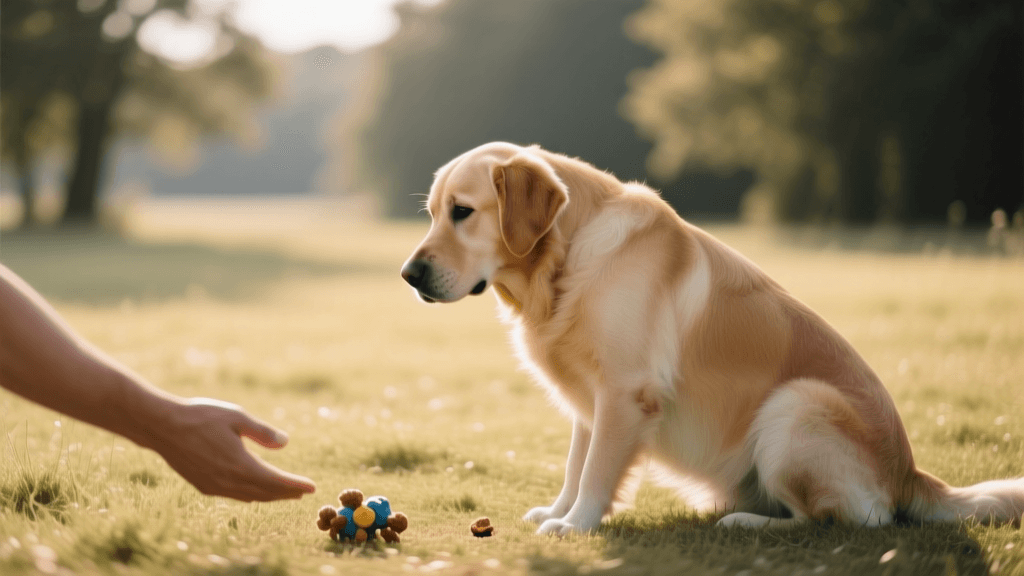
- Start Low-Value: Offer your dog a low-value toy, such as a worn-out tennis ball or a plain cotton rope.
- Present the High-Value Reward: While the dog is holding the low-value item, bring a piece of freeze-dried beef liver or boiled chicken right to their nose. The scent should be irresistible.
- The Drop: The moment the dog drops the toy to eat the treat, say a marker word like 'Yes!' or click a clicker.
- The Return: Once the dog finishes the treat, immediately give the toy back. This is crucial. If the dog learns that dropping an item means it disappears forever, they will guard it harder next time. Returning the toy builds trust.
- Timing and Repetition: Practice this for 5-minute sessions, 3 times a day. The exchange should happen within a 2-second window of presenting the food.
Step 3: Desensitizing Proximity (The Approach Game)
Once the dog happily drops items for a trade, we address the fear of a human simply walking past or standing near them while they have a high-value item.
- Establish the Baseline Distance: Give your dog a high-value chew while they are tethered or in a designated spot. Walk away until you find a distance where the dog is completely relaxed (e.g., 10 feet). This is your starting threshold.
- Treat and Retreat: From that 10-foot distance, toss a piece of high-value chicken toward the dog. Do not make direct eye contact, and keep your body language sideways and non-threatening.
- Decrease the Distance: After 10 successful tosses where the dog remains relaxed (no stiffening or whale eye), take one single step closer (now 9 feet away). Repeat the tosses.
- Progression Metrics: Decrease the distance by only 1 foot per successful training session. If the dog stiffens, growls, or eats the treat frantically, you have crossed their threshold. Immediately take two steps back and resume from a safer distance.
- The Ultimate Goal: Over several weeks, you will work your way up to standing right next to the dog, casually dropping treats into their vicinity, and eventually, gently resting a hand on their shoulder while they chew, proving that your presence is a predictor of bonus snacks, not theft.
Common Mistakes That Worsen Guarding
When dealing with instinctual canine psychology, human ego is often the biggest hurdle. The American Kennel Club (AKC) strongly advises against using confrontational training methods for resource guarding. Avoid these common pitfalls:
- The 'Alpha' Roll or Physical Punishment: Pinning a dog down or hitting them to 'show dominance' will only validate their fear that you are a dangerous thief. This leads to suppressed warning signs and unpredictable biting.
- Mock Teasing: Taking a dog's food bowl away while they are eating just to 'get them used to it' is highly counterproductive. It creates chronic anxiety around mealtimes and manufactures a guarding problem that may not have existed.
- Ignoring Early Signals: Waiting until the dog growls to change your behavior teaches the dog that early, polite signals (lip licking, stiffening) do not work, and they must escalate to aggression to get you to back off.
Tracking Progress and Knowing When to Call a Pro
Behavior modification is a marathon, not a sprint. Keep a training journal noting the date, the item guarded, the starting distance, and the dog's body language score (1-10). If you do not see measurable progress in your threshold distances after three weeks of consistent daily practice, or if the dog's guarding generalizes to everyday objects (like socks or trash), it is time to bring in a professional.
Look for a certified professional dog trainer (CPDT-KA) or a member of the International Association of Animal Behavior Consultants (IAABC) who utilizes force-free, science-based methods. By respecting your dog's evolutionary instincts and systematically changing their emotional response to your presence, you can transform a stressful guarding dynamic into a relationship built on profound trust and mutual understanding.
hannah-wickes
All our authors care for dogs every day — read more of their work on the authors page.